

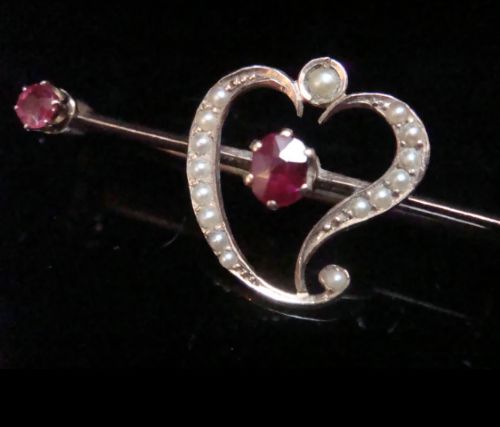


Antique Ruby Brooch
An antique ruby brooch brings together rich crimson stones and period metalwork, offering a wearable piece of history that catches the eye on any lapel.
Antique Ruby Brooch
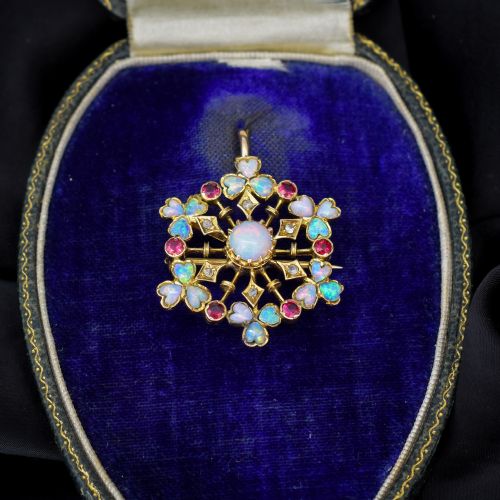
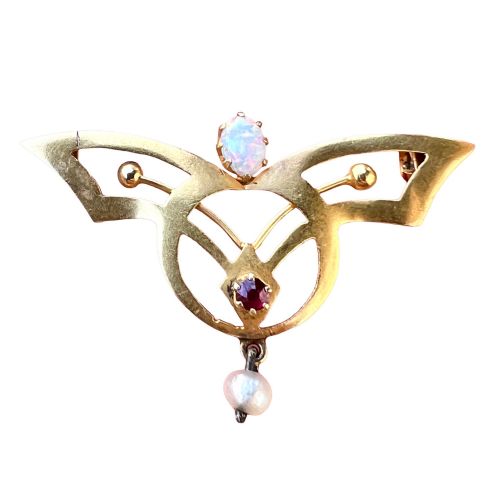
An antique ruby brooch encompasses pins, bar brooches and convertible pendant pieces fashioned during the Georgian, Victorian, Edwardian and Art Deco eras. These jewels showcase vivid red corundum set alongside diamonds, pearls and other gems within secure metal mounts.
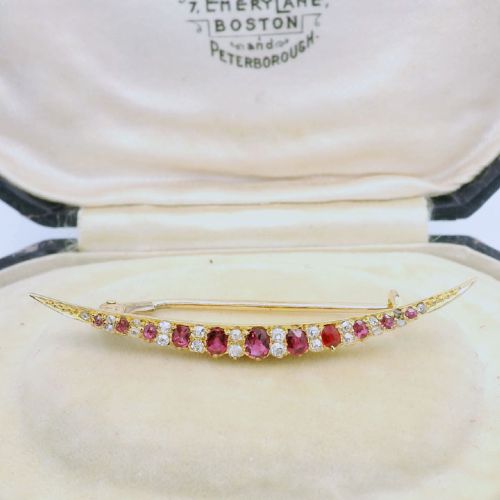
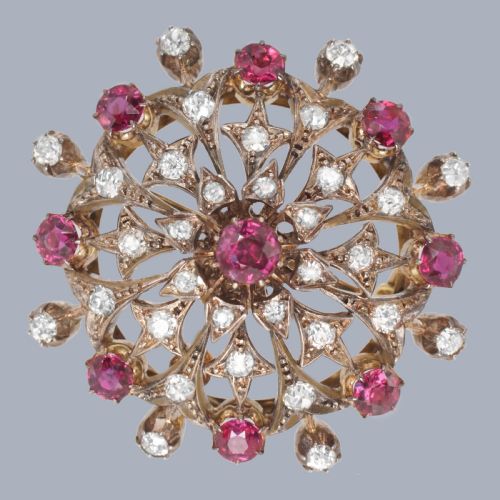
Crescent shapes, floral clusters, insects and geometric bar designs dominate the selection available to collectors. The version most commonly encountered on this page is the Victorian or Edwardian gold crescent set with alternating rubies and diamonds.
Many examples double as pendants, offering versatility through hidden loops or detachable bails. Pieces span from the late eighteenth century through to the mid-twentieth century, recording changing tastes in gem-setting and goldsmithing.
Materials and construction
Goldsmiths worked with various purities of yellow, rose and white gold, alongside silver-topped gold, platinum and sterling silver. Silver settings frequently held stones in early pieces to enhance white brilliance, whilst gold formed the structural backing and pin mechanisms.
Rubies appear alongside old-cut, rose-cut and diamond accents, accompanied by seed pearls, paste stones and opals. Stones were secured using collet settings, grain settings and claw mounts executed entirely by hand.
Hinged pin stems, C-clasps and safety catches evolved across the decades, marking the chronological shift from early hand-forged findings to later engineered fastenings.
Listings feature yellow gold, rose gold, white gold, silver and platinum across Victorian, Edwardian and Art Deco periods.
Evaluating workmanship and stones
Quality rests upon the natural origin, colour saturation and clarity of the rubies, alongside the matching and brilliance of accompanying diamonds. Superior examples feature well-matched stones with strong crimson hues rather than pale pinks or dark opaque parcels.
The finesse of the metalwork distinguishes finer pieces, evident in pierced gallery work, delicate millegrain edges and secure, even claw settings. Pierced motifs and balanced symmetry require advanced bench skills that separate master jewellers from standard commercial workshops.
The Antique Ruby Brooch Glossary
- Crescent brooch
- A curved, moon-shaped pin design popular during the late nineteenth and early twentieth centuries. These pieces typically graduate in size from the centre to the tapered ends.
- Bar brooch
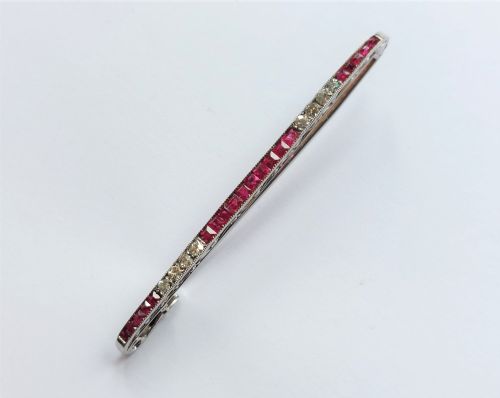
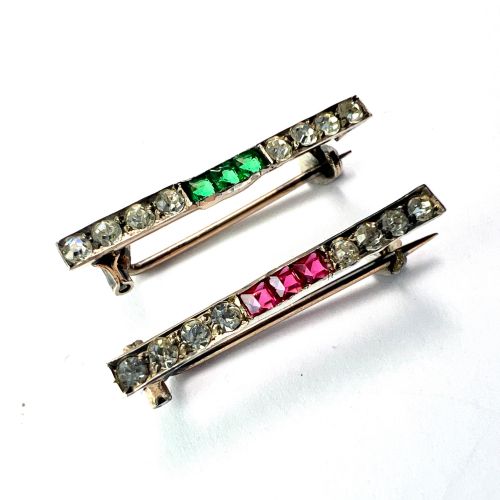
- A narrow horizontal pin featuring central gemstone clusters or evenly spaced decorative elements. This linear format gained widespread favour during the Edwardian and Art Deco periods.
- Silver-topped gold
- A manufacturing technique where a thin layer of silver is soldered to a gold backing. This method combined the white reflective surface desired for diamond and ruby settings with the structural strength of gold.
- Paste
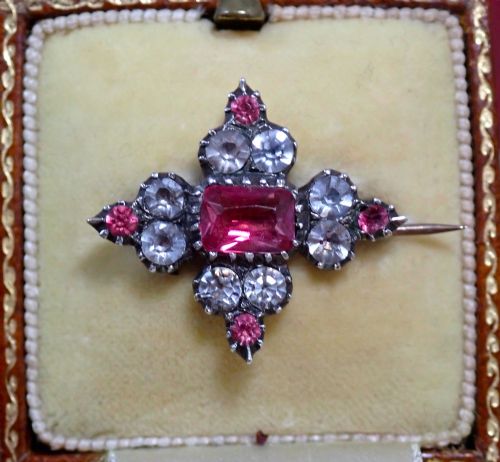
- Hand-cut lead glass used to imitate gemstones in historical jewellery. Fine historical paste displays crisp facets and high refractive index.
- Millegrain
- A decorative jewellery technique featuring a border of tiny raised metal beads along the edges of settings. This delicate texture softens metal lines and enhances the sparkle of adjacent stones.
Antique Ruby Brooch: Frequently Asked Questions
How do I wear an antique ruby brooch?
Pin the piece securely to the lapel of a heavy coat, the centre of a neckline, or fasten it to a velvet ribbon around the neck. Ensure the fabric is thick enough to support the weight of the metal and stones without sagging.
Convertible pieces featuring hidden loops also allow the brooch to be suspended from a chain as a pendant. This versatility makes them adaptable for both day and evening wear.
Are these rubies natural or treated?
Historical pieces predominantly feature natural corundum sourced from regions such as Burma, Siam, or Ceylon. Gemological reports often accompany significant pieces to confirm origin and treatment status.
Some Georgian and Victorian items utilise historical paste or treated stones, whilst Edwardian and later pieces frequently highlight certified natural stones. Examining the inclusions under magnification reveals the geological origins of the gems.
How do I date an antique brooch?
Dating relies on stylistic clues, metal types, and pin mechanisms. Georgian pieces use closed-back foils and hand-cut stones, whereas Victorian items often incorporate yellow gold and thematic motifs like crescent moons or flowers.
Edwardian designs favour platinum and millegrain work with lighter, airier frameworks. Art Deco pieces display geometric symmetry and white gold or platinum settings.
How should I clean my brooch?
Clean the piece gently using a soft brush with warm water and mild soap, avoiding harsh chemical dips that can damage pearls, paste, or softer metals. Pat dry thoroughly with a soft cloth before storing.
Enamel, pearls, and opals require particular caution as they are sensitive to moisture and abrasion. Regular checks by a jeweller ensure that old claw settings remain tight and secure.