
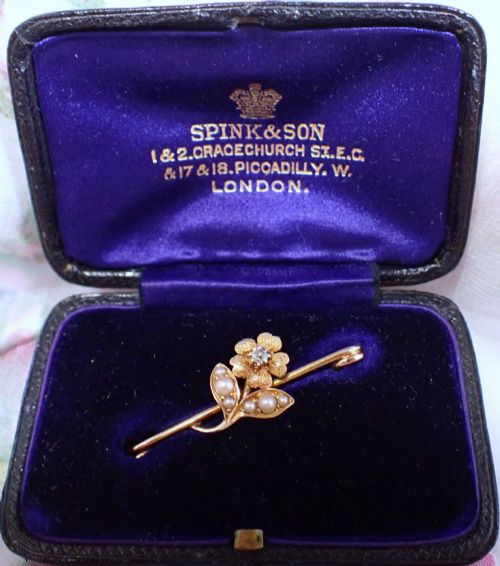


Pearl Diamond Bar Pin
A pearl diamond bar pin is a delicate fastening of precious metal set with gems, offering a refined lapel accent.
Pearl Diamond Bar Pin
A pearl diamond bar pin is a slender brooch designed to secure garments while displaying gemstones along a linear mount. When you search for pearl diamond bar pin, you encounter pieces primarily spanning the Victorian, Edwardian, and Art Deco periods, ranging from the late nineteenth century into the 1930s.
The common form on this page is a narrow bar set with pearls and diamonds, often shaped into floral, insect, or swallow motifs alongside traditional straight lines. These jewels originate from various workshops, utilising yellow gold, white gold, platinum, and silver to support the central gems.
How they were made
Maker workshops utilised multi-metal construction, combining 15ct or 18ct yellow gold with platinum and silver toppings to enhance the brilliance of the diamonds. This technical choice allowed goldsmiths to create secure, lightweight mounts that held smaller rose-cut diamonds and natural pearls firmly in place.
Gemstones are flush-set, grain-set, or bezel-set along the bar, integrating seed pearls, pink pearls, and occasional ruby accents into naturalistic flower or insect designs. The structural framing relies on hand-fabricated pin stems and C-clasps typical of early twentieth-century jewellery production.
The listings span the Victorian, Edwardian, and Art Deco eras, constructed in platinum, silver, and gold ranging from 9ct to 18ct.
What varies in quality
The standard of a pearl diamond bar pin depends on the integration of its stones and the precision of its metalwork. Higher quality examples display meticulous hand-piercing in platinum or white gold, allowing light to pass through the diamond clusters while securely bedding natural pearls.
The complexity of the subject matter also separates standard bar mounts from finer artistic interpretations, such as articulated insect bodies or detailed swallow carvings. The weight and purity of the gold, combined with the carat weight and cut of the diamonds, dictate the distinction between simpler production pieces and finer artisan work.
The Pearl Diamond Bar Pin Glossary
- Bar brooch
- A slender, elongated pin designed to fasten clothing while displaying gemstones along a linear axis. This form is particularly common in Edwardian and late Victorian jewellery.
- Rose-cut diamond
- An antique diamond cut featuring a flat base and a domed crown with triangular facets. This cut predates the modern brilliant cut and provides a softer, candlelight shimmer.
- Seed pearl
- A very small, naturally formed or cultured pearl often used in tight clusters or accent rows. These tiny gems require delicate setting techniques.
- Platinum
- A dense, strong white metal utilised heavily in Edwardian and Art Deco jewellery for intricate settings. Its strength allowed jewellers to create ultra-fine wirework and secure diamond settings.
- C-clasp
- A simple wire closure formed into the shape of the letter C to catch the pin stem. This traditional fastening mechanism appears frequently on antique brooches before safety catches were invented.
Pearl Diamond Bar Pin: Frequently Asked Questions
How do I wear an antique bar pin?
A pearl diamond bar pin secures easily onto lapels, collars, or heavier fabrics like wool and silk scarves. Because antique fastenings often feature traditional C-clasps without modern locking mechanisms, pairing the pin with a small safety guard adds security during wear.
Positioning the pin horizontally or at a slight diagonal on a structured jacket lapel showcases the linear design best. Ensure the fabric is thick enough to support the weight of the gold and gemstones without pulling.
Are these pearls natural or cultured?
The pearls found across these antique pieces include natural specimens from the Edwardian and Victorian eras. Natural pearls formed organically in saltwater or freshwater environments before the widespread adoption of cultured pearl farming.
Examining the pieces reveals organic variations in shape and lustre that characterise early twentieth-century jewellery. Each pearl is secured into gold or platinum mounts designed specifically for its unique contours.
How do I tell Edwardian pieces apart from Art Deco ones?
Edwardian pearl diamond bar pins typically feature delicate platinum-on-gold work with floral, ribbon, or naturalist motifs like swallows and insects. The aesthetic emphasises light, airy filigree and softer curves reminiscent of the early 1900s.
Art Deco pieces, emerging towards the 1920s and 1930s, lean towards geometric precision, stronger lines, and symmetrical arrangements. Platinum and white gold dominate the later period, contrasting sharply with the warmer yellow gold backings of late Victorian items.
What metals were commonly used in these pins?
Jewellers utilised a variety of precious metals depending on the decade of manufacture, including 9ct, 15ct, and 18ct yellow gold. Platinum and silver were frequently layered over gold to provide a bright white surface that enhanced the appearance of set diamonds.
This combination of metals reflects the technological transition in jewellery making from the late nineteenth century into the twentieth. Platinum eventually became the preferred metal for its exceptional strength in fine wirework settings.