


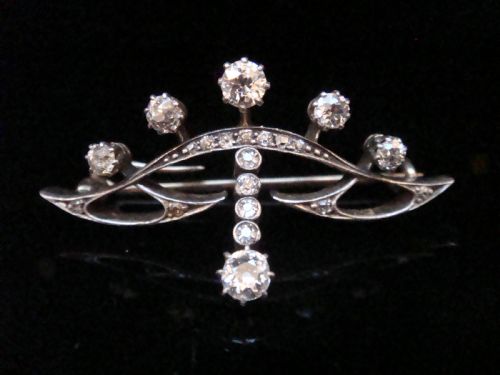


Platinum Gold Pin
A platinum gold pin brings together fine white metal and warm yellow gold, offering durable settings for diamonds, pearls and coloured stones.
Platinum Gold Pin
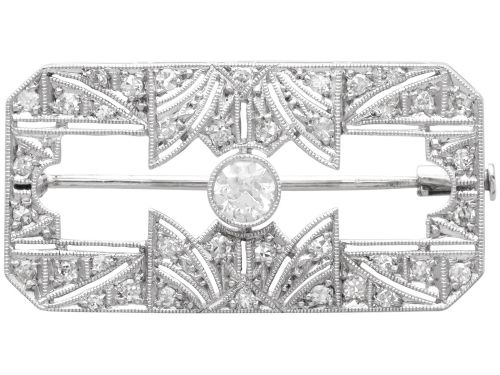
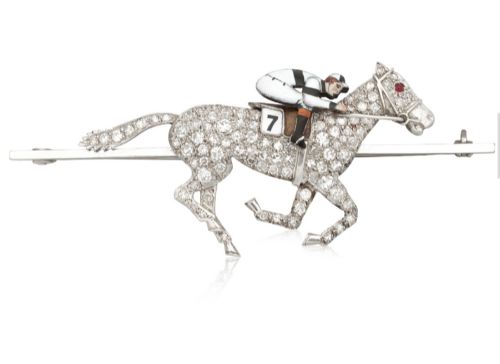
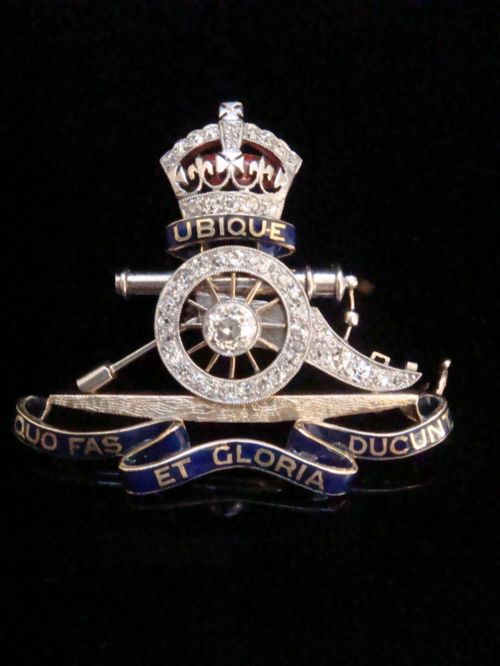
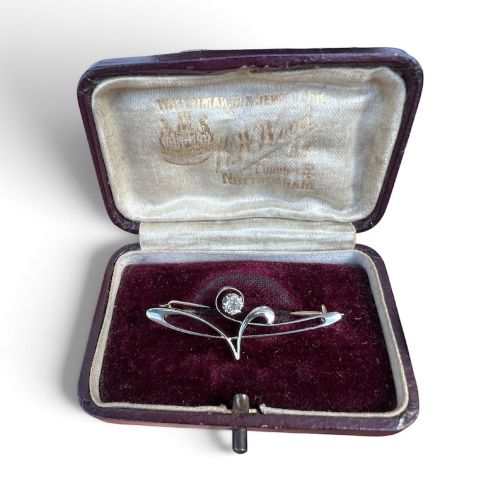
When you search for platinum gold pin, you encounter brooches, bar brooches, stickpins and jabot pins spanning the Victorian, Edwardian and Art Deco periods. These items combine the structural strength of platinum with the traditional warmth of yellow or white gold.
The Edwardian and Art Deco eras dominate this selection, featuring delicate openwork foliage, geometric bar forms and playful motifs like flying ducks or butterflies. Victorian and mid-century pieces also appear, ranging from simple stickpins to bold onyx and diamond designs.
Metals and gemstone settings
Craftsmen utilised platinum atop gold bases, a technique that allowed jewellers to create exceptionally fine wirework and secure claw or millegrain settings for diamonds without adding heavy weight. Platinum provided the bright, durable face while 9ct, 14ct, 15ct or 18ct gold formed the supportive structure.
Gems such as old cut diamonds, pearls, rubies, emeralds, sapphires and onyx were hand-set into these dual-metal frames. The contrasting metals accentuate the sparkle of the stones and the intricate filigree typical of early twentieth-century workshops.
A flying duck makes an unexpected appearance among the geometric bar brooches and diamond crescents.
Distinctions in craftsmanship and materials
The standard of a piece depends heavily on the precision of the platinum work and the matching of the gemstones. Superior examples display crisp millegrain edges, well-matched old cut diamonds and secure pin mechanisms that hold firm during wear.
Material composition also dictates the grade, with higher carat gold backs and natural pearls or substantial diamond carats marking out the finer specimens in the range. French and domestic workshops alike produced variations in weight and intricacy.
The Platinum Gold Pin Glossary
- Millegrain
- A decorative bezel technique featuring a row of tiny raised metal beads along the edge of a setting. This method softens the transition between metal and stone.
- Jabot pin
- A decorative pin originally designed to secure a jabot, a ruffled lace frisk on a garment. They often feature ornamental terminals at both ends or a secure locking pin.
- Stickpin
- A long pin with a decorative head used to fasten a necktie or lapel fabric. The pin shaft typically fastens with a small removable cap at the point.
- Old cut diamond
- A hand-faceted diamond cut before the standardisation of modern brilliants. These stones possess smaller tables and higher crowns, producing a distinctive softer glow under candlelight.
- Art Deco
- A design style spanning the 1920s and 1930s characterised by symmetry, geometric lines and stylised motifs. It favoured the contrast of platinum with diamonds and dark stones like onyx.
Platinum Gold Pin: Frequently Asked Questions
What is the difference between gold and platinum settings?
Platinum is exceptionally strong and naturally white, allowing jewellers to use minimal metal to hold delicate stones securely.
Gold provides a warmer tone, and when used on the reverse or shank, it offers traditional structure and distinct carat markings.
How do I date a platinum and gold pin?
Examine the design motifs, such as Edwardian garlands or geometric Art Deco lines, alongside any hallmarks stamped on the gold or platinum components.
Old cut diamonds and specific pin findings also point to the manufacturing period between the late Victorian era and the mid-century.
Can these pins be converted into pendants?
Many bar brooches and pins feature hidden loops or can accommodate discreet converters fitted by a specialist jeweller.
This allows you to wear the pin interchangeably as a pendant on a gold chain.