


Vintage Ruby Pin
A vintage ruby pin brings together rich red stones and precious metals in forms ranging from floral clusters to animal figures.
Vintage Ruby Pin
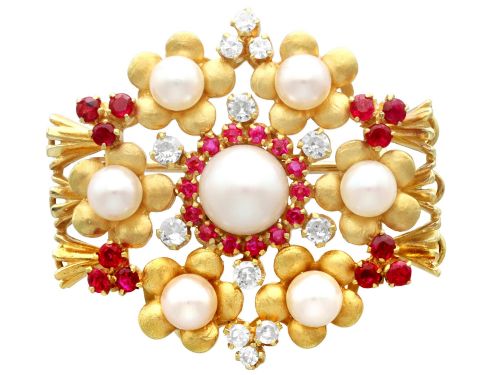
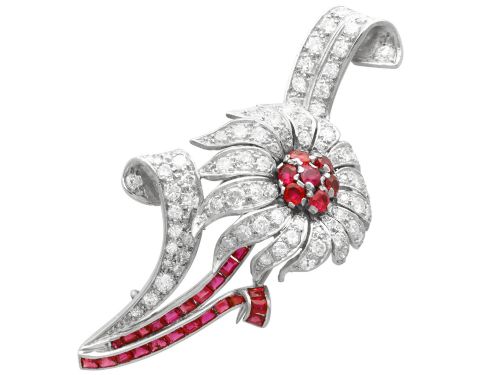
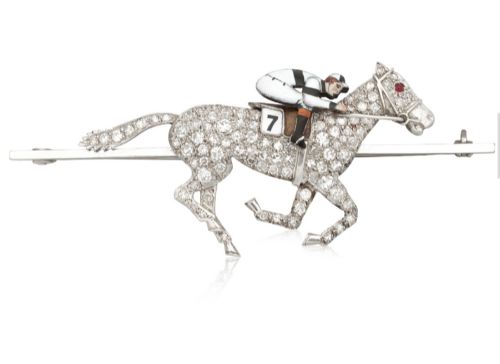
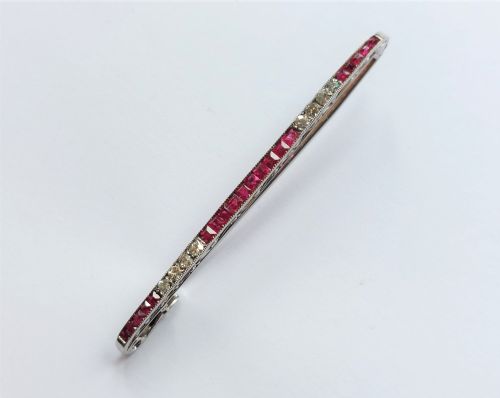
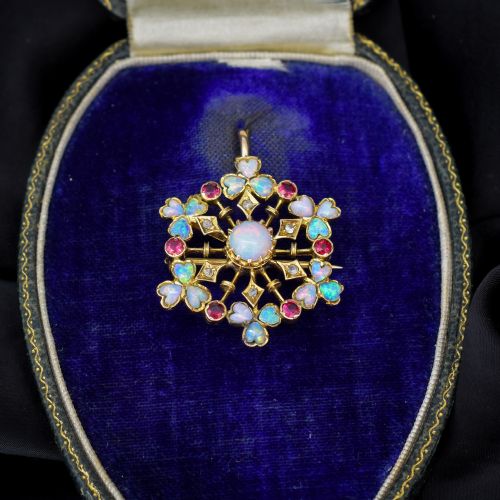
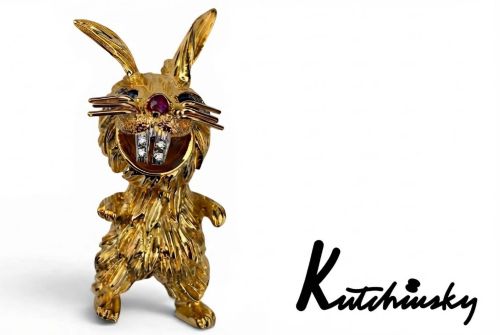
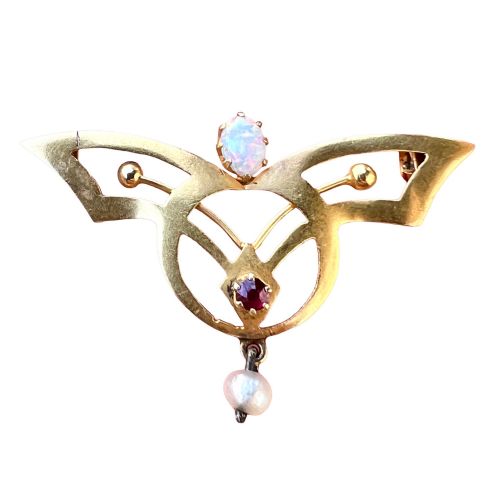
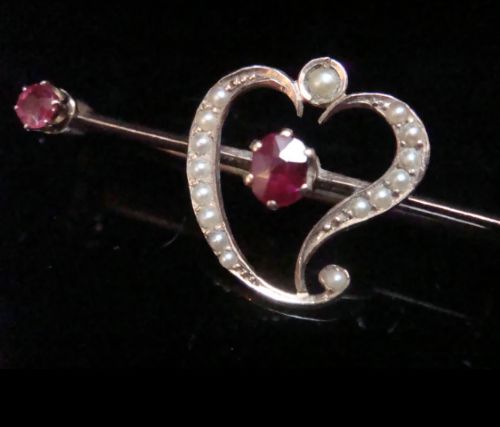
A vintage ruby pin encompasses brooches, pendant brooches, and bar brooches set with rubies alongside diamonds, pearls, or emeralds. You will frequently encounter Edwardian bar brooches and crescent designs from the early twentieth century alongside mid-century animal and floral subjects.
Materials and construction methods
Goldsmiths utilised yellow gold, rose gold, white gold, and platinum, frequently combining silver with gold in earlier pieces to enhance the sparkle of stones. Rubies appear alongside diamonds, sapphires, emeralds, opals, and seed pearls, secured in settings ranging from delicate prong work to fine channel and bezel mounts.
Many items combine casting and hand fabrication, particularly in articulated animal pins and structured bar brooches. Metalwork techniques such as repoussé, engraving, and chain mail construction appear across Victorian, Edwardian, and mid-century examples.
Current listings feature a diverse array of rubies combined with diamonds, pearls, and emeralds across Victorian, Edwardian, and mid-century styles.
Distinctions in craftsmanship and materials
Quality rests upon the saturation and clarity of the rubies, the precision of stone matching, and the crispness of the surrounding metalwork. Superior pieces display well-proportioned gems with consistent colour and secure, integrated stone settings that show minimal wear.
The complexity of the design and the integrity of maker marks or precious metal hallmarks further differentiate the range. Finer examples maintain structural stability in delicate elements like insect legs, wings, and openwork frames while preserving original components.
Kutchinsky·Ben Rosenfeld·Gubelin
The Vintage Ruby Pin Glossary
- Bar brooch
- A narrow horizontal pin featuring central ornamentation such as gemstones, clusters, or animal motifs. These forms gained immense popularity during the Edwardian and Art Deco periods.
- Crescent brooch
- A curved, horn-shaped pin tapering at the ends, frequently set in graduated rows of rubies, diamonds, or pearls. This silhouette was a staple of late Victorian and Edwardian jewellers.
- Cabochon
- A gemstone shaped and polished with a smooth, convex domed surface rather than faceted edges. This cut highlights the rich colour and internal characteristics of rubies.
- Paste
- Hand-cut and polished glass utilised to imitate gemstones in historic jewellery. Paste settings appear alongside genuine stones in certain decorative period pieces.
- Pendant brooch
- A versatile piece featuring a hidden or hinged loop that allows the brooch to convert into a pendant necklace. These hybrid items offer multiple ways to wear the jewellery.
Vintage Ruby Pin: Frequently Asked Questions
How do I wear a vintage ruby pin?
These pins attach securely to lapels, scarves, heavy knit sweaters, and structured collars using traditional pin stems and safety catches. Placing a supportive backing fabric underneath helps distribute the weight of heavier gold and gemstone pieces.
Convertible pendant brooches also offer the option to suspend the piece from a chain around the neck. This versatility lets you adapt the jewellery to different outfits and occasions.
What periods do these pins come from?
The available selection spans the nineteenth century through the Victorian, Edwardian, and Art Deco eras, extending into mid-century designs from the nineteen-fifties and sixties. Each period brings distinct metal choices and artistic motifs, from nineteenth-century crescent designs to mid-century animal figurals.
Examining the construction style, metal purity marks, and stone cuts helps identify the specific era of manufacture. Many pieces reflect the dominant aesthetic movements of their respective decades, including Art Nouveau curves and geometric Art Deco lines.
How should I clean my ruby pin?
Cleaning requires warm water, mild soap, and a soft brush to remove dust and oils accumulated around the gemstone settings. Avoid harsh chemical cleaners or ultrasonic machines, particularly for pieces containing pearls, opals, or foiled gems.
Allowing the piece to dry thoroughly on a soft cloth before storage preserves the integrity of the metal and stones. Regular gentle maintenance keeps the gold, silver, and rubies lustrous without risking damage to historic settings.
Are these pins made of solid gold?
The selection includes pieces fashioned from various precious metal purities, ranging from nine-carat and fourteen-carat to eighteen-carat yellow, rose, and white gold, alongside platinum and silver. Many Victorian and Edwardian items combine silver-topped gold to provide a bright contrasting background for gemstones.
Hallmarks and stamps on the pin stem or reverse frame typically indicate the metal composition and origin. Reviewing the specific item description confirms the exact material breakdown for each individual design.