
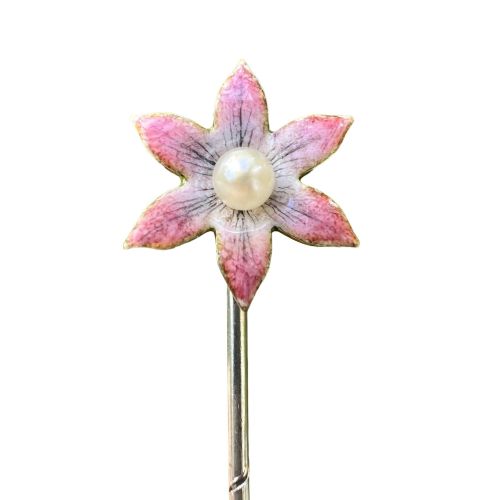


Vintage Pearl Tie Pin
A vintage pearl tie pin is a refined fastening born of the Victorian, Edwardian and Art Deco eras, prized for quiet elegance.
Vintage Pearl Tie Pin
A vintage pearl tie pin brings together the refined forms of the Edwardian, Victorian, and Art Deco periods into a single, wearable accessory. Buyers searching for this phrase encounter delicate stick pins, bar brooches, and convertible pieces designed to secure neckwear or lapels with understated grace.
The versions most commonly met on this page span the late nineteenth century through to the nineteen-twenties, showcasing pearls combined with precious metals and gemstones. Makers of these items often utilised gold, platinum, and enamel alongside natural pearls and diamonds to create lasting decorative utility.
How they were made
Craftsmen built these pieces using high-carat gold, platinum, and silver-topped gold, shaping secure mounts for natural pearls and small diamonds. Metalwork from the Victorian and Edwardian workshops relies on hand-forged pins, delicate millegrain edges, and secure box or C-catch clasps.
Enamel work and garnet settings appear alongside baroque and pink pearls, fixed with traditional glues and mechanical settings. The integration of platinum into later pieces allowed for finer, stronger wirework that held small gemstones securely without overwhelming the central pearl.
Vintage Pearl Tie Pin Retail Price Guide 2026
Typical asking prices for vintage pearl tie pin among the pieces listed under this phrase on Sellingantiques today, from the lower quarter to the upper quarter. They describe what is for sale here now, not the wider market.
Horseshoes gallop across the decades, reminding us that even the most delicate Edwardian pearls occasionally needed a lucky stable hand.
What varies in quality
Quality rests in the lustre and origin of the pearl, the weight of the gold or platinum mount, and the crispness of the surrounding ornamentation. Pieces featuring natural pearls paired with clean-cut diamonds or vibrant enamel sit at the upper end of the scale.
Lighter construction, replacement pins, or glued pearls rather than securely pegged ones separate simpler examples from finer workshop production. The balance between metalwork finesse and gemstone selection determines the lasting integrity of each piece.
The Vintage Pearl Tie Pin Glossary
- Bar brooch
- A narrow horizontal pin featuring central ornamentation. This form was especially popular during the Victorian and Edwardian periods.
- Stick pin
- A long pin with a decorative head designed to secure a cravat or tie. The pin shaft is typically made of sturdy base metal or gold.
- Millegrain
- A decorative jewellery technique involving a line of tiny beads along the edge of a metal setting. It softens the transition between metal and stone.
- Baroque pearl
- A pearl with an irregular, non-spherical shape. These organic forms were favoured in Art Nouveau and Edwardian designs for their unique character.
Vintage Pearl Tie Pin: Frequently Asked Questions
How do I wear a vintage pearl tie pin?
These pieces function traditionally as secure fastenings for neckties, cravats, or lapels. Many examples also serve well pinned to a hat or scarf.
Ensure the pin passes cleanly through the fabric weave without forcing the metal shaft. For heavier bar brooches, position them through double layers of fabric to keep the piece stable throughout the day.
How do I date an Edwardian pearl piece?
Look for platinum-topped gold settings, delicate openwork frames, and millegrain detailing typical of the early twentieth century. Motifs often include flowing floral lines or symmetrical geometric arrangements.
Consult the hallmarks and metal purity marks where present, as fifteen-carat gold and eighteen-carat white gold point directly to this era. Natural pearls set alongside small rose-cut or old-mine diamonds further confirm the period.
Are these pearls natural or cultured?
The pearls found in these antique pieces predate the widespread commercial adoption of cultured pearls in the nineteen-twenties. Many period items feature natural saltwater pearls formed organically.
Examine the lustre and surface texture under magnification to appreciate the organic formation of the nacre. Slight irregularities in shape and tone often indicate natural origin.
How should I care for antique pearl jewellery?
Pearls are organic gems sensitive to acids, cosmetics, and perfumes. Wipe them gently with a soft, dry cloth after wearing to remove any residue.
Store them separately in a lined box to prevent scratching from harder gemstones like diamonds. Avoid soaking antique pearl pieces in water, as older adhesives can weaken.