


Edwardian Rose Gold Pin
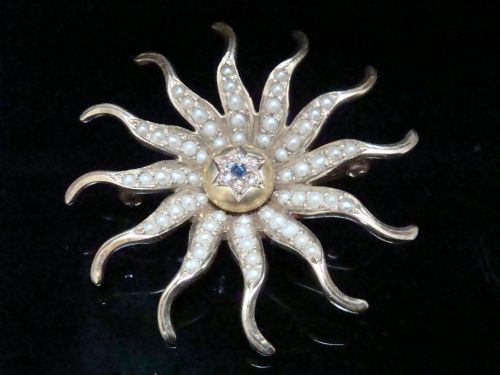
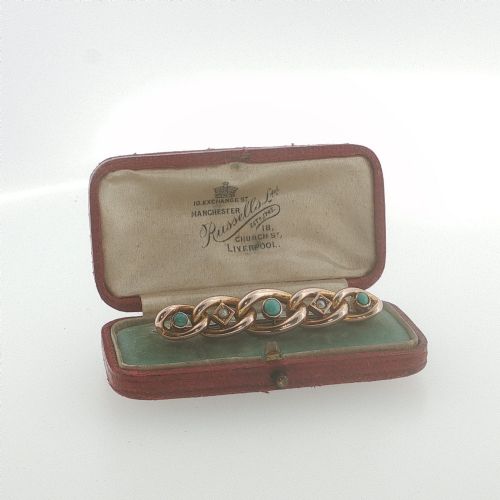
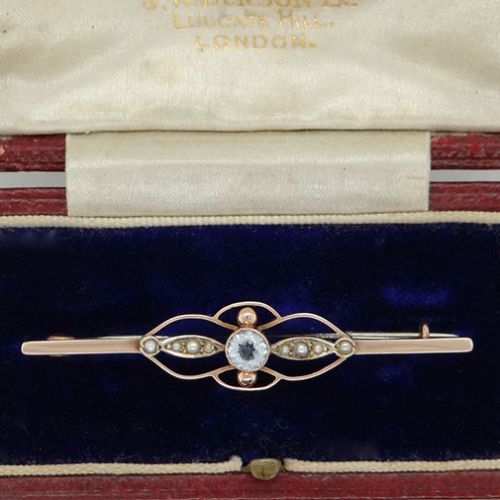
These edwardian rose gold pin examples are delicate jewels set with diamonds, seed pearls, and turquoise, offering a refined touch of the early twentieth century.
Edwardian Rose Gold Pin
When you search for an edwardian rose gold pin, you encounter brooches, stick pins, and bar brooches originating from the Edwardian period and adjacent eras like the Victorian and Art Deco years. These pieces combine warm rose gold with gems such as diamonds, rubies, turquoises, and seed pearls.
The selections on this page most commonly take the form of bar brooches and cluster brooches, often featuring motifs like swallows, crescents, leaves, and hearts. They reflect the transition from ornate nineteenth-century designs into lighter Edwardian styles and later Art Nouveau curves.
How They Were Made
The makers of these jewels utilised rose gold in nine-carat, fifteen-carat, and eighteen-carat purities, frequently pairing the warm metal with silver to securely mount diamonds. Stones were often rose-cut or set alongside pearls and coloured gems.
Craftsmanship in this period included detailed techniques such as plique-à-jour enamel, delicate seed pearl work, and secure bar settings. Goldsmiths balanced structural strength with airy, ornamental outlines.
What Varies in Quality
Quality depends upon the fineness of the goldwork and the matching of the gemstones, from evenly matched seed pearls to well-cut diamonds and rubies. Superior examples display intricate wirework, clean enamel application, and robust pin mechanisms.
The distinction between standard production and finer pieces lies in the artistry of the motif, such as detailed feather work on bird brooches or precise gemstone clusters, rather than mere size.
The Edwardian Rose Gold Pin Glossary
- Bar brooch
- A brooch featuring a narrow horizontal metal bar as its main structural element. These pieces often carry a central cluster or gemstone.
- Seed pearl
- A very small, naturally formed or cultured pearl used in delicate pavé or cluster settings. They provide a subtle, luminous contrast to rose gold.
- Rose-cut
- An antique gemstone cutting style with a flat base and a faceted dome that resembles an opening rosebud. This cut was favoured for its soft sparkle under candlelight.
- Plique-à-jour
- An enamelling technique where the enamel is applied without a backing, resembling miniature stained glass. It allows light to pass through the translucent coloured sections.
- Assay
- The testing of precious metal purity, often indicated by official hallmarks stamped onto the item. These marks help verify the origin and gold carat.
Edwardian Rose Gold Pin: Frequently Asked Questions
How do I wear an antique brooch today?
These pieces suit lapels, scarves, and heavy knitwear where the pin mechanism can secure firmly without damaging the fabric.
They also adapt well to being worn on hats or fastened at the neckline of a blouse.
Are these pins made entirely of rose gold?
Many examples combine rose gold with yellow gold, platinum, or silver, particularly where gemstones are set.
Silver was frequently used on the face of Edwardian brooches to brighten the appearance of diamonds.
How can I tell an Edwardian pin from a Victorian one?
Edwardian pieces generally favour lighter, more lace-like floral and geometric motifs, whereas Victorian items tend to be heavier and more substantial.
Stylistic overlaps occur frequently during transitional decades around nineteen hundred.
What is a stick pin used for?
Stick pins were traditionally worn in cravats, lapels, or ties to keep garments fastened in place.
Today they are often collected as miniature works of art or worn on jacket lapels.