
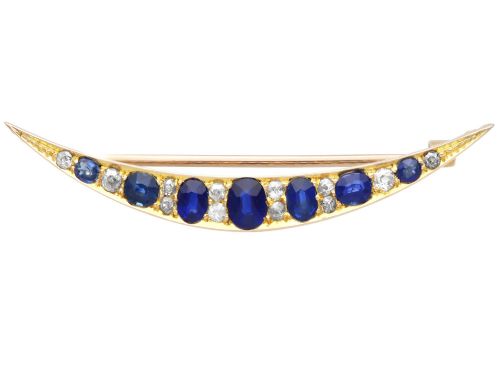
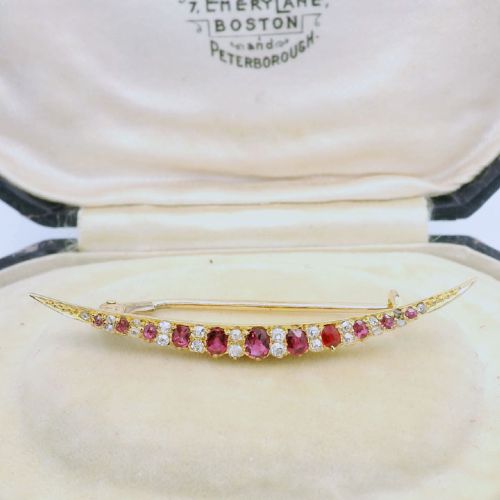


Gold Diamond Crescent Pin
These gold diamond crescent pin pieces combine precious stones and curved settings from the Victorian, Edwardian, and Art Deco eras to offer timeless charm.
Gold Diamond Crescent Pin
When you search for a gold diamond crescent pin, you are looking at antique brooches shaped in the classic lunar crescent motif. Most examples encountered here date from the Victorian, Edwardian, and later periods spanning 1890 to 1920.
Victorian and Edwardian iterations dominate the selection, often rendered in yellow gold, rose gold, or higher carat variations like 15ct and 18ct. The celestial motif remained exceptionally popular across multiple decades, resulting in varied stone configurations.
How they were made
The construction relies heavily on yellow gold, rose gold, and platinum-topped silver settings to house the gemstones securely. Goldsmiths utilised specific carat weights such as 15ct and 18ct alongside 9ct and 8ct alloys depending on the period.
Gemstones including diamonds, rubies, sapphires, and turquoise were hand-set into the curved metal framework. Jewelers arranged these stones in graduated sizes to accentuate the sweeping shape of the lunar motif.
Celestial motifs allowed Victorian makers to smuggle whole moonlit night skies onto a lady lapel.
What varies in quality
The grade of the piece depends on the scale and weight of the central gemstones, particularly larger rubies and diamonds. Heavier carat gold settings and integrated platinum toppings also distinguish finer examples from standard production.
Artisanal precision in the stone gradation and the symmetry of the crescent curve dictate the overall refinement of the jewel. The inclusion of rarer supporting stones like natural rubies or pearls elevates the standard of the work.
The Gold Diamond Crescent Pin Glossary
- Crescent brooch
- A piece of jewellery fashioned into the shape of a waxing or waning moon. This motif gained widespread popularity during the late nineteenth and early twentieth centuries.
- Victorian period
- The era spanning the reign of Queen Victoria, characterised by sentimental and symbolic jewellery designs. Pieces from this time often incorporated rich yellow gold and diverse gemstone clusters.
- Edwardian period
- The stylistic epoch following the Victorian age, known for lighter, more delicate mountings. Platinum and diamond combinations frequently define this refined aesthetic.
- Carat
- A unit used to measure the purity of gold or the weight of gemstones. Higher numbers indicate a greater proportion of pure gold in the metal alloy.
Gold Diamond Crescent Pin: Frequently Asked Questions
How do I wear a crescent brooch?
These brooches secure to clothing using a traditional pin and catch mechanism on the reverse. They work well pinned to lapels, collars, or heavy scarves.
Ensure the fastening is secure before wearing the piece on valuable fabrics.
How do I date a crescent brooch?
Dating relies on the materials used, such as platinum-topped silver for Edwardian pieces or heavy yellow gold for Victorian examples. The style of the gemstone settings and hallmarks also provide chronological clues.
Examining the pin mechanism can offer further evidence of the manufacturing period.
What stones accompany the diamonds?
Rubies are the most frequent companion stone, alongside sapphires, turquoise, and pearls. These coloured gems are typically alternated or clustered with diamonds along the crescent.
Thai rubies and natural rubies appear frequently among the listings.