
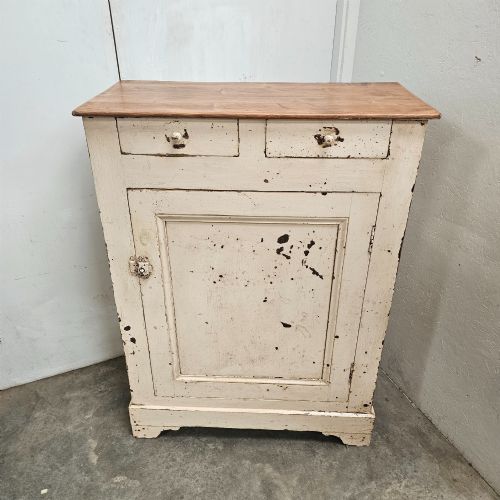
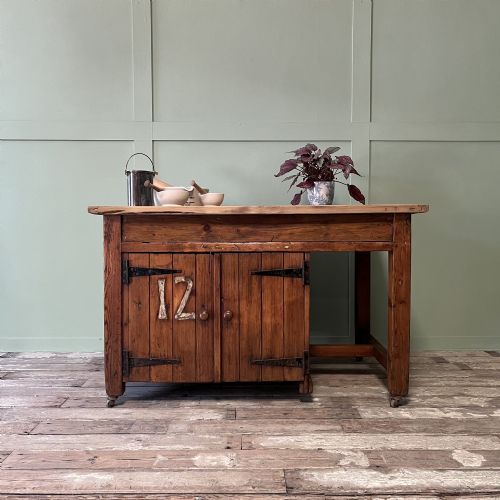
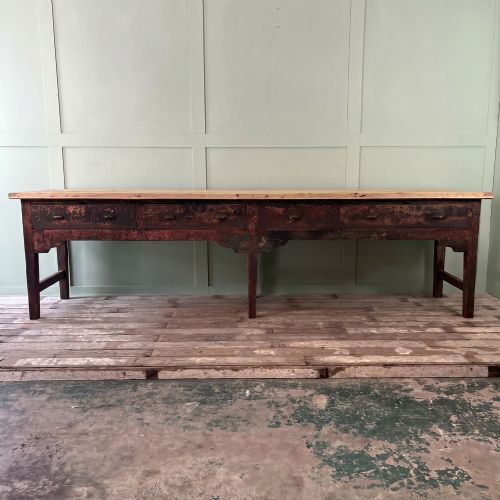
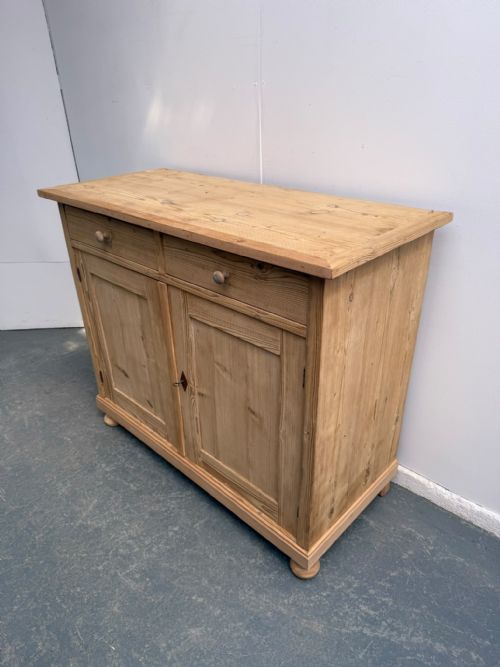
Vintage Pine Sideboard
A vintage pine sideboard brings honest utility and warmth to a room, offering practical storage through solid timber construction and simple vernacular forms.
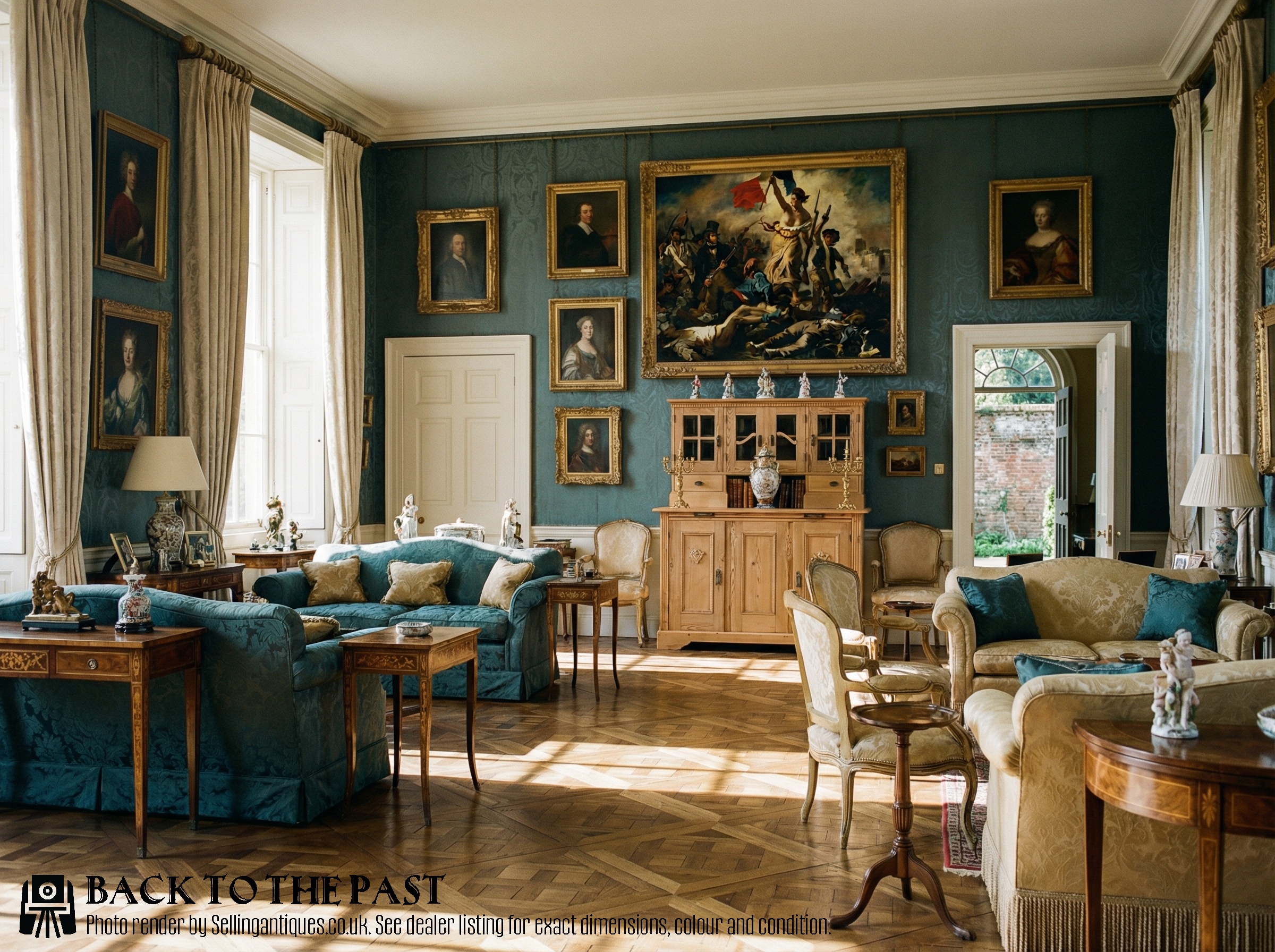
Vintage Pine Sideboard
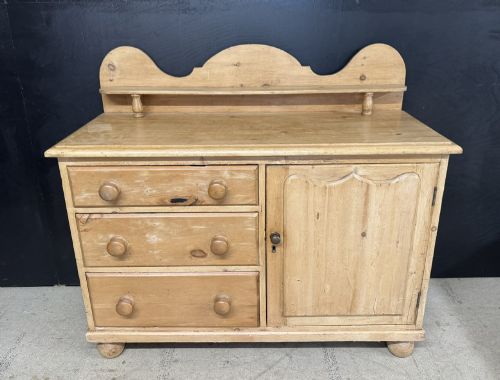
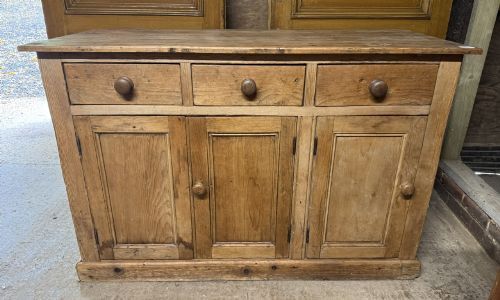
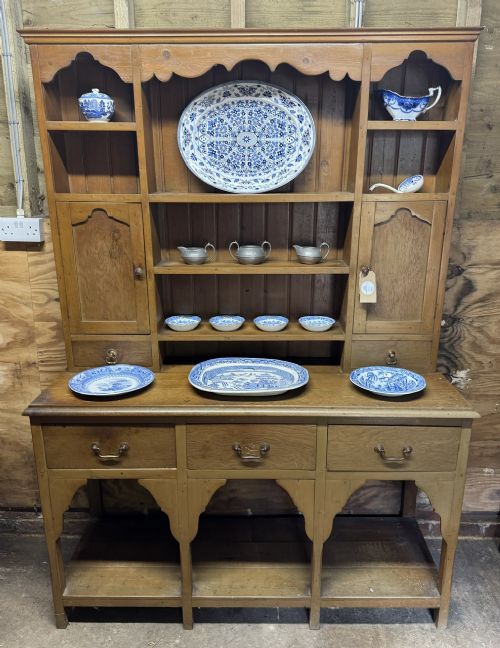
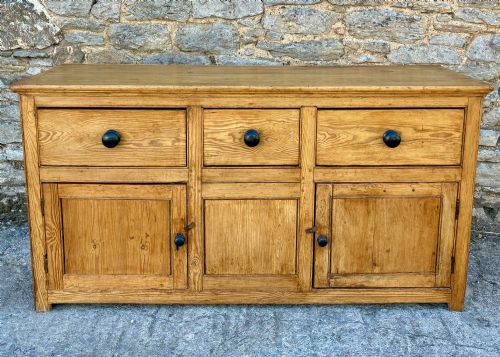
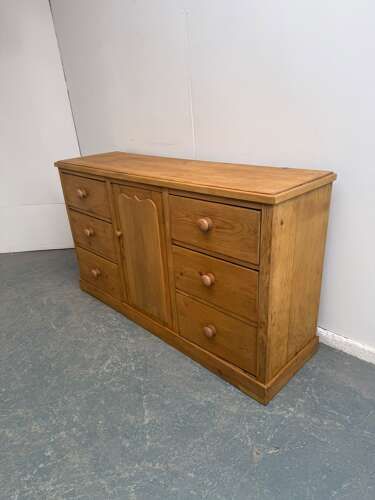
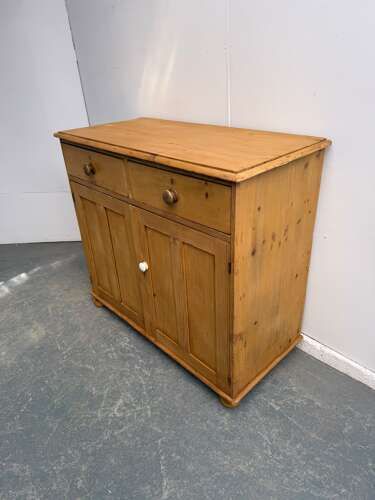
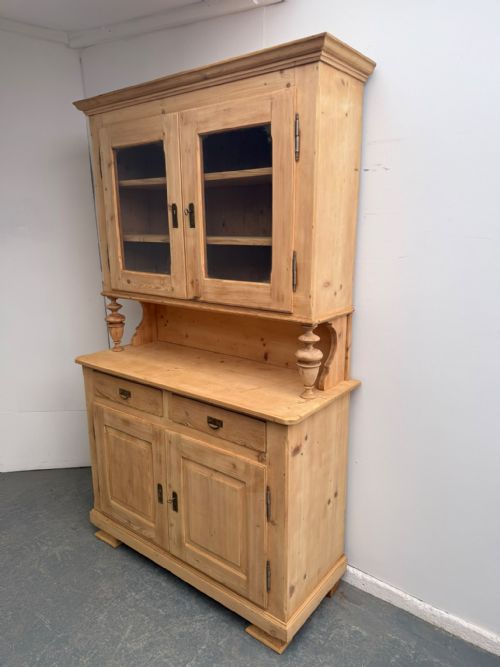
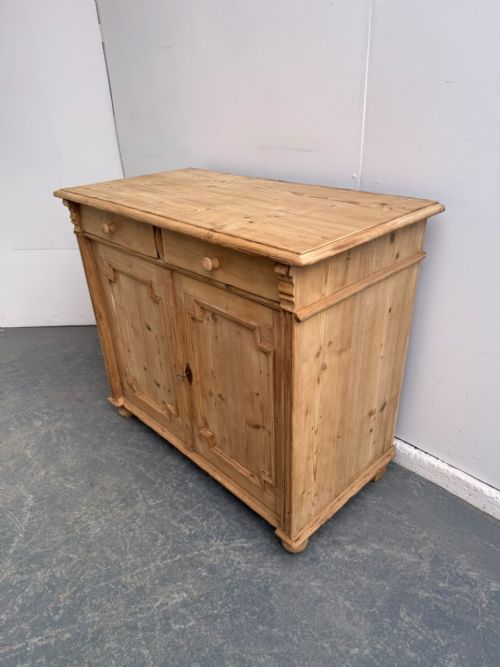
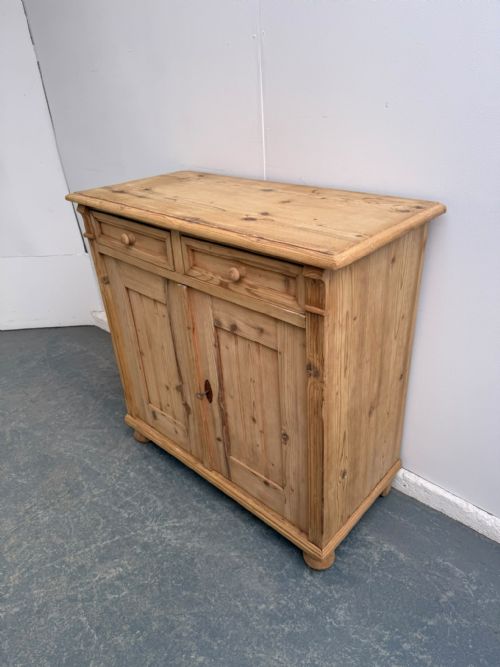
When you search for a vintage pine sideboard, you encounter a practical storage piece designed for domestic service, most frequently represented here by nineteenth-century dresser bases, cupboards, and serving tables. These pieces originate from various regional traditions, spanning English country workshops, Welsh farmhouses, and continental European homes.
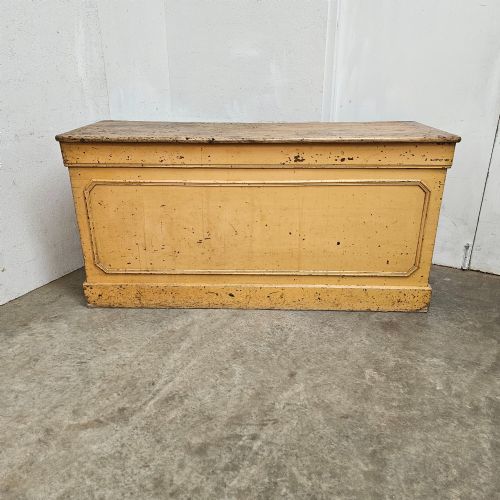
The selection ranges from large kitchen dresser bases with cupboards and drawers to low serving tables, prep tables, and specialised storage like shop counters or jam cupboards. Victorian examples appear frequently, alongside earlier Georgian items and pieces showing nineteenth-century craftsmanship in both waxed timber and original paint.
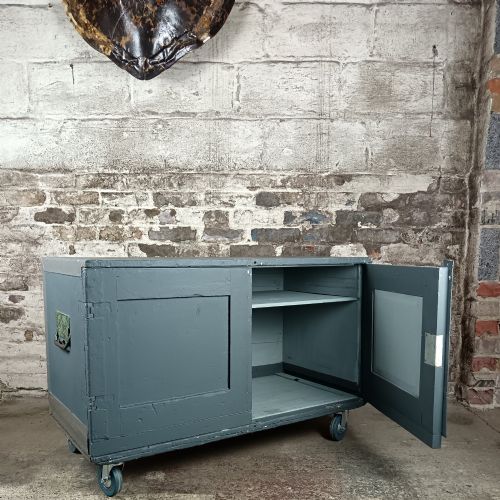
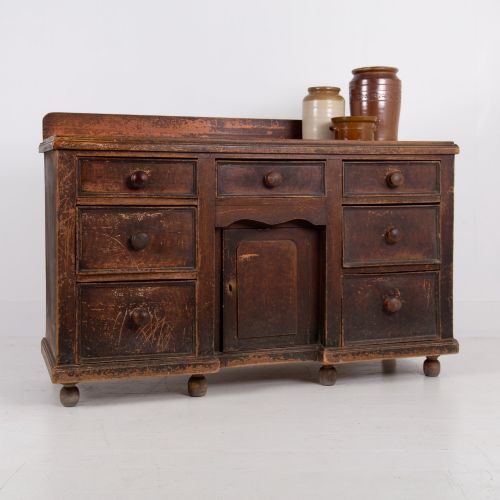
Regional variations include English country house designs, French provincial work, Scandinavian painted cupboards, and Hungarian storage furniture. Buyers find everything from unpainted waxed timber awaiting a new finish to surfaces retaining original green, black, or multi-layered paint.
Materials and construction methods
Makers relied primarily on pine, often supplemented by secondary woods like sycamore for prep surfaces, utilising durable joinery designed for heavy daily use in domestic and commercial kitchens. Timber surfaces were either left bare for waxing or finished with lead-based and oil paints that gained distinct character through decades of wear.
Hardware typically consists of brass or iron drawer pulls, hinges, and escutcheons, ranging from simple utilitarian brackets to campaign-style fittings. Construction techniques focus on sturdy carcase building, planked doors, and dovetailed drawers capable of withstanding the demands of farmhouse or shop environments.
Listings feature eighteenth, nineteenth, and early twentieth-century pieces, spanning Georgian, Victorian, and Edwardian periods in pine, painted wood, and brass.
Factors that distinguish quality
Quality in a vintage pine sideboard rests upon the integrity of the original timber, the proportion of the piece, and the survival of untouched surfaces. Superior examples retain their original backboards, handles, and structural stability without excessive timber replacement.
The character of the finish significantly influences desirability, whether through a deep, warm wax patina developed over generations or untouched original paint showing authentic traces of age. Proportion and internal configuration also matter, separating simple utilitarian boxes from well-balanced regional furniture with refined architectural mouldings.
The Vintage Pine Sideboard Glossary
- Dresser base
- The lower section of a kitchen dresser, featuring cupboards and drawers beneath a flat surface used for serving or food preparation.
- Patina
- The surface sheen and colour acquired by wood and paint through age, handling, and regular waxing over many decades.
- Potboard
- An open slatted lower shelf fitted beneath a dresser base, traditionally used for storing heavy pots and pans.
- Confiturier
- A small French cupboard traditionally used for storing pots of confit, usually fitted with a single door and drawer.
- Campaign chest
- A sectional piece of furniture designed to dismantle easily for transport, typically fitted with brass corners and recessed handles.
Vintage Pine Sideboard: Frequently Asked Questions
How do I clean a waxed pine sideboard?
Maintenance requires only a soft cloth and occasional application of traditional beeswax to nourish the dry timber and preserve the surface sheen. Avoid modern silicone polishes, which can build up and soften the underlying wax finish over time.
Gentle cleaning protects the accumulated patina that develops from decades of handling. Keeping the timber away from direct heat sources prevents the wood from drying out and splitting.
What is the difference between a dresser base and a sideboard?
A dresser base originates from a kitchen or dining environment as the lower half of a tall plate rack dresser, usually featuring deep drawers and cupboards. A sideboard evolved specifically for dining room service, often incorporating cellarette drawers or serving surfaces.
Both serve similar functional roles in modern homes for storing tableware and linens. Their proportions and internal layouts reflect the specific domestic tasks they were built to perform.
Can I paint an unpainted pine sideboard?
Unpainted pieces that are sold in bare wood or waxed finishes can accept new paint successfully after proper preparation. Many examples in the historical record were painted repeatedly as domestic fashions changed across different decades.
Preparing the surface involves cleaning away old wax residue so that primer and modern or traditional paint adhere securely. Choosing breathable paint formulations allows the historic timber to respond naturally to household humidity changes.
How do I date an antique pine piece?
Dating relies on examining construction marks, such as hand-sawn timber boards, handmade nails, and drawer dovetailing techniques. Machine-cut components and standardised screws generally indicate later nineteenth or early twentieth-century manufacture.
Style clues like proportions, moulding profiles, and regional design traits also help narrow down the period. Original paint layers and hardware can provide further evidence of when the piece was constructed and used.