
Vintage Oriental Table Lamp
These vintage oriental table lamp examples bring hand-painted porcelain, bronze, and lacquer into a room, offering rich texture and distinct global character.
Vintage Oriental Table Lamp
A vintage oriental table lamp search brings together decorative lighting formed from imported vessels, bronzes, and carved objects adapted for illumination. These pieces bridge centuries of design, drawing on 19th-century traditions as well as early 20th-century revivals.
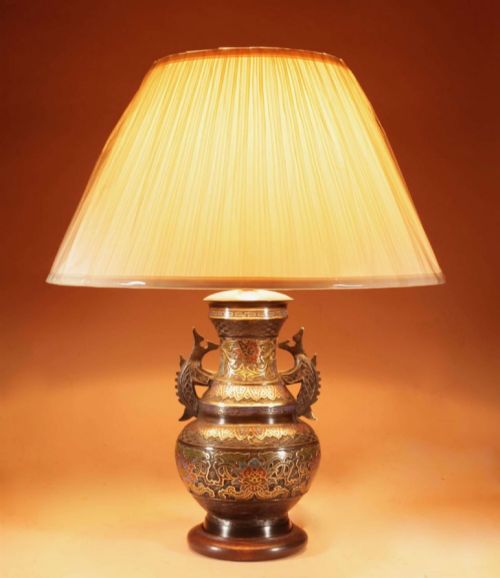
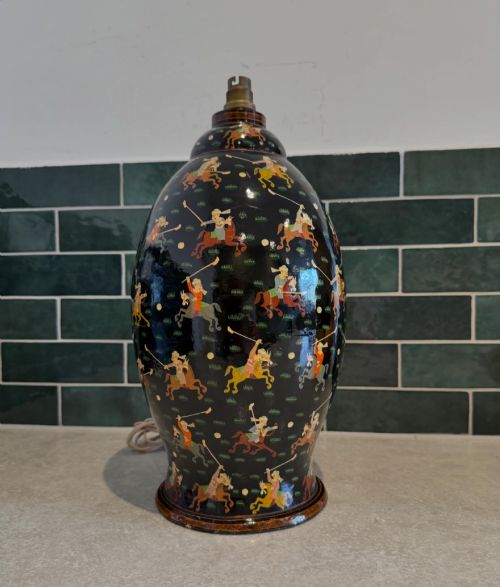
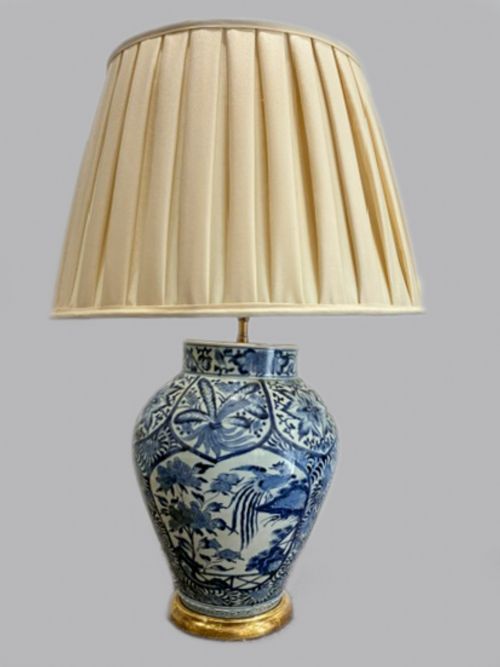
The most common versions met on this page include converted vases, cloisonné bronzes, and lacquered timber bases. Many originate from Japanese Meiji workshops or Kashmiri studios, spanning styles from Chinoiserie to Anglo-Indian.
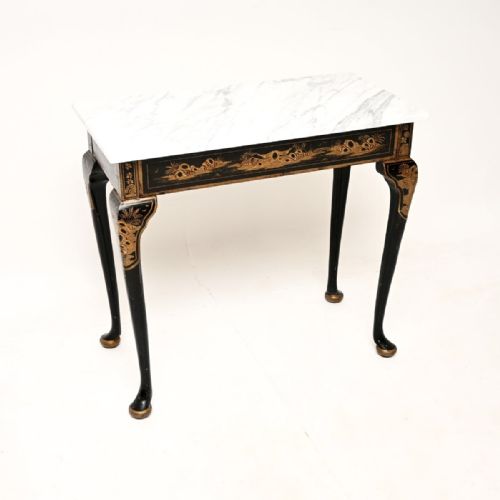
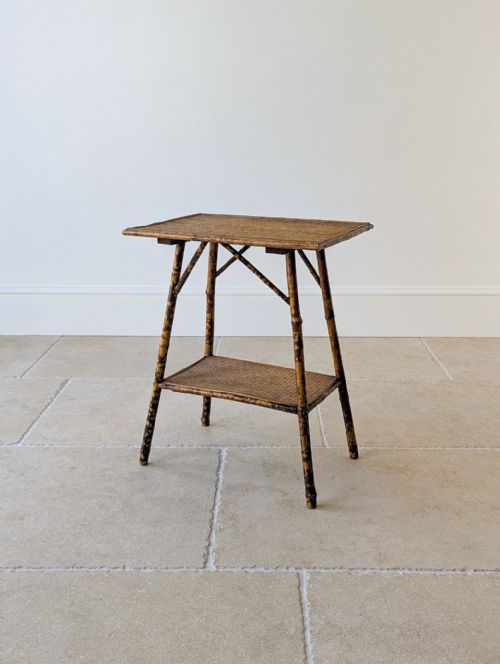
Alongside standard lighting, the selection occasionally encompasses occasional tables and plant stands designed to hold lamps. These varied forms reflect how diverse Asian and British colonial aesthetics influenced domestic interiors during the Victorian and Edwardian eras.
How They Were Made
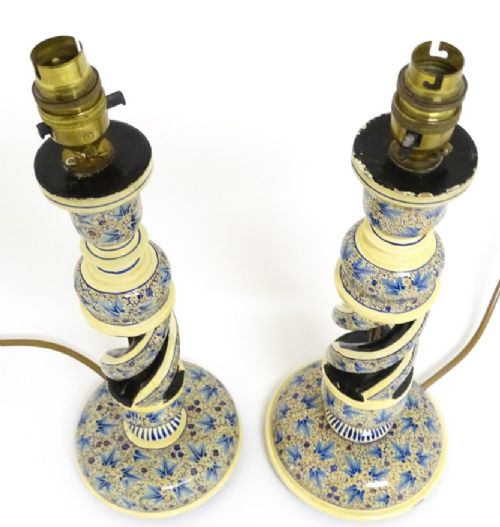
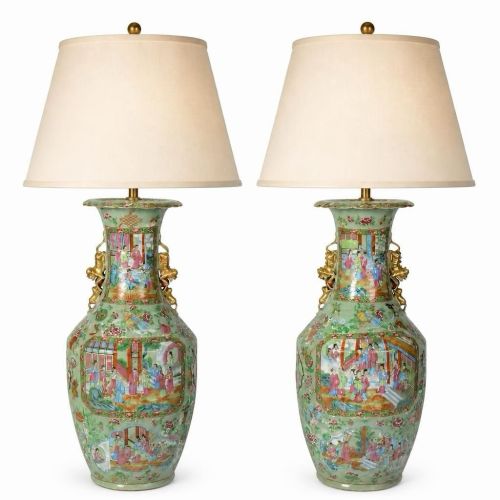
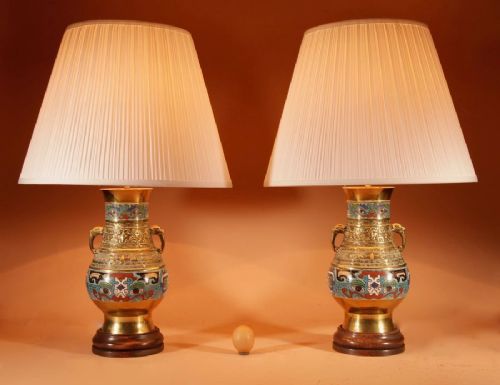
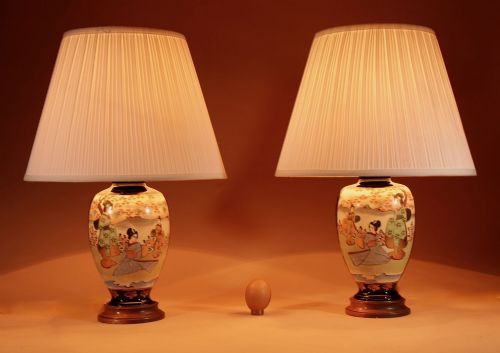
Makers utilised traditional hand-painting, cloisonné enamelling, and champlevé techniques directly onto metal and ceramic bodies. Porcelain vessels such as Satsuma and Famille Rose wares received detailed pigment work before undergoing conversion into functional light fittings.
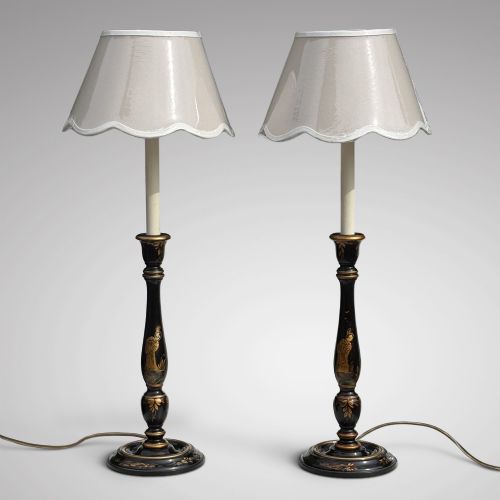
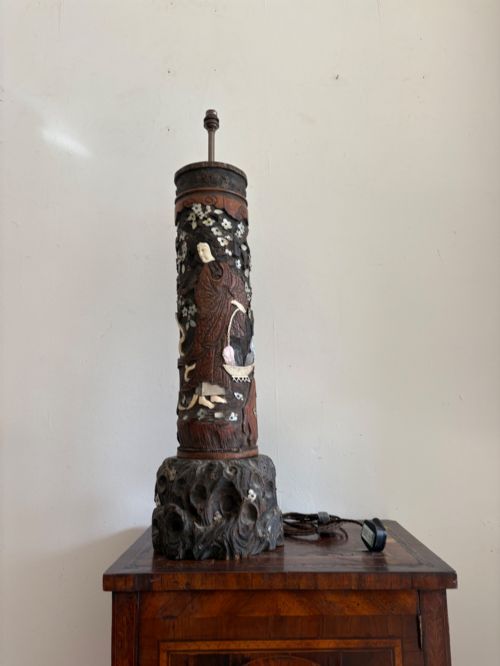
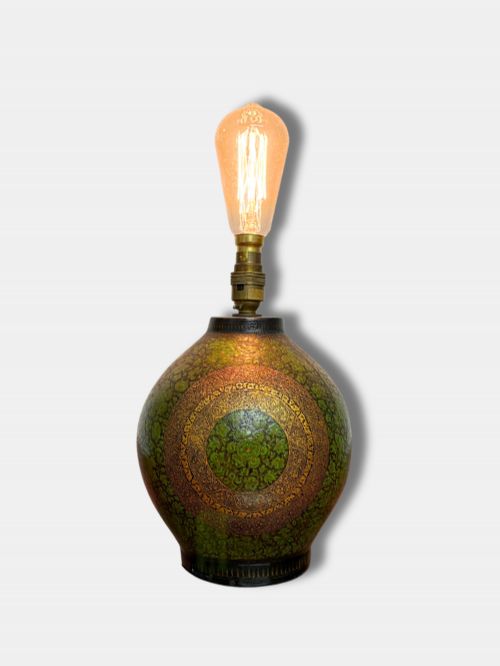
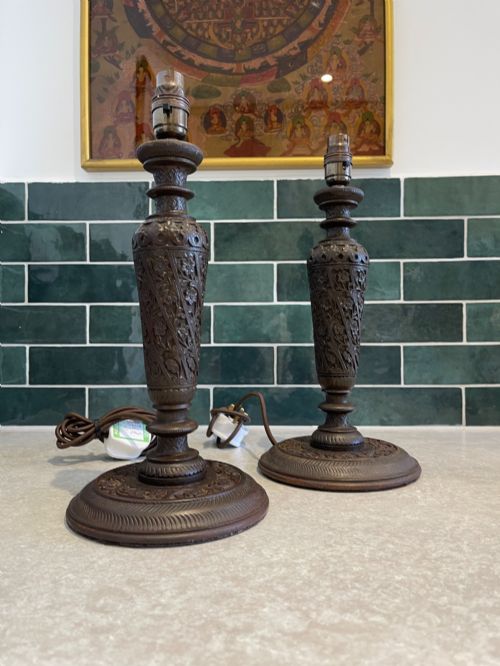
Wooden and papier-mâché bases relied on multi-layered lacquer applied over carved timber or compressed paper. Artisans then added gilt highlights, hand-painted motifs, or mother-of-pearl inlay to create rich surface depth.
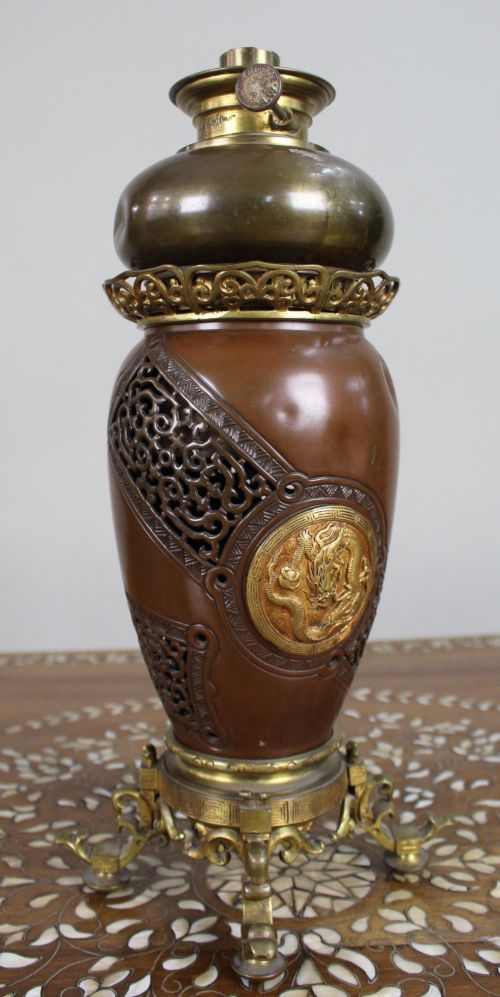
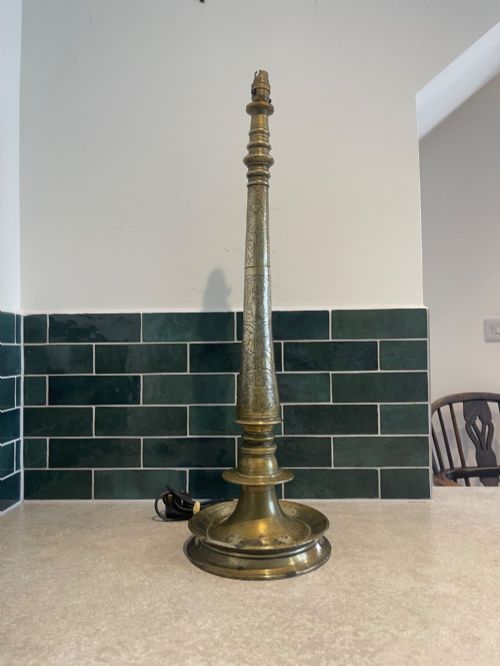
Metal components combined cast bronze, brass, and patinated white metal, frequently incorporating intricate pierced work or dragon motifs. These sturdy structural elements supported heavy ceramic bodies and elaborate fabric shades.
The site's listings feature materials spanning brass, lacquer, porcelain, and carved root wood across multiple periods.
What Varies in Quality
The standard of painting and enamel work dictates the visual success of each piece. Finer examples display precise brushwork, crisp cloisonné wire placement, and well-preserved gilt details that resist fading or heavy rubbing.
Material integrity and conversion quality also separate ordinary items from superior ones. Lamps created from original vases retaining their original form without damaging structural modifications stand apart from heavily altered pieces.
The Vintage Oriental Table Lamp Glossary
- Chinoiserie
- European artistic interpretation of Chinese and East Asian decorative styles, popular in lacquer furniture and decorative lighting. This aesthetic often employs motifs of pagodas, landscapes, and figures.
- Cloisonné
- Enamelling technique where thin metal wires form raised barriers on a metal base to hold coloured glass paste before firing. The resulting surface creates a patterned mosaic of bright colours.
- Satsuma
- Japanese pottery style featuring an ivory-crackled earthenware glaze decorated with polychrome enamels and gilt. These vessels frequently depict historical scenes or floral patterns.
- Champlevé
- Enamelling method where troughs or cells are hollowed out of a metal surface to receive enamel colours. This technique produces deep, durable decorative panels on bronze and brass objects.
- Famille Rose
- Chinese porcelain palette dominated by opaque pink or rose enamel colours introduced during the Qing dynasty. The soft floral and figural designs remain highly sought after by collectors.
Vintage Oriental Table Lamp: Frequently Asked Questions
How do I date a vintage oriental table lamp?
Dating relies on examining the base material, manufacturing marks, and the style of conversion wiring. Pieces often incorporate 19th-century vases or bronzes fitted for electricity during later decades.
Clues emerge from the patination of the metal, the composition of the lacquer, and whether the ceramic body shows age-related crazing in the glaze.
How should I clean a lacquered or painted lamp?
Maintain lacquered wood and papier-mâché surfaces by dusting gently with a dry, soft microfibre cloth. Avoid chemical sprays, abrasive sponges, or excessive moisture that can lift delicate hand-painted finishes.
Porcelain and bronze sections require similarly gentle care, using only dry or barely damp cloths to preserve patination and gilt highlights.
What interior styles suit these lamps?
These pieces complement eclectic, maximalist, and traditional rooms by introducing vibrant colour, metallic sheen, and intricate patterns. They work effectively on side tables, desks, or occasional furniture.
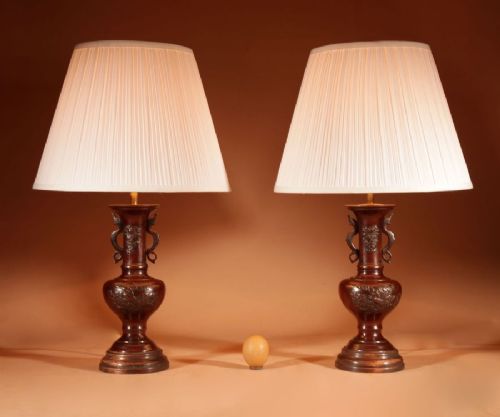
Pairing them with simple fabric shades allows the detailed decoration of the ceramic or bronze base to remain the focal point.