
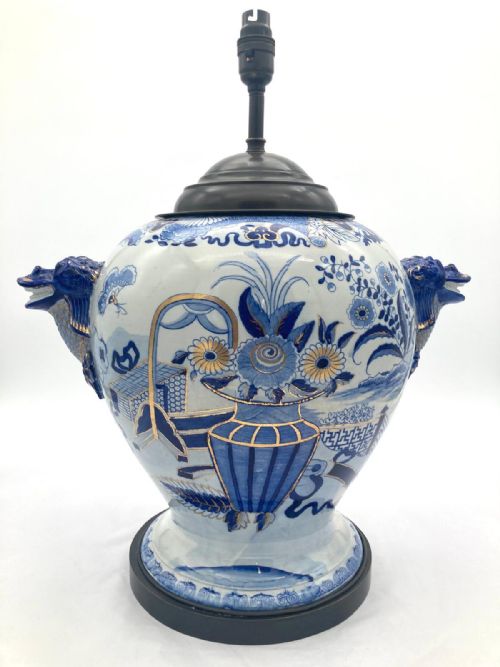


Oriental Ceramic Lamp Base
An oriental ceramic lamp base brings centuries of craftsmanship into a room, turning antique vases into striking domestic lighting.
Oriental Ceramic Lamp Base
An oriental ceramic lamp base transforms traditional East Asian vessels, ginger jars and baluster vases into functional domestic lighting for contemporary interiors. These pieces take forms originally thrown and fired in China and Japan, later adapted for electricity with various mounts.
Most examples encountered here date from the nineteenth century, though earlier eighteenth-century works and later twentieth-century interpretations also appear. They span distinct aesthetic traditions, including Chinese blue and white porcelain, celadon glazes and Japanese Satsuma wares.
How they were made
Potters shaped these bodies from fine porcelain, earthenware and ironstone, applying mineral pigments under or over the glaze before high-temperature firing. Artisans then integrated brass, gilt bronze or wood mounts to secure electrical fittings safely to the ceramic body.
Ginger jars once stored spices before finding a second life illuminating Victorian reading desks.
What varies in quality
Quality rests in the crispness of the hand-painted detail and the depth of the glaze, whether dealing with subtle celadon or vibrant famille rose palettes. The integration of metal mounts also matters, as heavy brass or ormolu hardware designed specifically for the vase elevates the piece above later, clumsy conversions.
Hicks and Meigh
The Oriental Ceramic Lamp Base Glossary
- Celadon
- A pale green jade-like glaze originating in China, prized for its subtle tone and crackle effect.
- Famille Rose
- A palette of opaque enamels dominated by pink, introduced to Chinese ceramics during the Qing dynasty.
- Satsuma
- Japanese earthenware pottery featuring a crackled ivory glaze decorated with intricate polychrome and gilt designs.
- Ginger Jar
- A wide-mouthed storage vessel with a rounded body, frequently converted into a table lamp.
- Imari
- A style of Japanese porcelain decorated in underglaze blue and overglaze red, gold and green.
Oriental Ceramic Lamp Base: Frequently Asked Questions
How do I choose the right size?
Consider the scale of the room and the piece of furniture where the lamp will sit. Larger vases require sturdy side tables and balanced shade proportions.
Measure the height from the base to the top of the harp to ensure the lighting sits at a comfortable level for reading or ambient glow.
Can I replace the electrical fitting?
Older conversions often use outdated wiring that benefits from modern rewiring for safety. A qualified electrician can update the internal cord without harming the antique ceramic body.
Retain the original brass or ormolu mounts whenever possible to preserve the historical integrity of the piece.
How do I clean an antique base?
Dust the porcelain surface gently with a dry, soft cloth on a regular basis. Avoid harsh chemical cleaners that might damage delicate overglaze enamel or gilt details.
Keep fabric and silk shades free of dust using a soft brush attachment on a low-suction vacuum.
Are these lamps stable?
The heavy ceramic construction provides a naturally solid foundation for daily use. Paired with substantial brass or wooden mounting, the centre of gravity remains low.
Place them on level surfaces away from heavy foot traffic to prevent accidental knocks.