
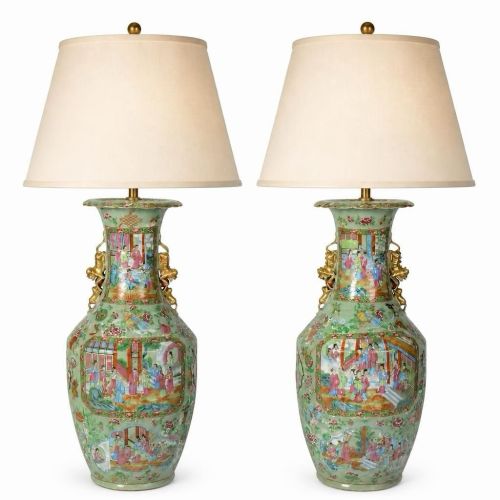
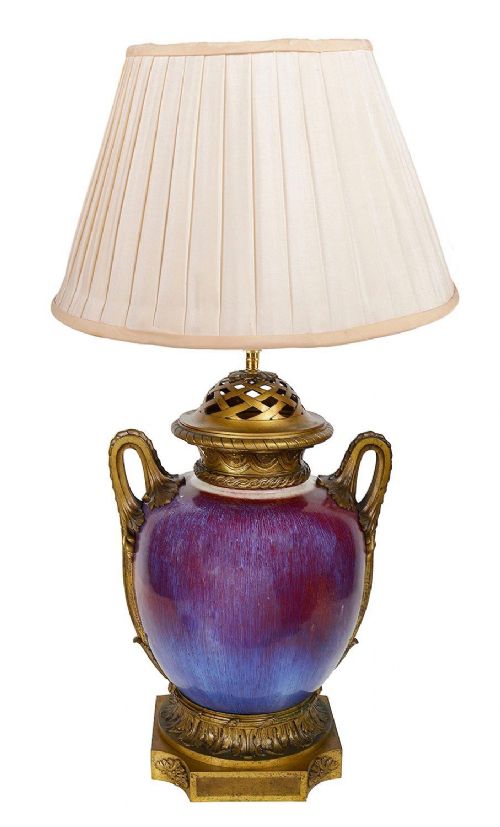


Qing Dynasty Porcelain Lamp
A qing dynasty porcelain lamp brings centuries of heritage into a room, offering striking forms and hand-painted artistry that collectors prize.
Identifying these lamps
When you search for a qing dynasty porcelain lamp, you encounter pieces originating from the nineteenth century. These items typically begin life as vases before being converted for modern illumination.
The selections on this page feature table lamps constructed from Chinese porcelain vessels. Makers mounted these porcelain bodies with materials such as brass, gilt bronze, hardwood, fabric, and silk.
Vessels displaying powder blue glazes or famille verte decoration dominate the available forms. These styles reflect the aesthetic traditions associated with the Qing dynasty and later Chinoiserie interpretations.
Materials and construction
Potters shaped the ceramic bodies from fine porcelain before applying coloured enamels and glazes by hand. Artisans then fired these vessels in kilns to achieve durable, vitrified surfaces.
Retail Price Guide 2026
Typical UK retail prices for qing dynasty porcelain lamp, calculated from the Sellingantiques database of over a million retail prices indexed since 2003. This retail price guide relies exclusively on Sellingantiques data; no external sources or auction records are used, so the figures do not describe the wider market.
Every listed piece on this site dates to the nineteenth century and incorporates porcelain combined with brass, gilt bronze, or hardwood.
Assessing quality
Quality rests upon the precision of the hand-painted enamel work and the richness of the underlying glaze. Powder blue surfaces and intricate famille verte motifs reveal the skill of the original decorator.
The integration of metal mounts and hardwood elements dictates the overall harmony of the piece. Superior conversions respect the original ceramic body without compromising its structural integrity.
The Qing Dynasty Porcelain Lamp Glossary
- Qing Dynasty
- The final imperial dynasty of China, lasting from sixteen forty-four until nineteen twelve. Pieces from this era display distinct traditional motifs and ceramic techniques.
- Famille Verte
- A green-dominant palette of enamel colours used in Chinese porcelain decoration. Artisans applied these hues over the glaze to create detailed pictorial scenes.
- Powder Blue
- A mottled blue ceramic glaze applied by blowing cobalt through a bamboo tube onto the porcelain body. This technique creates a speckled, textured appearance across the surface.
- Gilt Bronze
- Copper alloy treated with a layer of gold to give a lustrous metallic finish. This material frequently appears in the mounts and hardware supporting the ceramic bodies.
- Chinoiserie
- European artistic style reflecting Chinese aesthetic influences. This decorative approach inspired local interpretations of Asian forms during the eighteenth and nineteenth centuries.
Frequently Asked Questions
What is a qing dynasty porcelain lamp?
These pieces are nineteenth-century Chinese porcelain vessels that have been adapted to function as table lamps. They combine historic ceramic bodies with structural mounts and electrical fittings.
Craftsmen often utilised vases featuring powder blue glazes or famille verte enamel decoration for these conversions.
How do I date these lamps?
Dating relies on examining the characteristics of the porcelain body, the style of the hand-painted decoration, and the materials used in the mounts. Nineteenth-century examples show specific potting techniques and enamel palettes associated with the period.
The integration of brass, gilt bronze, and hardwood also provides clues regarding the age of the conversion.
Are these lamps fragile?
The ceramic bodies require careful handling due to their age and material composition. Placing the lamps on stable surfaces helps prevent accidental tipping.
Regular dusting with a soft cloth maintains the glazed porcelain and painted enamel surfaces without causing damage.
Where should I place these lamps?
These table lamps suit sideboards, consoles, and desks where their decorative forms can be appreciated. The fabric or silk shades provide soft illumination suited to living spaces and studies.
Their substantial presence makes them effective focal points within a room.