
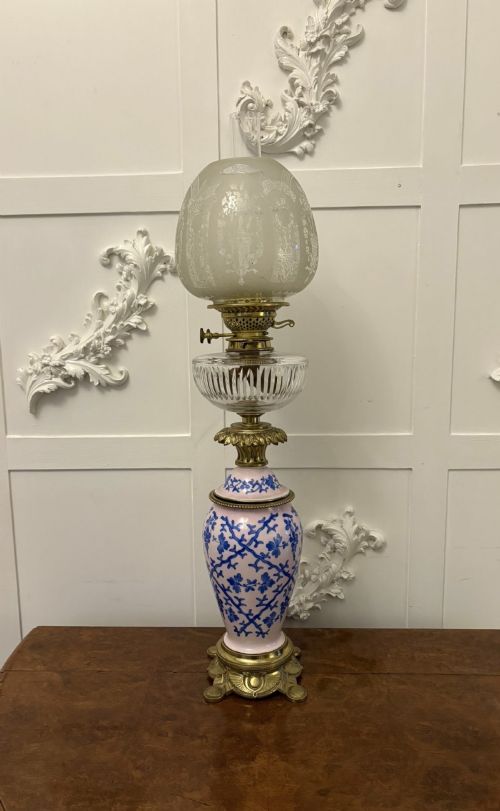
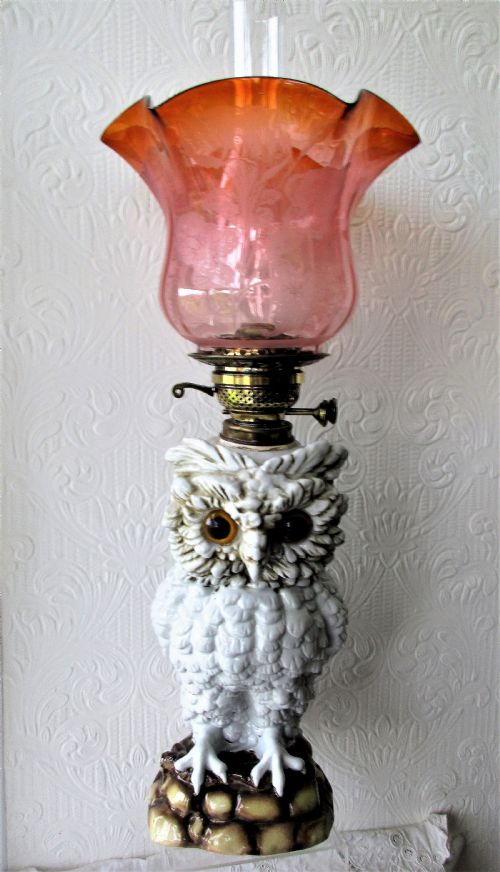


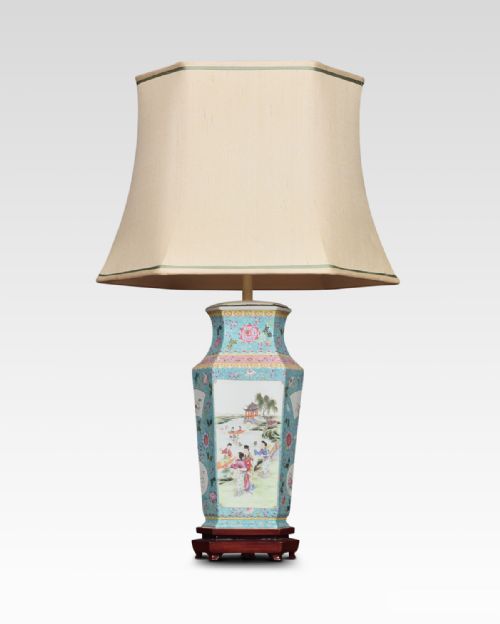
Pink Porcelain Table Lamp
A pink porcelain table lamp brings soft colour and layered pattern into a room through converted vases, oil fonts and perfume vessels.
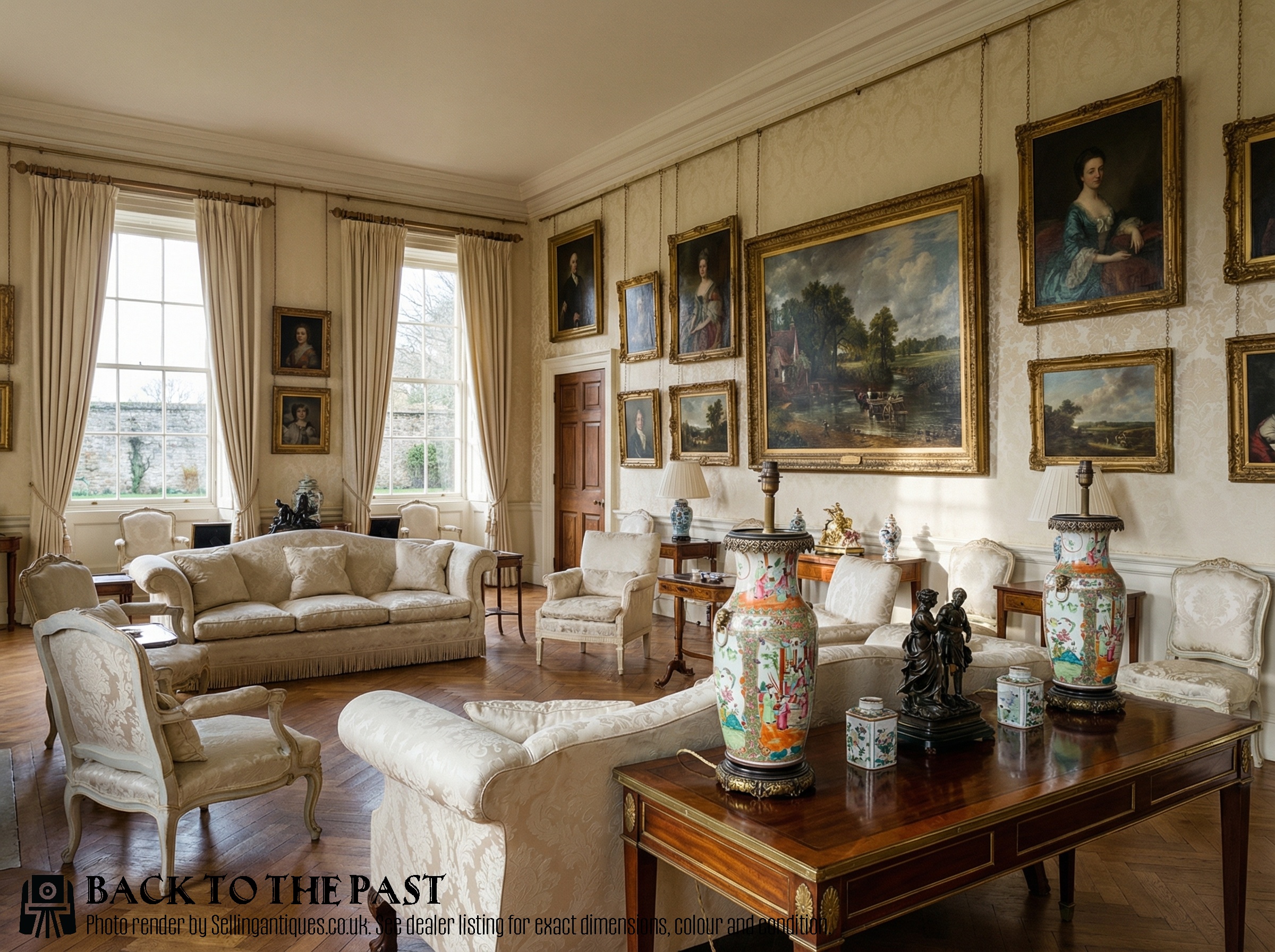
Pink Porcelain Table Lamp
A pink porcelain table lamp typically originates from nineteenth-century Chinese export workshops or European factories imitating eastern palettes. The selection relies heavily on converted Famille Rose and Rose Medallion ginger jars and vases alongside Victorian oil lamps.
Buyers encounter numerous pairs and single statement pieces spanning the Victorian era, the French Rococo Revival, and Art Deco periods. Many examples began life as decorative vessels or oil lamps before later conversion into modern electrical fittings.
The form spans straightforward ginger jar bases to elaborate figural compositions incorporating gilt bronze mounts, enamel details and fabric shades.
Materials and construction
Makers utilised hard-paste and soft-paste porcelain bodies painted with enamels, dominated by pink tones derived from gold chloride. Artisans often combined these ceramic bodies with cast brass, gilt bronze mounts and wooden bases to provide stability.
Many items incorporate converted brass oil lamp burners or later wiring threaded through drilled ceramic bases. Hand-applied enamel work and gilt highlights frequently decorate the surface alongside applied silk or fabric shades.
Pink Porcelain Table Lamp Retail Price Guide 2026
Typical asking prices for pink porcelain table lamp among the pieces listed under this phrase on Sellingantiques today, from the lower quarter to the upper quarter. They describe what is for sale here now, not the wider market.
The listings feature nineteenth-century Chinese export ceramics alongside Victorian oil lamps and French Rococo Revival pieces.
What separates the best from the rest
Quality rests upon the crispness of the enamel painting and the original purpose of the ceramic body. Hand-painted detail on nineteenth-century Chinese export porcelain demonstrates finer brushwork than later mass-produced alternatives.
The integration of metal mounts also dictates standard, where cast gilt bronze and heavy brass fittings elevate a piece above standard domestic conversions. Preservation of the glaze without hairline cracks or heavy restoration remains central to the standing of any lamp.
Argilor Paris·Sitzendorf
The Pink Porcelain Table Lamp Glossary
- Famille rose
- A palette of Chinese porcelain enamels featuring an opaque pink colour derived from colloidal gold. This grouping emerged during the Qing dynasty and dominated export wares.
- Rose medallion
- A distinctive style of Canton porcelain featuring divided panels filled with figures, birds and flowers surrounding a central medallion. The panels are typically framed in green and gold.
- Ginger jar
- A wide-shouldered ceramic storage vessel originally used for spices that frequently forms the body of a table lamp. These jars often feature matching covers or converted tops.
- Gilt bronze
- Copper alloy treated with a gold amalgam layer to provide a durable golden finish. Makers employed this material for mounts and bases on French porcelain pieces.
- Oil lamp
- A lighting device utilising a wick and oil reservoir that forms the basis of many antique ceramic conversions. These retained fonts often display brass burners.
Pink Porcelain Table Lamp: Frequently Asked Questions
Are these lamps converted from old vases?
Many examples began as nineteenth-century Chinese export vases, ginger jars or oil lamps before electricians fitted them for modern table use. This practice preserves decorative ceramic forms while adapting them for contemporary interiors.
Makers frequently drilled the base or fitted brass collars to secure the electrical hardware without damaging the main painted body.
How do I identify Canton and Famille Rose porcelain?
Famille Rose pieces rely on an opaque pink enamel wash combined with greens, yellows and blues to render floral and figural scenes. Rose Medallion is a specific sub-category of Canton porcelain featuring segmented panels filled with intricate motifs.
Both styles date primarily through the nineteenth century and reflect intense trade between China and European markets.
Do antique porcelain lamps come in pairs?
The selection includes several matched pairs alongside individual statement pieces. Pairs typically originate from large garnitures of nineteenth-century vases converted simultaneously or later matched by decorators.
Matching pairs suit placement on twin sideboards or bedside tables, while single lamps often serve as desk or reading lights.
How should I clean a painted porcelain lamp base?
Dust the ceramic surface gently with a dry microfiber cloth to protect the hand-painted enamel and gilt highlights. Avoid harsh chemical cleaners or soaking the body, particularly around drilled areas and metal mounts.
Check the electrical fittings periodically and consult a professional restorer for any loose brass components.