


Famille Rose Vase Lamp
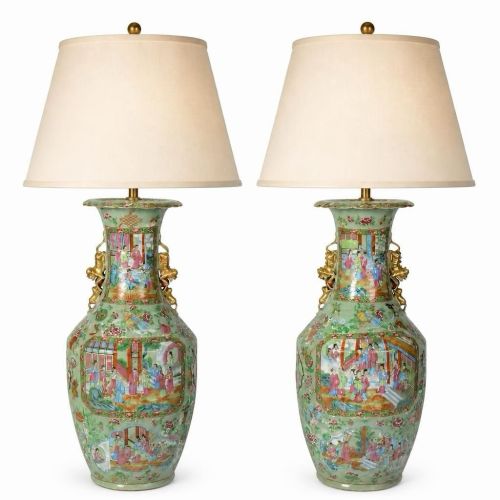
These famille rose vase lamps bring vibrant enamel palettes and converted porcelain forms straight into your interior.
What they are
A famille rose vase lamp repurposes a traditional Chinese porcelain vessel into an electrified or oil-burning table lamp, often utilising pieces originating from the nineteenth century or the early twentieth century. These items combine hand-painted oriental ceramics with fitted mounts, pairing classical forms like baluster bodies with functional household lighting.
You are most likely to encounter Cantonese export wares featuring characteristic pink enamels alongside greens, blues and gilt detailing. Many listings present these pieces either individually or as matched pairs, frequently incorporating twentieth-century fabric shades or structural brass elements.
The underlying ceramics hail from periods such as the Qing dynasty and subsequent late nineteenth-century export eras. Surviving examples demonstrate how traditional vases were adapted for Western domestic interiors through professional conversion into functional table lamps.
How they were made
The foundational vessels consist of thrown porcelain shaped into baluster or wider vase profiles, painted by hand using opaque enamel pigments. Artisans applied rose-coloured mineral oxides alongside secondary tones before firing the pieces to fuse the decoration permanently to the ceramic body.
Conversion into a lamp typically involves the addition of metal components, most notably brass mounts affixed to the base or neck to secure electrical or oil-burning hardware. Secondary materials such as carved wooden bases and fabric shades complete the assembly of these decorative objects.
Retail Price Guide 2026
Typical UK retail prices for famille rose vase lamp, calculated from the Sellingantiques database of over a million retail prices indexed since 2003. This retail price guide relies exclusively on Sellingantiques data; no external sources or auction records are used, so the figures do not describe the wider market.
Several vases began their lives holding oil before industrious hands traded wicks for wiring to brighten Victorian drawing rooms.
What varies in quality
Quality rests heavily upon the crispness and complexity of the enamel painting across the porcelain surface. Finer examples display meticulous brushwork and rich gilding, whereas simpler versions rely on heavier, less detailed application.
The integrity of the original porcelain vessel and the discretion of its conversion dictate overall refinement. Expertly fitted brass mounts and undamaged ceramic bodies elevate a piece far above heavily altered or structurally compromised specimens.
The Famille Rose Vase Lamp Glossary
- Famille rose
- A major palette of Chinese porcelain enamels introduced in the eighteenth century, distinguished by its opaque pink or rose colour derived from colloidal gold. This palette allowed for nuanced shading and detailed floral or figural rendering.
- Canton
- A major port in southern China from which vast quantities of porcelain were exported to Western markets during the nineteenth century. Wares decorated here often feature crowded panels of figures, birds and flowers.
- Baluster vase
- A tall vase form characterised by a rounded body that tapers toward the base and swells near the lower centre, resembling the shape of a baluster in a railing. This silhouette provides a stable and visually balanced foundation for table lamps.
- Chinoiserie
- The European interpretation and imitation of Chinese and East Asian artistic traditions, particularly in decorative arts, architecture and garden design. It reflects Western fascination with oriental motifs during the nineteenth century and earlier.
- Qing Dynasty
- The final imperial dynasty of China, ruling from sixteen forty-four until nineteen twelve, encompassing the production eras of many export porcelain vases. Pieces from this period exhibit distinct stylistic shifts across successive imperial reigns.
Frequently Asked Questions
What is a famille rose vase lamp?
A famille rose vase lamp is a decorative table lamp created by converting a hand-painted Chinese porcelain vessel into a functional light fitting. These pieces combine traditional nineteenth-century export ceramics with fitted brass mounts and wiring.
They serve as focal points in interior schemes, blending historic Asian craftsmanship with practical domestic lighting.
How do I date these lamps?
Dating relies upon examining the characteristics of the porcelain body, the style of the enamel painting, and any accompanying metal mounts. Nineteenth-century examples often display the distinctive palette and heavy potting typical of Canton export wares.
Secondary indicators include the style of wiring, the composition of the brass fittings, and any applied wooden bases that suggest when the conversion took place.
Are these lamps sold as pairs?
Many listings feature matched pairs of lamps, reflecting their original creation as decorative garniture vases before their conversion. Single lamps also appear frequently within the available selection.
Pairs offer symmetry for sideboards or mantelpieces, while single pieces function well as accent lighting on smaller tables.
How do I care for my lamp?
Maintenance involves gentle dusting of the porcelain surface using a soft, dry cloth to protect the delicate enamel and gilt decoration. Avoid harsh chemical cleaners or abrasive materials that could damage the antique glaze.
Electrical components should be checked periodically by a qualified professional to ensure safety, particularly on older conversions.