


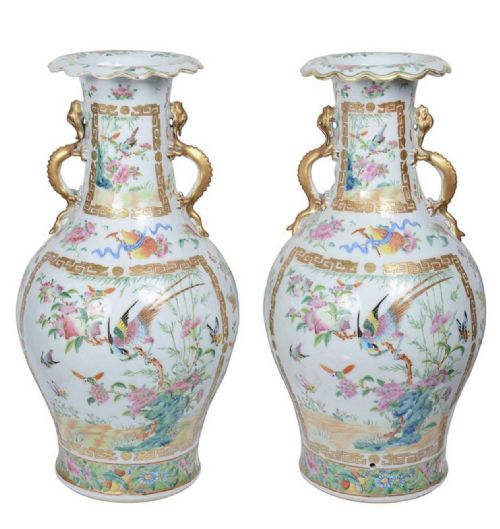

Chinoiserie Baluster Lamp
A chinoiserie baluster lamp brings decorative eastern motifs and graceful curved profiles into a room.
Chinoiserie Baluster Lamp
When you search for a chinoiserie baluster lamp, you encounter conversion pieces formed from earlier vases alongside items made specifically for illumination. The typical form on this page follows a curvaceous baluster silhouette, widening gracefully toward the lower section before tapering.
The evidence shows examples stretching from the eighteenth century through the Edwardian era and into the nineteen-thirties. You will frequently find pairs mounted with brass or ormolu hardware, utilising porcelain, ceramic, and tin-glazed earthenware bodies.
Origins span across Chinese export workshops, nineteenth-century European factories, and traditional periods including the Qing dynasty. These lighting pieces merge decorative ceramic artistry with functional interior illumination.
How they were made
Makers shaped clay into the characteristic baluster profile before applying intricate hand-painted designs using palettes such as famille verte, famille rose, and powder blue. Artisans often incorporated gold leaf detailing to highlight the decorative scenes and borders.
Many ceramic bodies received bespoke metal additions, featuring cast brass or ormolu mounts that secured the base and collar. Workshops frequently paired these mounted porcelain vessels with tailored fabric shades to complete the lighting fixture.
Listings span multiple decades and centuries, featuring materials such as porcelain, ormolu, brass, and tin-glazed earthenware across table lamp and vase forms.
What varies in quality
The sophistication of the painted surface work dictates much of the distinction across these lamps. Finely executed brushwork depicting complex floral bands or figural scenes separates standard production from superior pieces.
The quality of the metal mounts plays a significant role in the overall execution. Precision in the cast ormolu and brass fittings, combined with the harmonious integration of the ceramic body, defines the finer examples.
The Chinoiserie Baluster Lamp Glossary
- Baluster
- A vertical architectural form with a rounded swelling lower portion that tapers toward the top. This distinctive silhouette provides the foundational shape for many traditional vases and lamps.
- Famille Verte
- A porcelain decoration style dominated by green enamel pigments. This palette appeared widely on nineteenth-century wares alongside other coloured enamels.
- Ormolu
- Gilded bronze mounts applied to furniture and decorative objects. These cast metal fittings frequently secure the base and upper hardware of porcelain lamp conversions.
- Tin-Glazed Earthenware
- Pottery coated with a tin-opacified glaze that provides a white surface for painted decoration. This material underpins traditional Delft pieces found in early lighting forms.
- Rose Medallion
- A distinct style of Chinese export porcelain featuring segmented panels filled with figures, birds, and flowers. The palette relies heavily on rose pink enamels combined with gilt details.
Chinoiserie Baluster Lamp: Frequently Asked Questions
What is a chinoiserie baluster lamp?
These pieces are decorative lighting fixtures created from ceramic and porcelain vessels, often utilising converted vases with curved profiles. They incorporate European interpretations or direct imports of Chinese design traditions.
The form relies on a characteristic baluster shape that widens near the base. Many examples feature detailed hand-painted scenes paired with metal mounts.
How were these lamps used?
Historical interiors utilised these ceramic pieces primarily to provide ambient lighting on side tables and mantelpieces. Their decorative presence added colour and pattern to formal rooms.
Over time, many traditional vases received electrical wiring and hardware conversions to function safely as modern table lamps.
How do I live with one?
Place these lamps on sturdy wooden side tables or chests where their painted ceramic bodies can catch the light. Pairing them with a complementary fabric shade helps balance the height and visual weight of the ceramic base.
Keep them away from busy traffic areas to protect the painted surfaces and metal mounts from accidental knocks.
How do I identify the period?
Dating relies on examining the ceramic body, the style of the painted enamels, and the characteristics of the metal mounts. Nineteenth-century examples often display rich famille verte or rose medallion palettes alongside ormolu hardware.
Earlier eighteenth-century pieces typically show tin-glazed earthenware or Delft characteristics, while later twentieth-century items reflect specific porcelain factories and export styles.