
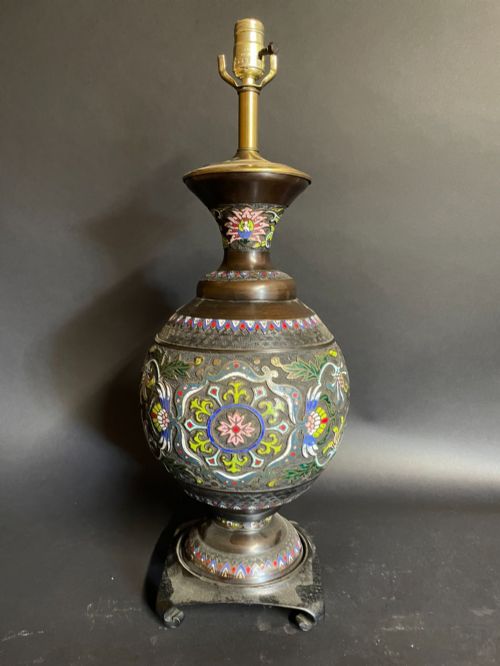


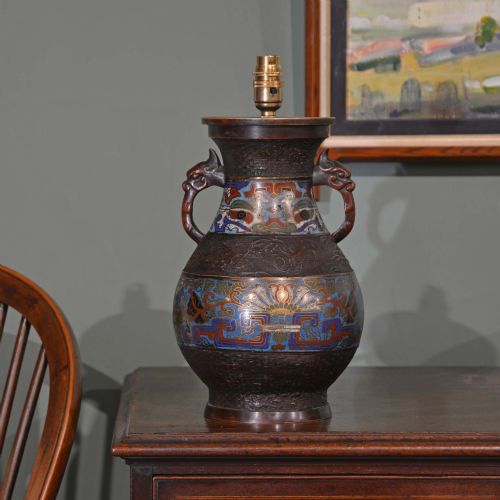
Chinese Urn Table Lamp
A chinese urn table lamp brings together sculpted ceramic bodies and domestic illumination, offering a focal point of Eastern ornament for a room.
Chinese Urn Table Lamp
A chinese urn table lamp transforms traditional ceramic vessels into functional lighting, drawing on centuries of ceramic artistry. The pieces found here predominantly feature forms from the nineteenth century, utilising porcelain and bronze bases.
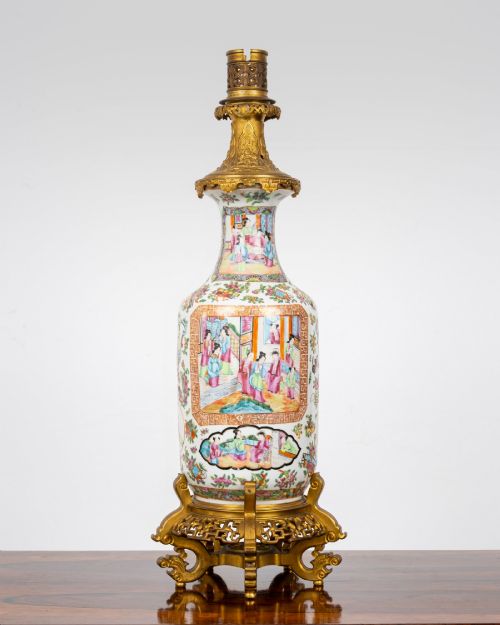
Buyers encounter blue and white designs, celadon glazes, and rich famille rose or rose medallion decoration alongside bronze mounts. These pieces often originate from Qing Dynasty traditions or later export markets.
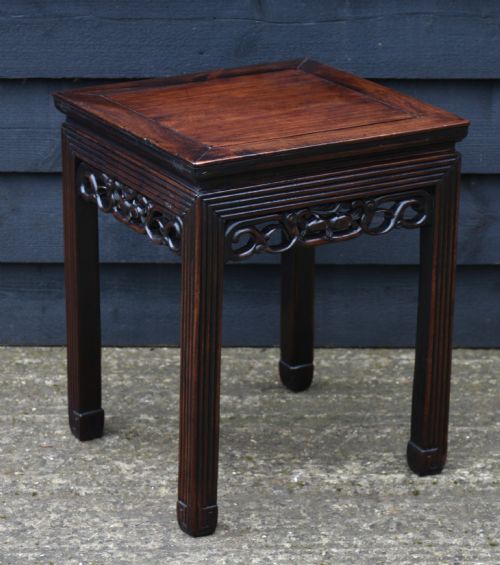
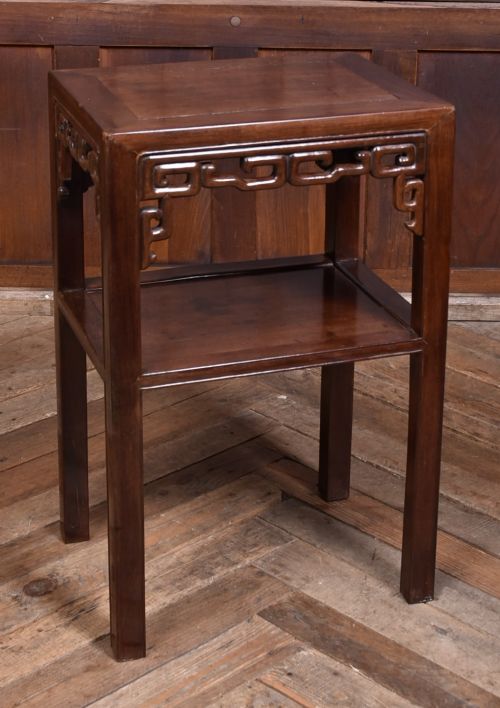
Alongside converted vessels, the category includes companion stands in carved hardwood and marble, designed to support display items or lighting fixtures within a traditional interior.
Materials and construction
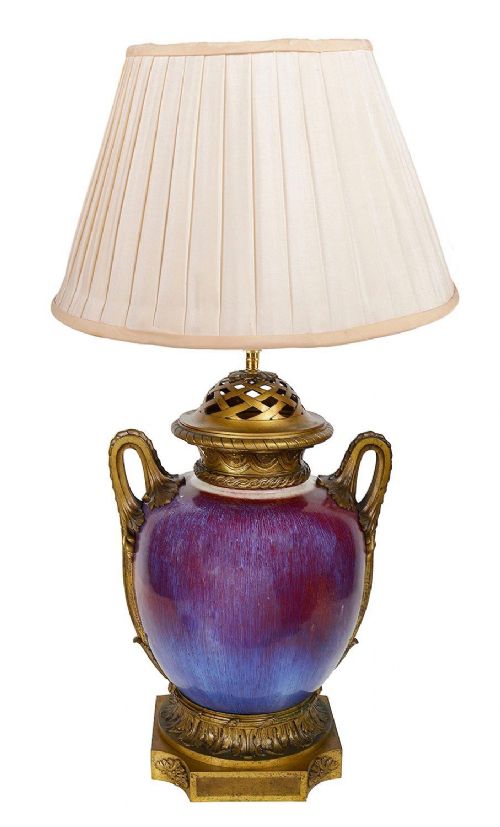
The construction combines high-fired ceramic bodies with metal mounts in bronze or brass, often paired with carved hardwood or marble for accompanying furniture elements. Porcelains display varying glaze types, including crackle ware, monochrome sang du bœuf, and intricate polychrome enamel painting.
Metal components involve cast bronze mounts that secure the ceramic vessel and provide stability for electrical fittings. Hardwood stands utilise traditional joinery in dense timbers such as rosewood to support heavy vase bases and marble table inserts.
Several items combine heavy oriental porcelain jars with sturdy nineteenth-century bronze mounts built to withstand lively drawing rooms.
Assessing quality
Quality rests in the crispness of the ceramic painting, the depth of the glaze, and the weight and detail of any bronze mounts. Superior examples exhibit fine brushwork in famille rose or blue and white motifs, combined with robust, securely fitted metalwork.
The integrity of the underlying ceramic body and the precision of the carved hardwood mounts or companion tables distinguish finer items. Pieces showing balanced proportions between the vessel and its base demonstrate careful conversion and assembly.
The Chinese Urn Table Lamp Glossary
- Celadon
- A pale green jade-like ceramic glaze applied to porcelain bodies. It derives its distinctive colour from iron oxide in the reduction firing.
- Famille Rose
- A palette of opaque enamel colours dominated by pink, introduced to Chinese ceramics in the eighteenth century. It allows for soft tonal gradations in floral and figural scenes.
- Cloisonné
- A metalwork technique where enamel paste is applied within compartments formed by soldered wires. The piece is then fired and polished smooth.
- Rose Medallion
- A distinct style of Cantonese export porcelain featuring panels populated with figures, birds, and flowers framed by gilt and floral borders.
Chinese Urn Table Lamp: Frequently Asked Questions
How do I care for a porcelain lamp base?
Dust the ceramic surface gently with a dry microfibre cloth to prevent accumulation. Avoid harsh chemical cleaners that might damage hand-painted enamel or gilt details.
Keep electrical components away from moisture and consult a qualified electrician if wiring requires attention.
Were these originally made as lamps?
Most ceramic bodies in these pieces started life as lidded vases, ginger jars, or ceremonial vessels rather than lighting fixtures. They were subsequently converted into lamps by mounting them with electrical fittings.
This adaptation of antique vases was common in European and American interiors during the nineteenth and early twentieth centuries.
How do I identify a Qing Dynasty piece?
Qing Dynasty items display characteristic potting techniques, specific glaze formulations like sang du bœuf or celadon, and traditional hand-painted motifs. Examination of the base often reveals foot ring characteristics and historical potting methods.
Context from associated hardwood stands and mounting styles helps confirm the period of the piece.