



Gilt Ceramic Table Lamp
Gilt ceramic table lamps combine painted porcelain or earthenware with gilded mounts, bringing nineteenth-century lighting and decorative pottery to interiors.
Gilt Ceramic Table Lamp
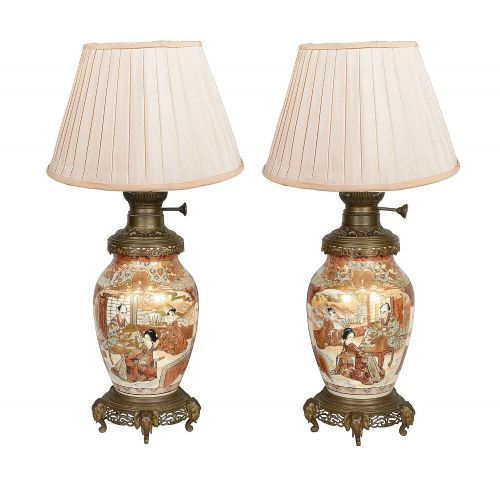
A gilt ceramic table lamp brings together glazed earthenware or porcelain bodies with metal mounts, frequently formed from earlier decorative vessels converted for electrical illumination. You will frequently encounter nineteenth-century examples alongside eighteenth-century styles, originating from French, Japanese, and Chinese workshops.
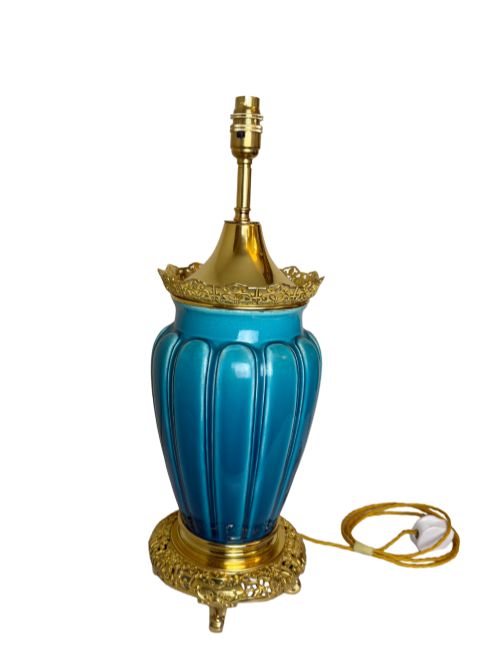
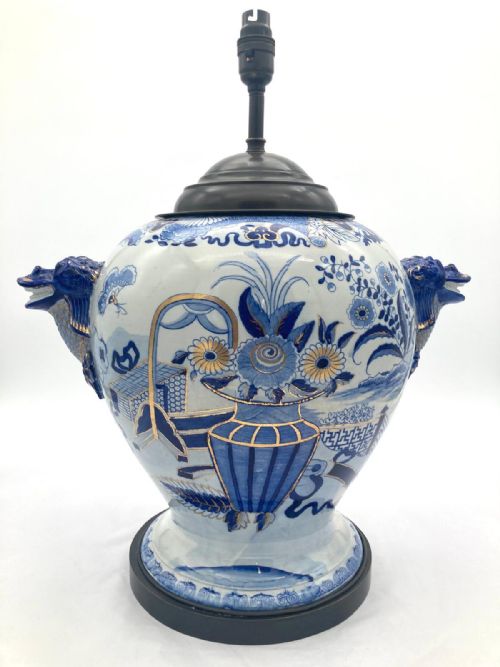
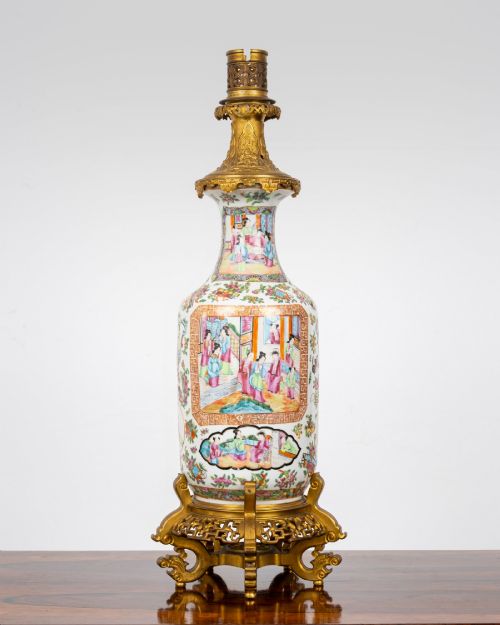
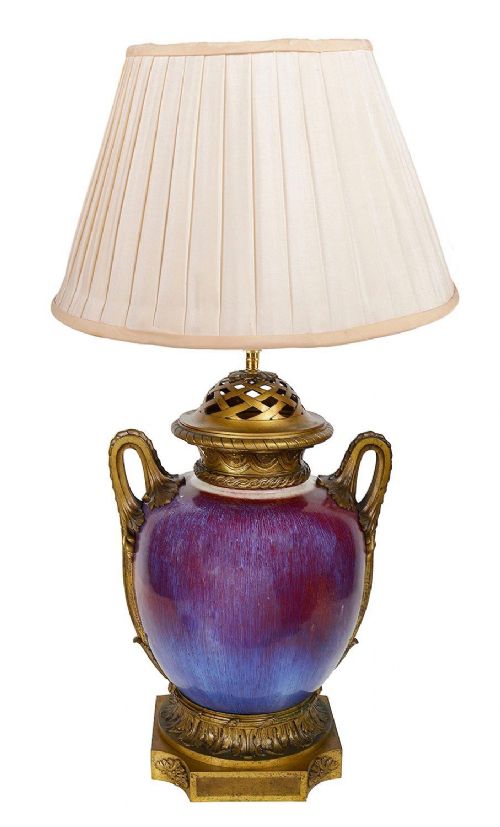
The ceramic components encompass blue and white delftware, powder blue glazes, ironstone, and painted famille rose or satsuma bodies. These vessels are mounted on gilt bronze, ormolu, or brass bases, often paired with handmade fabric or silk shades.
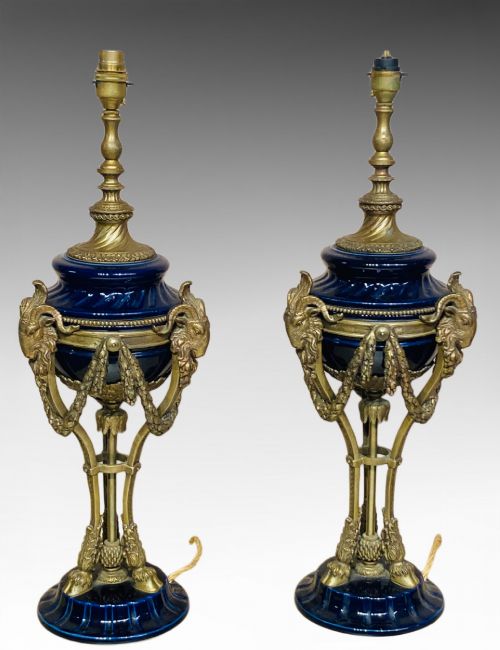
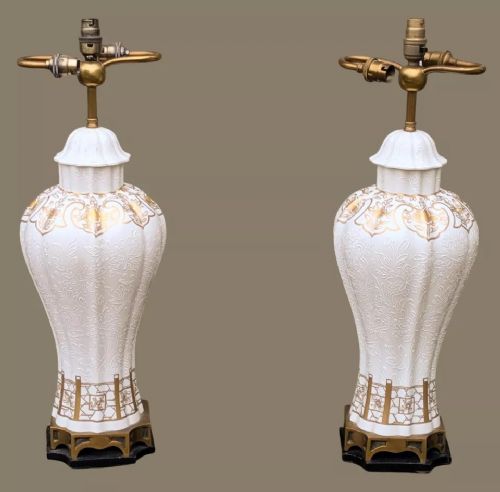
Many listings comprise pairs of lamps created from matching decorative vases, spanning periods from the Regency era through to the twentieth century. The body might take the form of lidded jars, amphorae, or baluster vases fitted with metal collars and bases.
Materials and Construction
Potters shaped the ceramic bodies from porcelain or earthenware, applying glazes such as turquoise, sang de boeuf, and cobalt blue before hand-painting decorative scenes in polychrome enamels. Metalworkers then cast mounts in brass, gilt bronze, or ormolu to secure the base and collar of the lamp.
Conversion of antique vases into lamps involved drilling the ceramic base to pass wiring, whilst retaining the original hand-painted surfaces and gilt metal mounts. Artisans utilised silk and fabric to construct handmade shades that complemented the proportions of the ceramic body.
The selection includes individual vases and matched pairs, utilising fabric and silk shades atop gilt bronze and ormolu bases.
Assessing Quality and Execution
The refinement of the hand-painted enamel work and the crispness of the gilt bronze or ormolu casting determine the distinction of a piece. Finer examples display detailed brushwork on porcelain surfaces alongside heavy, sharply chiselled metal mounts that fit the ceramic body precisely.
Proportion and balance dictate the visual success of the conversion, where the scale of the base and the choice of fabric shade complement the original vase. Harmonious pairing in matched sets relies on the uniformity of the ceramic glaze and the matching wear upon the gilding.
Hicks and Meigh·Samson
The Gilt Ceramic Table Lamp Glossary
- Ormolu
- Gilded bronze used for decorative mounts and fittings. The technique involves applying a mercury and gold amalgam to cast bronze before heating.
- Famille Rose
- A palette of Chinese ceramic glazes dominated by opaque pink enamel. This style gained prominence during the Qing dynasty and inspired later European copies.
- Satsuma
- Japanese earthenware pottery featuring a crackle-glaze ivory body decorated with polychrome enamels and gilt. These wares were widely exported during the Meiji period.
- Pâte-sur-Pâte
- A ceramic technique where wet porcelain slip is built up in successive layers to create a low relief cameo effect. This process requires considerable skill from the ceramic artist.
- Ironstone
- A heavy, durable type of earthenware patented in the nineteenth century. It provided a robust alternative to porcelain for large decorative vessels.
Gilt Ceramic Table Lamp: Frequently Asked Questions
How do I date a gilt ceramic table lamp?
Dating relies on examining the characteristics of the ceramic body, the style of the hand-painting, and the method of the metal mounts. Nineteenth-century examples often feature distinct glaze formulations and hand-chased ormolu.
Changes in manufacturing techniques, such as the transition from hand-thrown earthenware to industrial bodies, help narrow the period of the original vessel before its conversion into a lamp.
Were these always table lamps?
Many ceramic bodies began as decorative vases, lidded jars, or ginger pots before being converted into table lamps at a later date. This conversion process typically involved adding a metal base and collar while drilling the ceramic for electrical wiring.
As a result, the ceramic element frequently predates the electrical components and the secondary metal mounts by several decades or centuries.
How do I care for gilt bronze mounts?
Gilt metal mounts require gentle dusting with a soft, dry cloth to prevent the accumulation of dirt within the chased details. Avoid abrasive cleaners or chemical polishes, which can strip away the historical layer of gilding.
Keep the lamps away from direct sunlight and moisture to protect both the delicate fabric shades and the integrity of the painted ceramic glaze.
What is the difference between Satsuma and Imari?
Satsuma wares feature a characteristic ivory-coloured crackle glaze decorated with detailed polychrome enamels and raised gold accents. They originate from Japanese earthenware traditions.
Imari pieces utilise a distinct palette of underglaze cobalt blue combined with iron red and gilt on a hard porcelain body, focusing on geometric and floral motifs.