

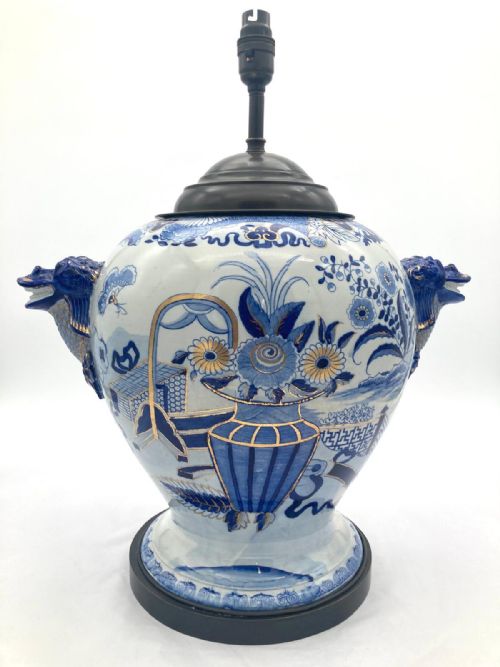


Blue Chinoiserie Base Lamp
A blue chinoiserie base lamp brings hand-painted oriental scenery into a room, offering warm light through converted antique porcelain and earthenware vessels.
Blue Chinoiserie Base Lamp
A blue chinoiserie base lamp is formed by converting antique vases, ginger jars, and baluster vessels into functional table lighting. These pieces draw upon styles spanning the eighteenth and nineteenth centuries, including Regency and Edwardian adaptations of oriental motifs.
The vessels utilised for these lamps predominantly originate from Chinese export porcelain or European ceramic traditions such as Dutch Delftware and Ironstone. Makers historically took prized ceramic containers and fitted them for electricity, often mounting them upon brass or gilt bases.
Buyers encountering this selection will frequently find pairs of lamps alongside substantial single pieces. The forms range from large ginger jars to slender baluster vases, frequently paired with handmade silk or fabric shades.
Construction and Materials
These lamps rely upon ceramic bodies created from porcelain, earthenware, or ironstone, decorated with blue pigment under the glaze. The firing processes of the eighteenth and nineteenth centuries yielded varied surface textures, from smooth porcelain to crackleware finishes.
Metal components such as brass and gilt mountings provide structural support and elevation to the ceramic vessels. Wiring modifications have been introduced subsequently to render the antique containers suitable for modern use.
Blue Chinoiserie Base Lamp Retail Price Guide 2026
Typical asking prices for blue chinoiserie base lamp among the pieces listed under this phrase on Sellingantiques today, from the lower quarter to the upper quarter. They describe what is for sale here now, not the wider market.
Many a stately ginger jar has spent centuries storing spices before finding a second career illuminating a bedside table.
Markers of Distinction
The quality of a blue chinoiserie base lamp rests upon the crispness of the hand-painted cobalt decoration and the integrity of the ceramic body. Early porcelain and Delftware vessels display depth in their blue tones that simpler earthenware struggles to match.
Proportion dictates the elegance of the conversion, particularly the harmony between the ceramic vessel and its brass, gilt, or wooden base. Pairs of matched vases maintain greater cohesion than assembled companions, particularly when original manufacturing flaws remain minimal.
Hicks and Meigh
The Blue Chinoiserie Base Lamp Glossary
- Chinoiserie
- European decorative style reflecting Chinese artistic influences. This aesthetic shaped centuries of porcelain decoration and furniture design.
- Delftware
- Tin-glazed earthenware originating from the Netherlands. It frequently mimics oriental blue and white porcelain patterns.
- Ironstone
- A durable type of earthenware patented in the nineteenth century. It offered a robust alternative to porcelain for large vessels.
- Baluster
- A vase or architectural form characterised by a rounded lower body tapering to a narrow neck. This shape appears frequently in table lamps.
- Famille Verte
- A porcelain palette dominated by green enamels, though often incorporating underglaze blue. It developed during the Qing dynasty.
Blue Chinoiserie Base Lamp: Frequently Asked Questions
How do I clean my lamp?
Dust the ceramic body gently with a dry, soft cloth to protect the glaze and painted surface. Avoid harsh chemical cleaners that might damage the antique finish or the metal mounts.
Keep silk or fabric shades free of dust using a soft brush attachment on a vacuum cleaner operated at low suction.
Are these lamps recently rewired?
Many antique vessels converted into lamps undergo rewiring to meet current electrical standards safely. This ensures the internal components function reliably within a modern home.
Qualified electricians should inspect older conversions to confirm the wiring suits daily usage.
Can I find matching pairs?
Pairs of lamps do appear within these selections, often created from matched antique vases or ginger jars. These symmetrical pieces suit placement on sideboards or bedside tables.
Single lamps predominate, offering strong focal points for smaller tables or desks.
How do I date the ceramic?
Dating relies upon examining the characteristics of the glaze, the weight of the ceramic, and the style of the blue painting. Eighteenth-century pieces often display distinct potting traits compared to nineteenth-century examples.
Documentation or dealer descriptions provide further context regarding the precise period of manufacture.