

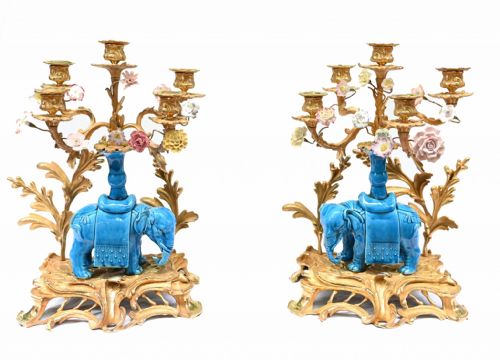


Victorian Chinoiserie Table Light
These victorian chinoiserie table light selections bring nineteenth-century hand-painted lacquer, porcelain, and carved wood into domestic rooms as characterful illumination.
Victorian Chinoiserie Table Light
A victorian chinoiserie table light brings nineteenth-century Orientalist design into domestic interiors through converted vases, canisters, and carved root wood mounted as table lamps. The selection centres on nineteenth-century pieces spanning porcelain, lacquer, and enamel forms.
Buyers encountering this phrase meet objects originating from Victorian adaptations of Chinese export wares, including Canton Famille Rose, Famille Verte, and blue and white prunus blossom vases. Many examples incorporate brass, ormolu, or fabric elements to transform traditional vessels into functional illumination.
The category encompasses both single lamps and matching pairs dating across the nineteenth century, with specific dates clustering around eighteen eighty and eighteen ninety. These items reflect the period fascination with decorative arts from the Chinese Qing Dynasty and broader Chinoiserie aesthetics.
How they were made
Construction relies on repurposing nineteenth-century vessels made from porcelain, carved root wood, tin, and glass, paired with brass and ormolu mounts. Artisans adapted imported tea canisters, vases, and cloisonné pieces by adding electrical or oil-burning fittings.
Surface decoration employs traditional lacquer work, enamel painting, and decalcomania techniques applied to wood, metal, and ceramic bodies. Ormolu mounts and brass components are cast and chased to secure the ceramic and wooden bodies.
Victorian Chinoiserie Table Light Retail Price Guide 2026
Typical asking prices for victorian chinoiserie table light among the pieces listed under this phrase on Sellingantiques today, from the lower quarter to the upper quarter. They describe what is for sale here now, not the wider market.
Materials across these listings include porcelain, brass, lacquer, ormolu, wood, tin, glass, and fabric.
What varies in quality
Quality depends upon the integration between the original nineteenth-century vessel and its metal mounts, where precision in ormolu or brass fitting preserves the integrity of the ceramic or wood body. Finer examples maintain crispness in carved root wood and hand-painted enamel detail without compromising the underlying object.
The distinction between standard and superior pieces rests on the artistic merit of the painted or cloisonné decoration and the authenticity of the Victorian conversion methods. Harmonious matching in pairs and the retention of original nineteenth-century surface patination elevate the standing of individual lamps.
The Victorian Chinoiserie Table Light Glossary
- Chinoiserie
- European decorative style reflecting Chinese artistic influences. It dominated various periods of interior design through motifs of landscapes and figures.
- Ormolu
- Gilded bronze mounts used extensively in nineteenth-century decorative arts. This technique adds metallic highlights to ceramic bases.
- Famille Rose
- A major palette of Chinese ceramic glazes distinguished by opaque pink enamel. The style appears frequently on export porcelain lamps.
- Cloisonné
- Enamelwork method where compartments are created on a metal vessel by soldering wire. These filled cells produce intricate coloured patterns.
- Decalcomania
- Transfer decoration technique popular in the nineteenth century. It allowed intricate designs to be applied to glass and ceramic surfaces.
Victorian Chinoiserie Table Light: Frequently Asked Questions
How do I light a Victorian lamp safely?
Modern rewiring is standard for these nineteenth-century pieces to ensure safe domestic use.
Consult a qualified electrician to check internal components while preserving original exterior mounts.
Are these lamps sold in pairs?
Many listings feature matching pairs alongside individual table lamps.
Pairs often originate from converted vases or candelabras produced during the nineteenth century.
What materials make up these lights?
Construction materials include porcelain, brass, glass, lacquer, ormolu, wood, and tin.
These diverse elements combine ceramic bodies with metal mounts and fabric components.
How do I date a chinoiserie lamp?
Dating relies on stylistic indicators from the nineteenth century, including specific ceramic palettes and metal mount types.
Reference points span the Victorian era with examples from eighteen eighty and eighteen ninety.