




Oriental Porcelain Bedside Lamps
Oriental porcelain bedside lamps bring historic ceramic vessels into domestic lighting, offering patterned colour and form for low-level illumination.
Oriental Porcelain Bedside Lamps
Oriental porcelain bedside lamps consist principally of converted vessels such as ginger jars, baluster vases, and twin-handled forms adapted to take electrical fittings. These domestic light fittings derive from Chinese and Japanese ceramic traditions spanning the nineteenth century and early twentieth century.
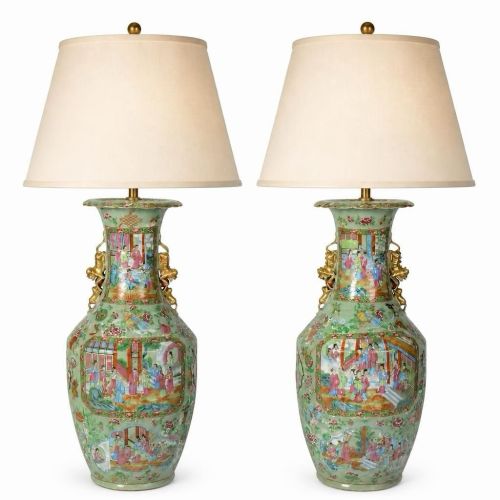
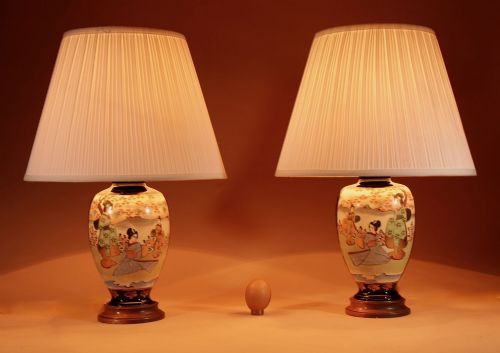
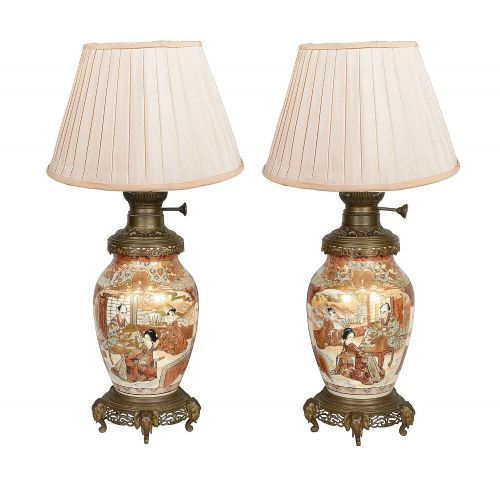
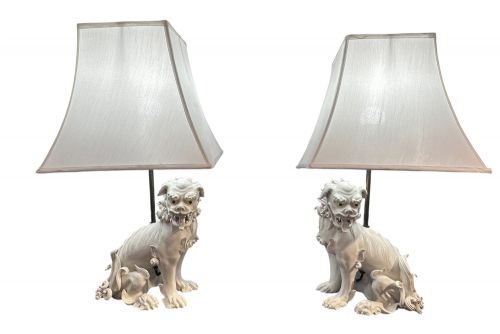
The selection centres on pairs and individual pieces rendered in distinct decorative schemes including Satsuma, Kutani, blue and white, and the polychrome palettes of Canton and the Qing dynasty. Many examples utilise converted nineteenth century porcelain bodies mounted on bases of brass or wood.
Buyers encounter forms that range from small decorative ginger jars to large baluster vases paired symmetrically for placement on either side of a bed. These objects bridge historical ceramic craft and functional interior lighting.
Materials and Construction
The foundation of these pieces is hard-paste porcelain or earthenware, shaped into vessels and decorated with hand-painted enamel pigments, underglaze cobalt, or intricate crackleware glazes. Workshops applied detailed pictorial scenes, floral motifs, and symbolic figures before firing the ceramics at high temperatures.
Conversion into lamps involved mounting the porcelain bodies onto stable bases made of brass, wood, or ormolu, and incorporating electrical flex, silk shades, and brass hardware. This secondary adaptation preserved the original ceramic body while fitting it for modern domestic use.
Listings feature porcelain, brass, fabric, wood, silk, enamel, ceramic, and earthenware across the nineteenth century and early twentieth century.
Evaluating Quality
Quality in these conversions rests upon the artistic merit and preservation of the original ceramic vessel rather than the electrical components added later. Finely painted brushwork, crisp enamel application, and balanced symmetry distinguish superior nineteenth-century vases from simpler later productions.
The integrity of the porcelain body, the depth of the glaze, and whether the pieces survive as a true matching pair rather than a later assembled grouping determine the standing of an individual lamp.
Fukagawa·Samson
The Oriental Porcelain Bedside Lamps Glossary
- Ginger jar
- A wide-shouldered ceramic vessel originally used for storing spices, frequently converted into the body of a bedside lamp. These forms provide a stable, rounded silhouette suited to domestic furniture.
- Satsuma
- A type of Japanese earthenware featuring a pale, crackled ivory glaze decorated with elaborate polychrome enamels and gilt. These wares are frequently found adapted into decorative table lamps.
- Famille Verte
- A Chinese porcelain palette dominated by green enamel hues, developed during the Qing dynasty and imitated in later nineteenth-century pieces. The style incorporates floral and figurative compositions.
- Baluster form
- A candlestick or vase shape characterised by a rounded lower body tapering to a narrow neck, resembling a traditional architectural baluster. This profile is a common silhouette for ceramic lamps.
- Crackleware
- Pottery or porcelain featuring a network of fine decorative cracks intentionally produced in the glaze during firing. This surface texture appears frequently on nineteenth-century Chinese and Japanese vessels.
Oriental Porcelain Bedside Lamps: Frequently Asked Questions
Are these lamps converted from old vases?
Most of these lamps are created by converting nineteenth-century or early twentieth-century ceramic vases and ginger jars into functional lighting. The original vessels retain their hand-painted decoration while receiving modern electrical fittings.
This adaptation allows historic ceramic forms to serve a practical purpose in contemporary interiors without losing their decorative character.
Do matching pairs exist?
Symmetrical pairs of lamps appear frequently among nineteenth-century Chinese and Japanese pieces, designed specifically for placement on bedside tables. These matched vessels share identical decorative motifs and scale.
Collectors often seek out genuine pairs rather than assembled sets to maintain visual balance in bedroom decoration.
How do I identify Satsuma ware?
Satsuma ceramics are recognised by their characteristic ivory-coloured earthenware body covered in a fine, web-like network of glaze crackles. They are typically finished with dense hand-painted patterns in coloured enamels and raised gold.
This distinct Japanese style provides a textured, ornate appearance that sets it apart from smooth blue and white porcelain.
What shades suit these lamps?
Silk and fabric shades in neutral tones or colours that complement the enamel palette of the porcelain body work best with these lamps. The scale of the shade should balance the proportions of the ceramic base.
Choosing simple, traditional shades ensures the historic painted decoration of the vase remains the focal point.