




Pair Chinese Porcelain Lamps
Pair chinese porcelain lamps bring symmetry and rich historical glaze to a room, uniting oriental ceramic artistry with European metal mounting.
What pair chinese porcelain lamps are
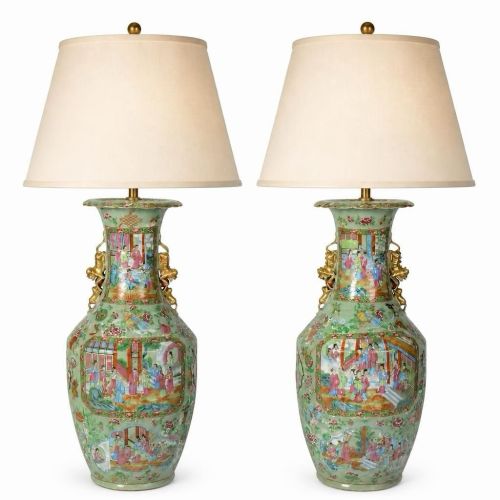
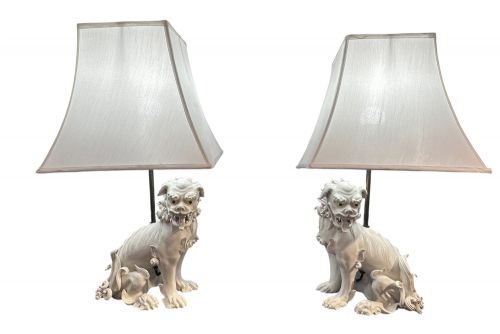
When you search for pair chinese porcelain lamps, you are looking at matched vessels originally made in the East as vases, later converted into table lamps. These pieces span the eighteenth century, the nineteenth century, and nineteen hundred.
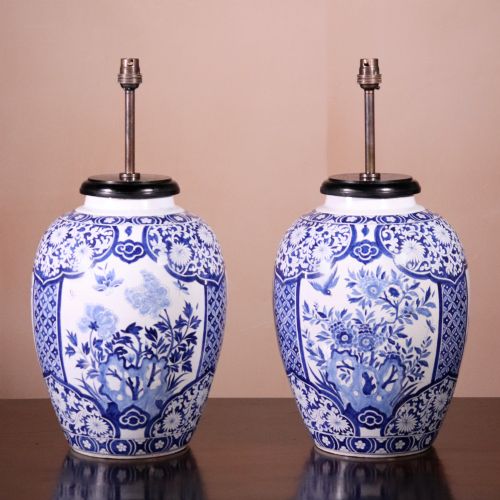
The forms on this page include mandarin vases, baluster shapes, crackelware, and famille rose or Cantonese decorated porcelain. Many examples arrive paired with brass, ormolu, gilt bronze, or wood mounts applied in Europe.
You will also find blue and white schemes, celadon glazes, and armorial styles adapted for lighting. They function primarily as large table lamps, often retaining substantial scale.
How they were made
The foundation of these objects is fired porcelain, painted with enamel and cobalt pigments beneath or over the glaze, depending on the period. Artisans shaped symmetrical bodies into baluster forms and wide-mouthed vases.
European workshops subsequently added metalwork mounts in ormolu, gilt bronze, and brass to elevate the ceramic bodies for domestic illumination. Wooden elements also support the structured bases and fabric shades.
Some nineteenth-century French artisans looked at a perfectly good Chinese vase and decided it simply needed heavy bronze shoes.
What varies in quality
The finesse of the hand-painted enamel work and the crispness of the porcelain body set the standard for each pair. Finer pieces display intricate detail in figures and foliage, while simpler production shows broader brushwork.
The integration of the metal mounts dictates the refinement of the finished lamp. Heavy, crisply chased ormolu or gilt bronze mounts indicate superior workshop assembly compared to plain brass alternatives.
Samson of Paris
The Pair Chinese Porcelain Lamps Glossary
- Ormolu
- Gilded bronze mounts applied to furniture and ceramics. This technique was frequently utilised by European craftsmen to elevate imported Asian porcelain.
- Baluster
- A vase form with a rounded lower body tapering to a narrow neck. This shape provides stable proportions for large table lighting.
- Famille rose
- A palette of opaque enamel colours dominated by pink, introduced to Chinese porcelain production in the eighteenth century. It appears frequently on decorative vases.
- Celadon
- A pale green jade-like glaze fired at high temperatures. The subtle colour varies from greyish-green to olive.
- Crackelware
- Pottery featuring a network of fine intentional cracks in the glaze. This decorative finish imitates ancient ceramic styles.
Frequently Asked Questions
Are these lamps originally wired for electricity?
These vessels started life as decorative vases or jars during the eighteenth and nineteenth centuries. They were converted into lamps at later dates to suit modern interiors.
Rewiring and fitting for modern electrical standards typically happened in Europe during the nineteenth or twentieth centuries.
How do I distinguish eighteenth-century pieces from nineteenth-century ones?
Differentiating the periods relies on examining the painting style, glaze depth, and the character of the porcelain body. Eighteenth-century examples often display finer hand-painted details and specific tonal qualities in the enamel.
Mount styles also offer clues, as ormolu casting techniques evolved significantly between the seventeen-hundreds and the eighteen-hundreds.
What is ormolu mounting?
Ormolu refers to finely chased gilt bronze applied to the base, neck, or handles of the porcelain. European metalworkers added these mounts to give stability and decorative symmetry.
This practice bridges Asian ceramic production with Western interior design tastes.
Where should I place large vase lamps?
Their substantial scale makes them suited for heavy sideboards, large console tables, or prominent corners in a room. They require sturdy surfaces capable of supporting their combined porcelain and metal weight.
Matching pairs provide visual balance when positioned symmetrically on opposite sides of a space.