






Japanese Urn Lamps
These japanese urn lamps bring centuries of eastern craftsmanship into domestic interiors, offering distinctive illumination paired with historic ceramic and metal vessels.
Japanese Urn Lamps
Japanese urn lamps convert historic vessels into functional table illumination, bringing traditional eastern craftsmanship into domestic interiors. When searching for japanese urn lamps, buyers encounter converted vases and vessels spanning the seventeenth century through to the nineteen twenties.
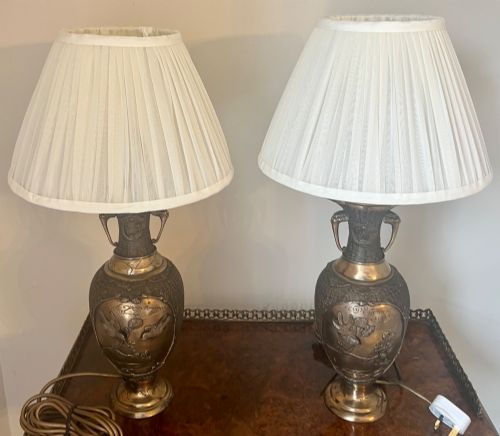
The selection ranges from large nineteen-century bronze bodies to delicate porcelain examples from the Meiji period and earlier Edo eras. Many specimens arrive as matched pairs, utilising robust metal mounts or fitted wiring suited to contemporary settings.
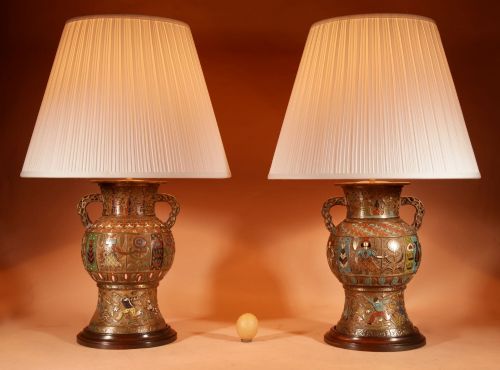
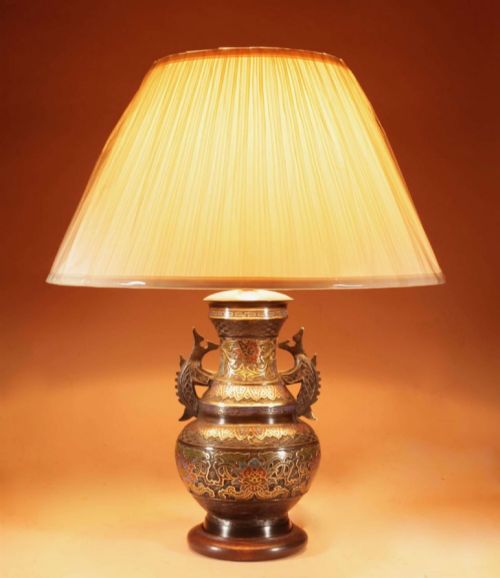
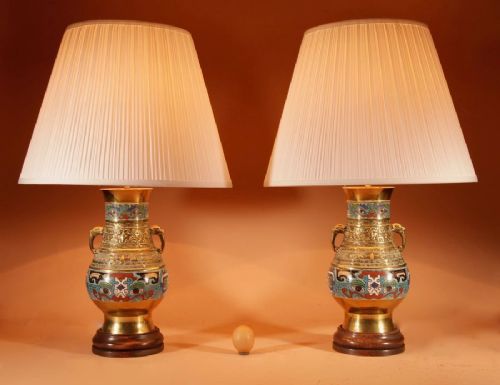
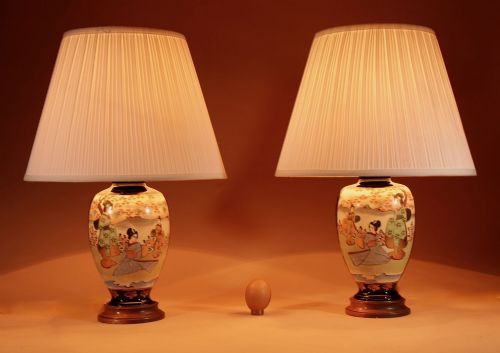
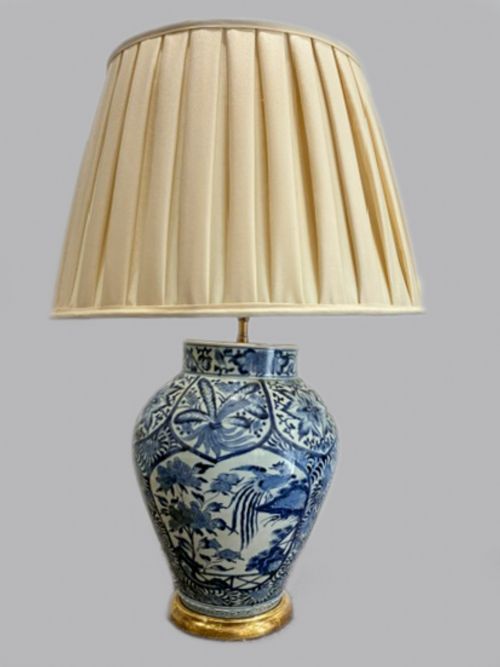
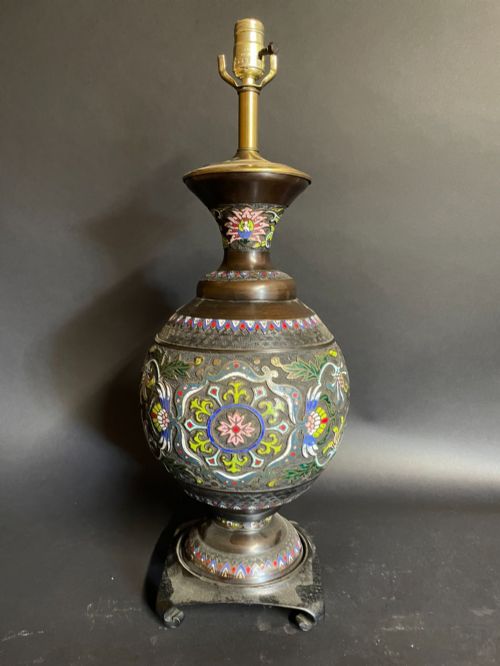
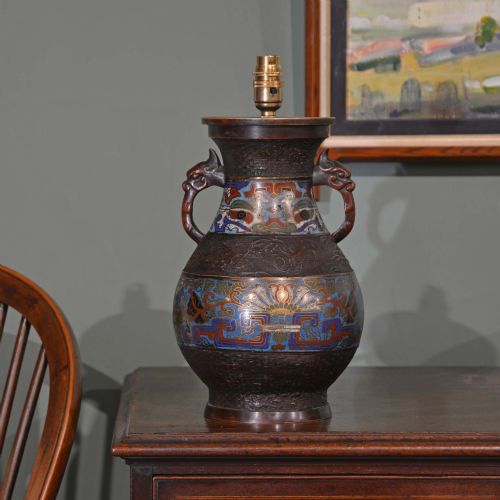
Porcelain types include Satsuma, Kutani, blue and white, and Imari wares, whilst metal counterparts display intricate champleve and cloisonne enamel work. These diverse forms reflect centuries of decorative arts traditions adapted for modern interior lighting.
How They Were Made
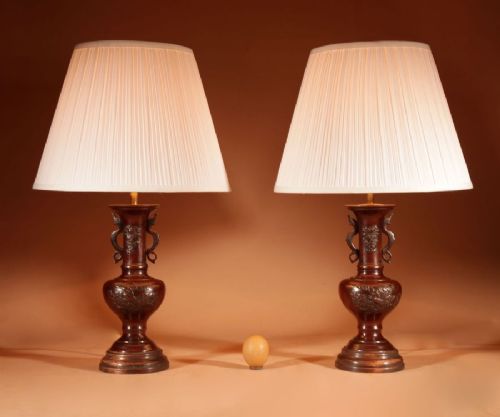
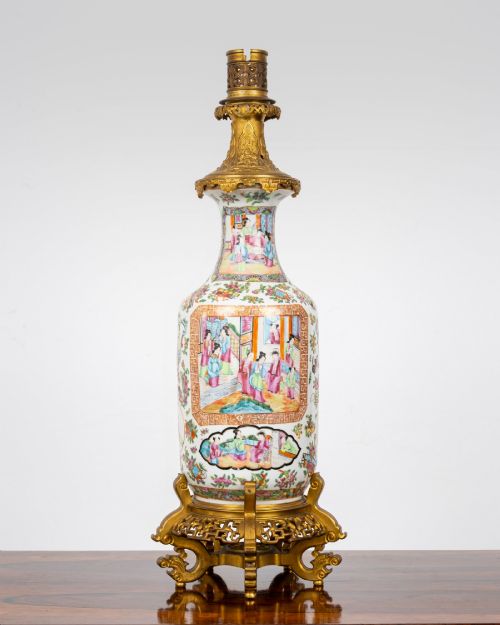
Makers constructed these lamps by mounting historic bronze, brass, earthenware, and porcelain vessels onto supportive bases and adding electrical fittings. Artisans often incorporated gilt bronze mounts to secure the ceramic bodies safely.
Surface decoration frequently involves cloisonne and champleve enamel techniques on metal, alongside hand-painted glazes on Satsuma and Kutani porcelain. Fabric shades in silk complete the construction, balancing heavy ceramic and metal bases.
Listings feature periods spanning from the 17th century up to 1920, incorporating fabric, brass, bronze, wood, enamel, porcelain, silk, and earthenware.
What Varies in Quality
Quality depends on the preservation of the original vessel and the subtlety of its surface decoration, whether in the enamel work of champleve pieces or the painted details of Satsuma porcelain. Earlier examples from the seventeenth and eighteenth centuries demonstrate high standards of historic manufacture.
The integration of metal mounts and the proportion of the converted vessel dictate the visual balance of the finished lamp. Pairs display greater consistency in manufacturing quality and decorative detail than individual converted vases.
Gin Barrie
The Japanese Urn Lamps Glossary
- Champleve
- An enamelling technique where troughs are carved into a metal surface and filled with vitreous enamel before firing. This method creates bold, colourful patterns across bronze bodies.
- Cloisonne
- A decorative metalwork process utilising thin metal wires soldered to a base to form compartments filled with enamel paste. These compartments are then fired and polished to a smooth finish.
- Satsuma
- A type of Japanese earthenware featuring a crackled ivory glaze decorated with polychrome enamels and gilding. These ceramics frequently depict traditional figurative and floral scenes.
- Imari
- A style of Japanese porcelain featuring distinctive underglaze blue and overglaze iron red, green, and gold ornamentation. Originating in Arita, these wares were widely exported during the Edo period.
- Meiji Period
- The historical Japanese era spanning from eighteen sixty-eight to nineteen twelve, characterised by extensive artistic production and international trade. Works from this period show exceptional technical refinement.
Japanese Urn Lamps: Frequently Asked Questions
How do I identify a Meiji period lamp?
Meiji period lamps typically date between eighteen sixty-eight and nineteen twelve, displaying dense cloisonne enamel or finely painted Satsuma porcelain.
Examine the weight and metalwork quality, as pieces from this era frequently utilise heavy bronze or brass mounts.
Are these lamps converted from original vases?
Many examples begin as historic Japanese vases or urns created centuries before their conversion into table lighting.
Makers adapt these vessels by adding electrical components and secure bases whilst preserving the original ceramic or metal body.
What materials are commonly used?
The construction relies heavily on bronze, brass, earthenware, and porcelain bodies complemented by enamel work.
Shades fashioned from fabric and silk provide the finishing touch for table placement.
How do I care for antique enamel lamps?
Clean metal and enamel surfaces gently with a dry microfibre cloth to prevent dust accumulation.
Avoid liquid cleaners that might damage historic patination or delicate surface gilding.