
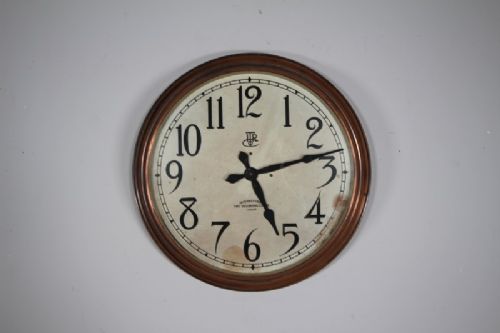
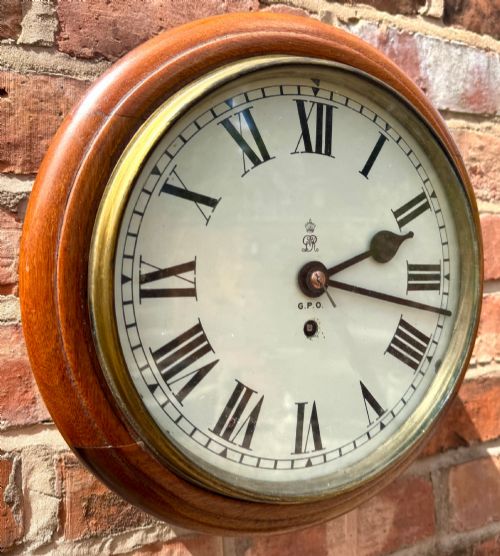
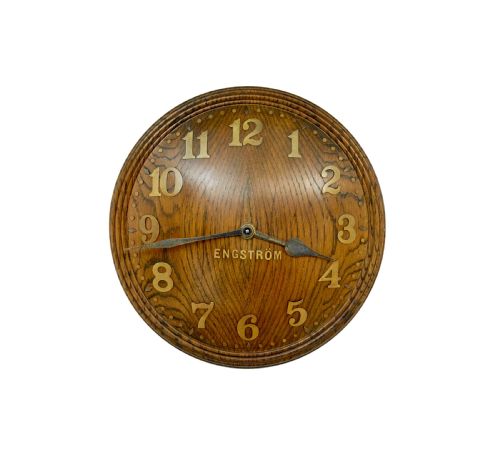
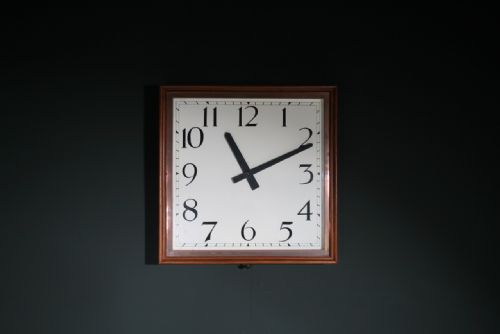


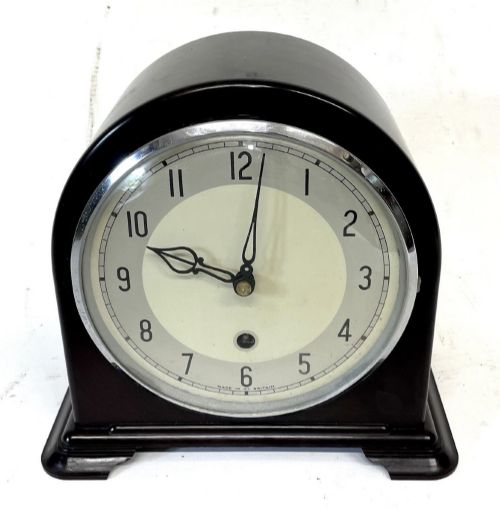


Vintage Office Clock
A vintage office clock brings utilitarian history to a room, combining reliable timekeeping with the robust materials of the past.
Vintage Office Clock
A vintage office clock encompasses practical timepieces designed for professional spaces, railway stations, and government departments across multiple decades. When searching for a vintage office clock, buyers frequently encounter sturdy wall clocks and compact desk models originating from the Victorian era through the mid-twentieth century.
Originating predominantly from British workshops and commercial institutions, these timepieces range from heavy mahogany school clocks to modernist chrome designs. Each piece carries the distinct functional character of its original working environment.
Materials and construction
Clockmakers utilised durable timber frames such as mahogany and oak to house precision movements securely in high-traffic administrative spaces. Cases often feature turned wooden bezels and hinged glass doors designed to protect the dial from dust and daily wear.
Metal components played a vital role in both structural support and aesthetic detailing, incorporating brass, copper, chrome-plating, and heavy-duty bakelite. Specialised movements, including single chain fusee and eight-day mechanisms, ensured reliable accuracy for professional use.
Vintage Office Clock Retail Price Guide 2026
Typical asking prices for vintage office clock among the pieces listed under this phrase on Sellingantiques today, from the lower quarter to the upper quarter. They describe what is for sale here now, not the wider market.
Listings feature robust oak and mahogany wall clocks alongside Art Deco chrome desk clocks from the nineteen-thirties.
Factors determining quality
Quality in these timepieces rests upon the precision of the internal movement and the integrity of the original casing. Superior examples retain matching serial numbers, stamped movement plates, and unaltered wooden frames that reflect careful maintenance.
The degree of craftsmanship visible in the dial typography, bezel construction, and secondary materials distinguishes standard commercial issues from finer bespoke instruments. Original components and documented maker signatures further elevate the standing of an individual piece.
Mappin & Webb·Engström by Zenith·Imhof·John Walker·Smiths
The Vintage Office Clock Glossary
- Fusee
- A conical pulley connected to the mainspring by a chain or cord, designed to equalise the torque as the spring unwinds. This mechanism ensures consistent timekeeping accuracy across the power reserve.
- Dial
- The face of the clock where the hours and minutes are displayed, often protected behind a glazed brass or wooden bezel. Traditional office examples feature clear Arabic or Roman numerals for legibility.
- School clock
- A common wall-mounted timepiece style featuring a straightforward circular dial and a drop case, widely utilised in classrooms and municipal offices during the nineteenth and twentieth centuries.
- Bakelite
- An early synthetic thermosetting plastic utilised for robust casing construction during the mid-twentieth century. This material offers durability and a distinctive dark lustre.
- Bezel
- The ring of brass, wood, or metal that holds the protective glass pane in place over the clock dial. It often hinges open to allow access for winding and hand adjustment.
Vintage Office Clock: Frequently Asked Questions
How do fusee movements work?
A fusee movement uses a conical drum and a chain to regulate the pull of the mainspring. As the spring loses tension, the chain rides higher on the cone to maintain steady power.
This clever mechanical arrangement prevents the clock from losing speed as it runs down between windings, ensuring reliable daily performance.
Where were these clocks originally placed?
These timepieces hung in railway stations, post offices, government departments, and school rooms. Their clear dials and robust construction suited busy public environments.
Today, they transition easily into domestic hallways, studies, and kitchens, bringing a strong architectural presence to interior walls.
How do I date a wooden wall clock?
Dating involves examining the timber species, construction methods, and dial design. Mahogany cases often point to the nineteenth century, while lighter oak and chrome suggest the nineteen-thirties.
Maker stamps on the backboard or movement plates provide definitive clues to the exact decade of manufacture.
Are desk clocks practical for daily use?
Desk models often feature eight-day movements or fifteen-jewel mechanisms designed for dependable tabletop timekeeping. Many incorporate reliable platforms that function well on modern surfaces.
Regular winding and occasional professional servicing keep these compact mechanical pieces operating smoothly in a home office.