



Vintage Oak Corner Cupboard
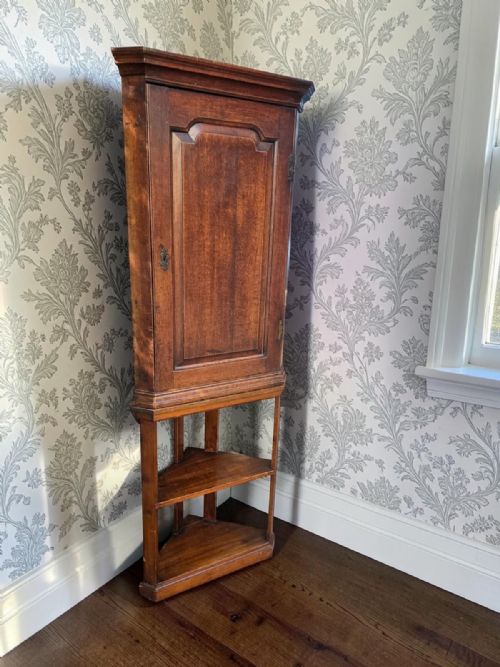
A vintage oak corner cupboard anchors an empty corner with period timber and practical shelving.
Vintage Oak Corner Cupboard
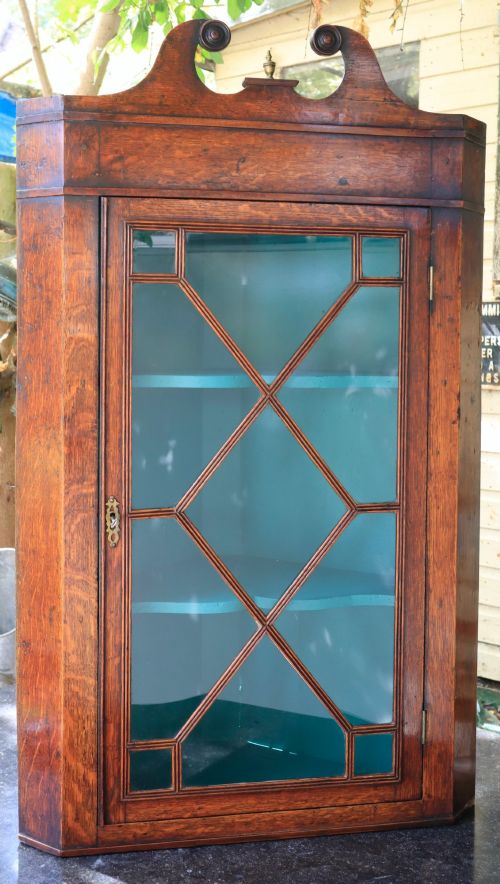
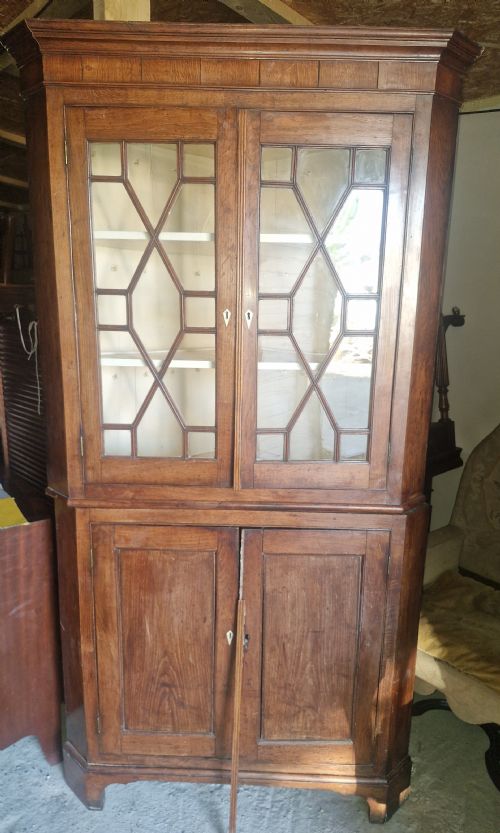
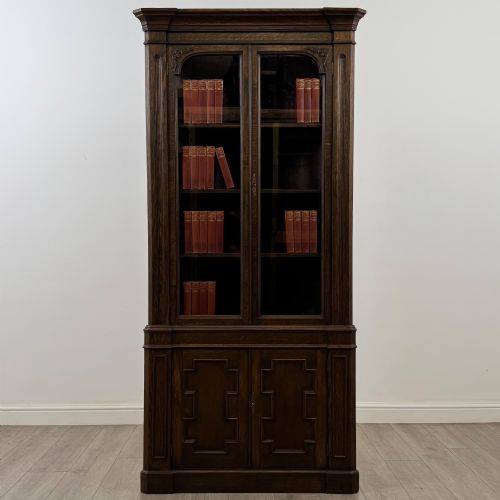
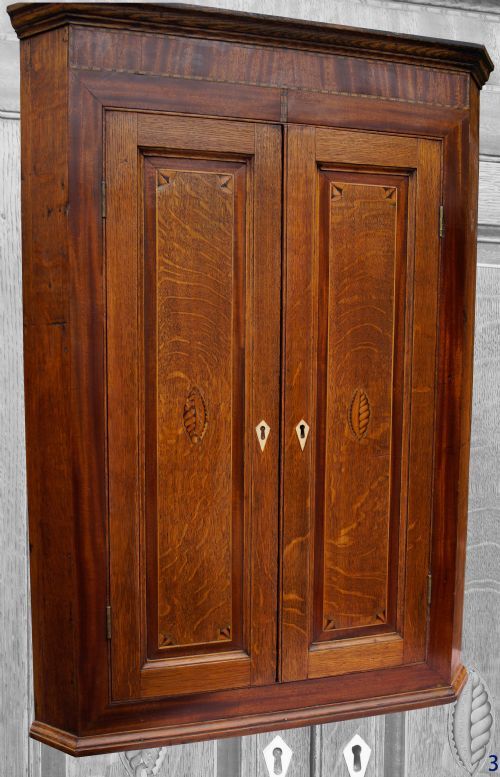
A vintage oak corner cupboard is a fitted or freestanding storage piece designed specifically to utilise awkward angles in rooms, appearing in forms such as hanging cabinets, wall cabinets, and large floor standing versions in two parts. Buyers searching for a vintage oak corner cupboard will find examples ranging from panelled 18th century and Georgian pieces to Victorian, Edwardian, and 1930s revivals.
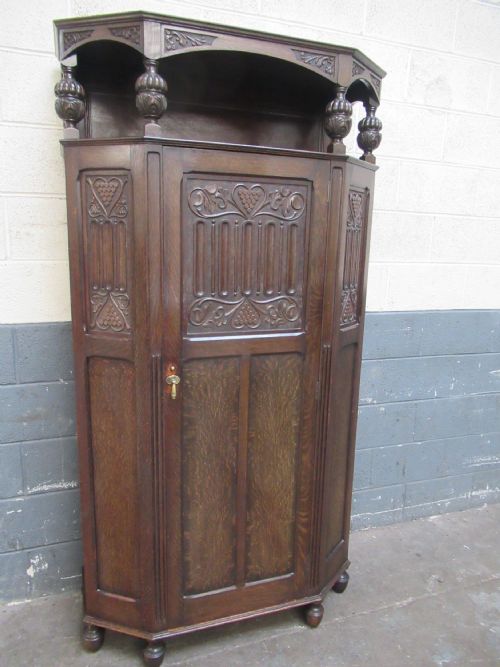
The selection here includes regional variations like Welsh and North European pieces, alongside specific styles such as Chippendale Revival, Jacobean Revival, and Arts and Crafts. Standing floor units and bow fronted cupboards offer substantial storage, while hanging wall cabinets conserve floor space in smaller rooms.
What varies in quality
The distinction between standard and superior pieces rests on timber selection, structural integrity, and the crispness of cabinetmaking details such as raised panels and mouldings. Early 18th century and Georgian examples often demonstrate finer proportions and more articulate joinery than later revival pieces.
Regional execution also shapes the character of a piece, where country workshops produced robust, plain furniture while urban cabinetmakers applied sophisticated inlays, bow front profiles, and refined cornices.
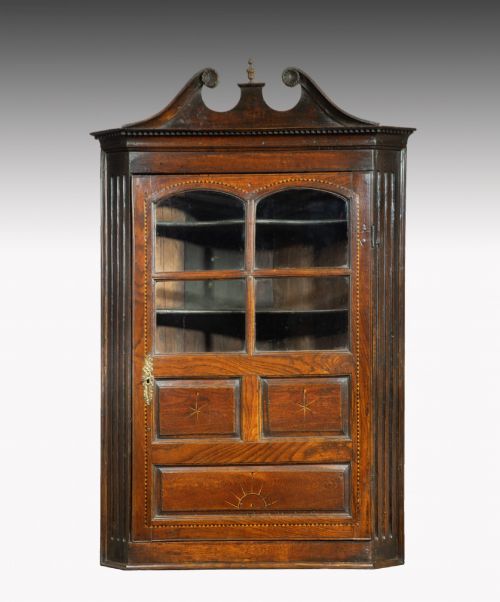
Form variations on this site range from compact wall cabinets and glazed display units to impressive two-part floor standing cupboards and bow-fronted designs.
The Vintage Oak Corner Cupboard Glossary
- Hanging cupboard
- A cabinet equipped with internal brackets or fixings designed to be mounted directly to a wall rather than standing on the floor. These save valuable floor space in smaller rooms.
- Bow front
- A convex, curved front profile that projects outward, commonly seen on Georgian and later cabinets to soften sharp angles. This technique adds visual depth to the piece.
- Raised panel
- A central wooden insert within a door frame that is bevelled or tapered at the edges to sit flat within a groove. It allows the timber to expand and contract with humidity changes.
- Standing corner cupboard
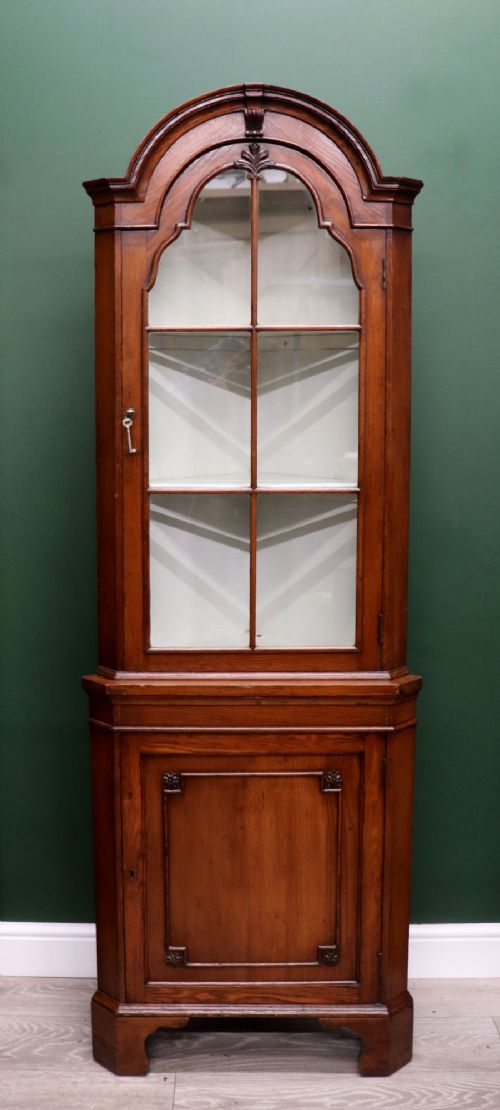
- A tall floor unit, sometimes built in two separate parts, that rests directly on the floor. They provide generous capacity for storage or display.
- Revival style
- A design movement later in time, such as Chippendale or Jacobean Revival, that emulates the aesthetic of previous centuries. These pieces interpret earlier forms using contemporary manufacturing methods.
Vintage Oak Corner Cupboard: Frequently Asked Questions
Where should I place a corner cupboard?
These cabinets fit neatly into unused 90-degree room junctions, making them ideal for dining rooms or hallways.
Floor standing versions anchor a room layout, while wall hanging models work well above side tables.
How do I date an oak corner cupboard?
Dating relies on construction methods, timber patination, and stylistic markers such as panel thickness and hardware.
Georgian and 18th century pieces typically show hand-planed surfaces and pegged joinery, whereas later Victorian and 20th century examples employ machine-cut elements.
What is the difference between hanging and standing cupboards?
Hanging models attach to walls to conserve floor space and generally offer smaller proportions for domestic storage.
Standing versions rest on the floor, often constructed in two distinct sections for easier transport and offering maximum capacity.
Are these cabinets suitable for modern homes?
The compact geometry of a corner design allows historic timber furniture to integrate easily into contemporary interiors.
They provide practical enclosed shelving to hide clutter or display ceramics without obstructing walkways.