
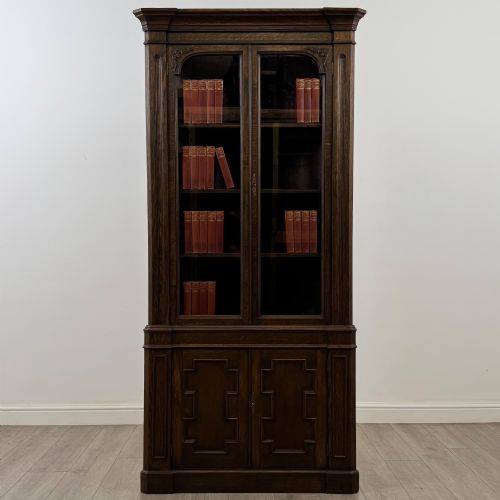
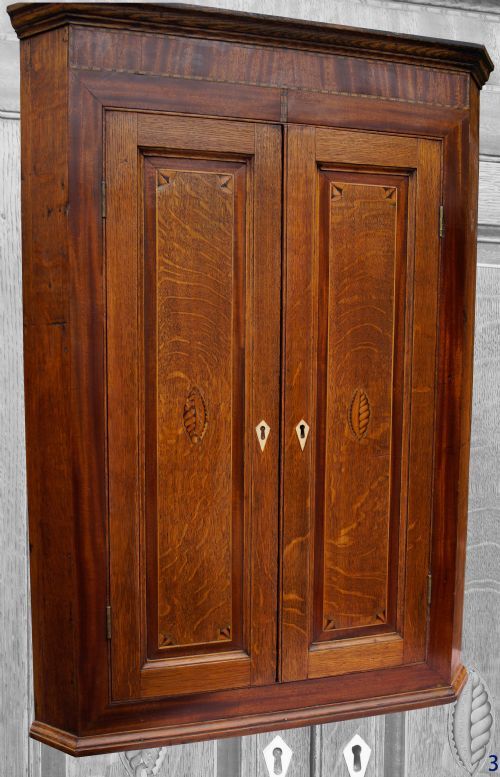
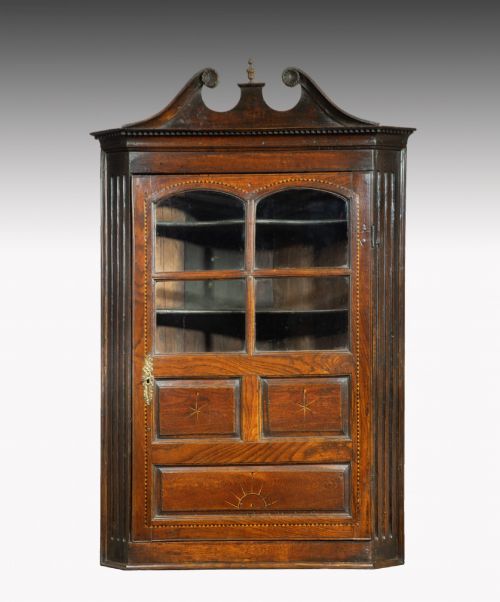

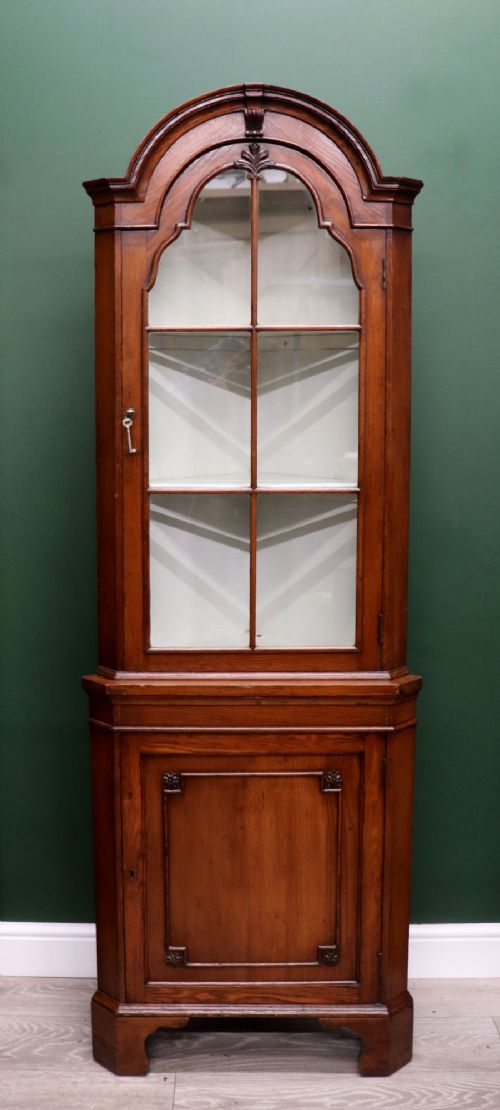
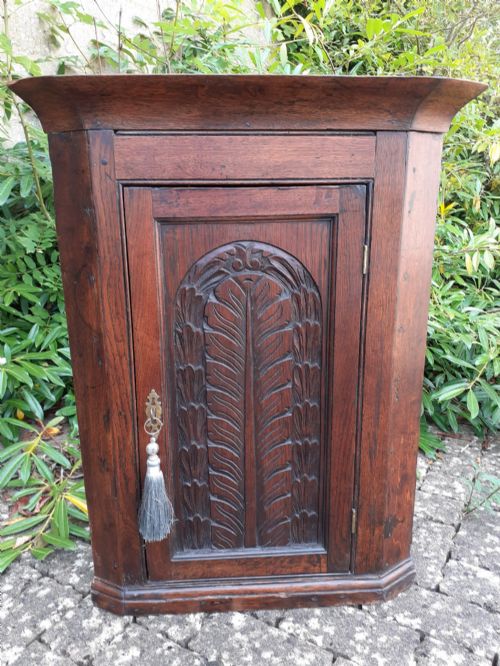


Antique Oak Corner Unit
These antique oak corner units turn dead space into functional display, offering practical storage with genuine period character.
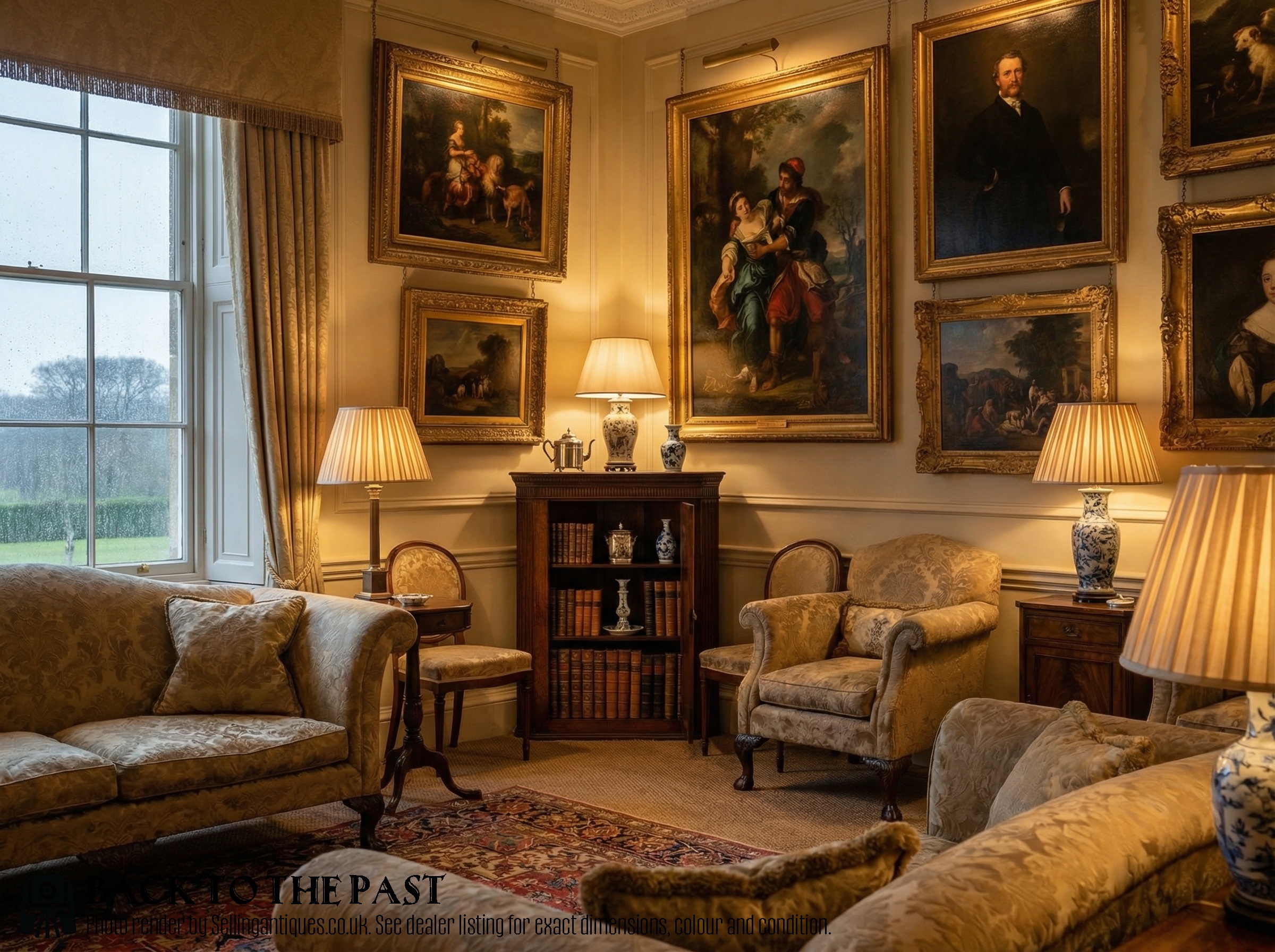
What They Are
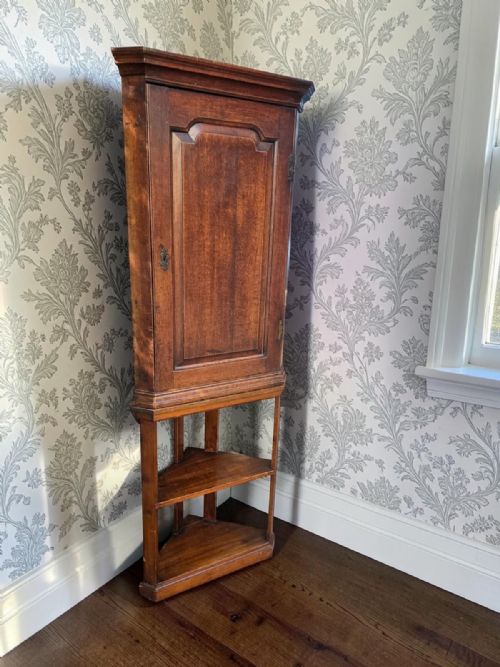
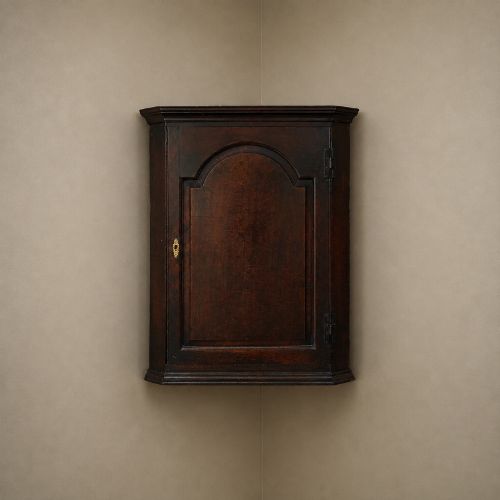
An antique oak corner unit is a fitted or hanging cupboard designed to occupy the junction of two walls, making efficient use of overlooked architectural space. Most examples found here date from the eighteenth century or the Victorian era, spanning Georgian designs to Arts and Crafts interpretations.
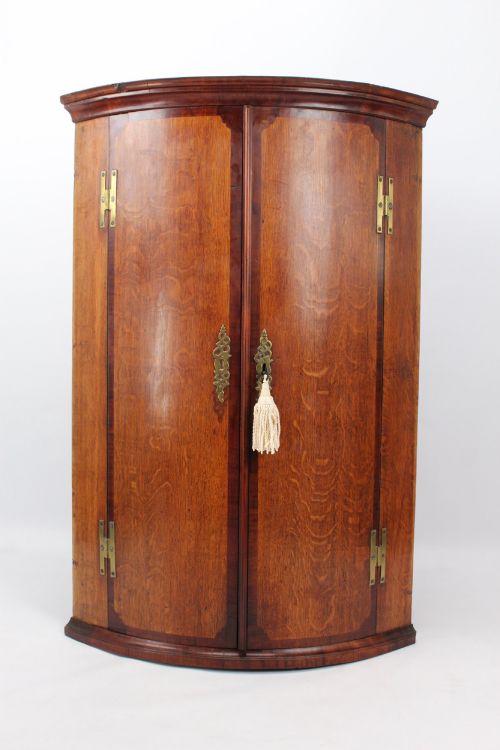
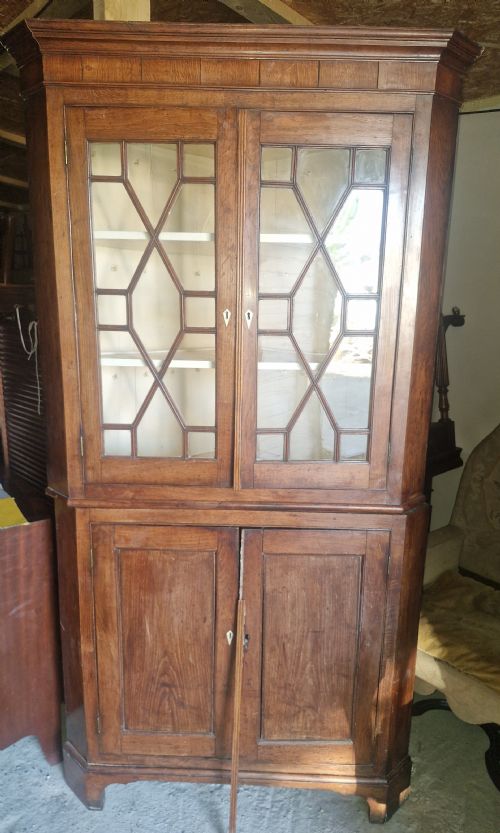
The physical forms include hanging corner cupboards and bow-fronted corner cabinets. These pieces often feature single doors, sometimes accented with glazing or decorative inlays in contrasting woods such as mahogany and satinwood.
How They Were Made
Joiners built these units primarily using solid oak, occasionally incorporating secondary timbers alongside brass for hinges and escutcheons. Glass panels and lead came appear in glazed doors, while decorative detailing includes fine wood inlays.
Construction methods rely on traditional cabinet-making joints suited to corner furniture, with heavy timber carcasses built to support heavy hanging loads or floor placement.
Retail Price Guide 2026
Typical UK retail prices for oak corner unit, calculated from the Sellingantiques database of over a million retail prices indexed since 2003. This retail price guide relies exclusively on Sellingantiques data; no external sources or auction records are used, so the figures do not describe the wider market.
The listings combine eighteenth-century and Victorian periods, utilising oak alongside decorative touches of mahogany, satinwood, and brass.
What Varies in Quality
Quality rests in the precision of the timber selection and the complexity of the cabinetwork, such as the execution of a curved bow front rather than a flat panel. Grain alignment and the subtlety of decorative inlays distinguish standard provincial pieces from finer Georgian commissions.
Hardware choice and interior arrangement also divide the range, with hand-wrought brass fittings and shaped shelving indicating higher workshop standards during the eighteenth and nineteenth centuries.
The Antique Oak Corner Unit Glossary
- Bow front
- A convex, outwardly curved cabinet front. This curved form requires advanced joinery skills compared to flat panels.
- Escutcheon
- A protective plate surrounding a keyhole. These hardware elements are often cast in brass.
- Inlay
- Decorative wood pieces inserted into recesses in the primary timber. Common contrasting woods include mahogany and satinwood.
- Lead came
- Soft lead strips used to hold small panes of glass together in windows and cabinet doors. This technique secures glazed panels safely.
Frequently Asked Questions
How do I hang a corner cupboard?
These cupboards require secure attachment to wall studs using heavy-duty internal fixing points or reinforced brackets.
Because solid oak is heavy, professional installation ensures the weight distributes safely across the corner walls.
Are these units suitable for modern homes?
An antique oak corner unit fits neatly into domestic corners, turning unused angles into storage for glassware or books.
The rich grain of eighteenth-century oak brings warmth and historical texture to contemporary or traditional rooms.
How do I tell Georgian from Victorian pieces?
Georgian pieces often display restrained classical proportions and fine brass hardware suited to eighteenth-century interiors.
Victorian items, particularly those following Arts and Crafts principles, may feature more rustic construction and honest handcrafted details.
What is the difference between a cabinet and a cupboard?
Cabinets frequently incorporate glazed doors designed for displaying precious ceramics or glassware within the room.
Cupboards generally feature solid wooden doors meant for concealed storage out of sight.