

Vintage Nested Side Tables
Vintage nested side tables deliver practical surface space that tucks neatly away when floor space matters.
Vintage Nested Side Tables
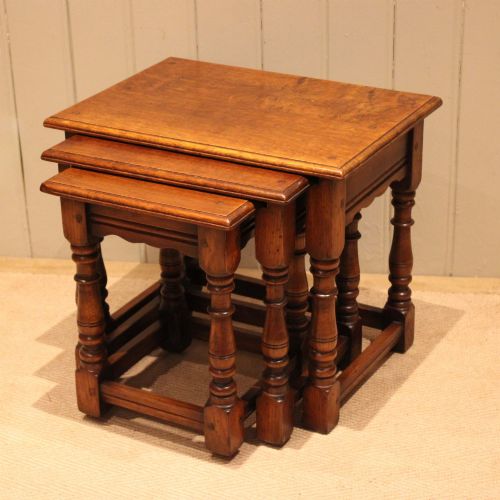
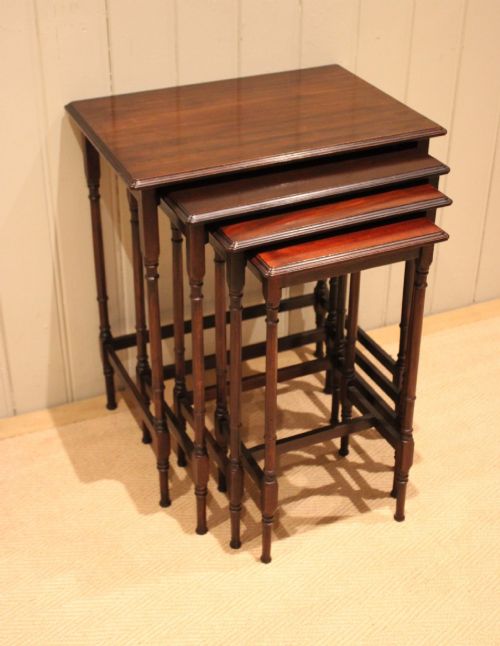
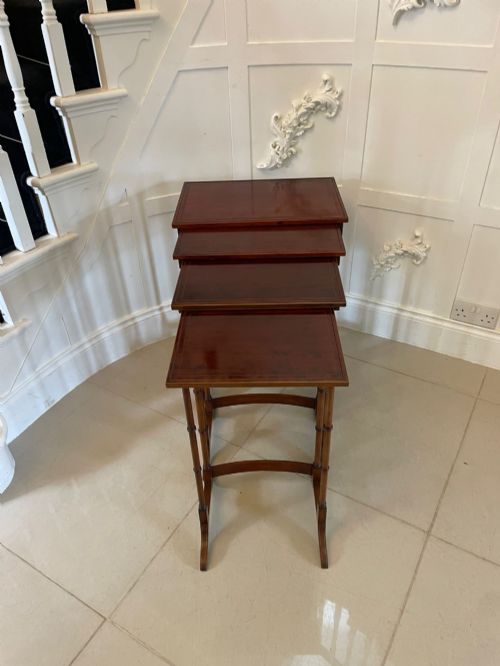
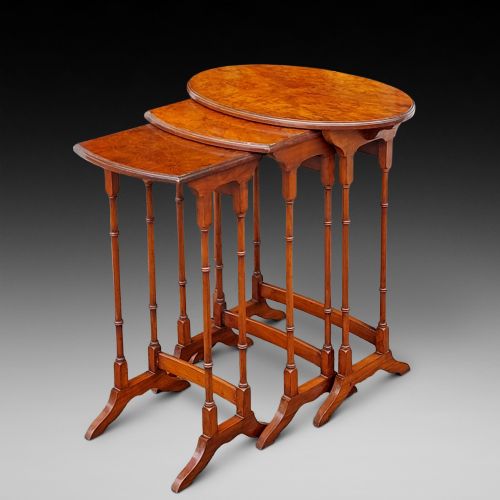
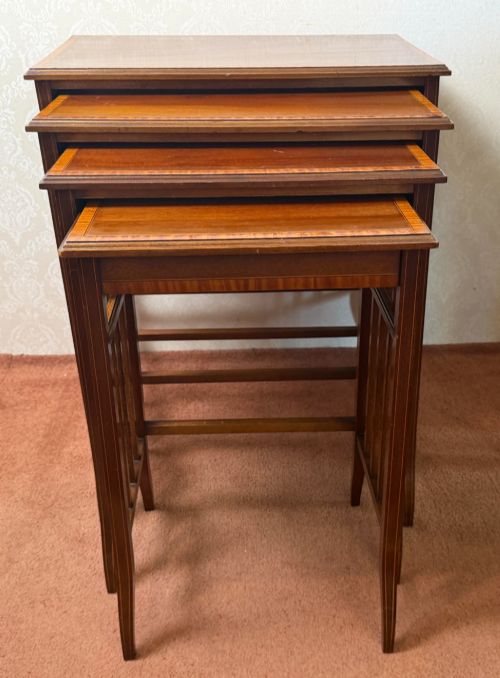
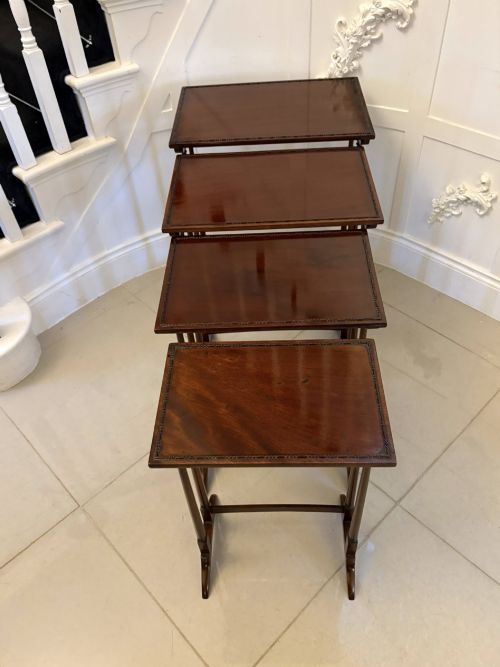
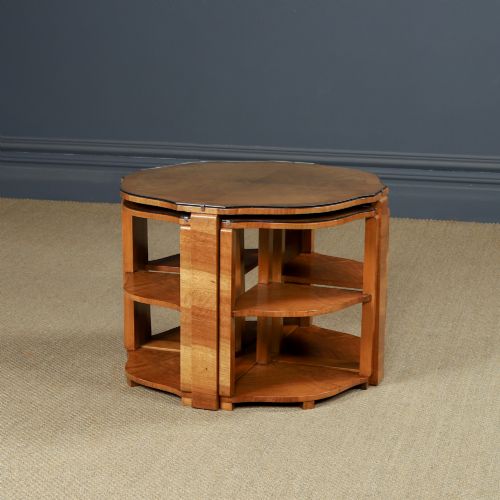
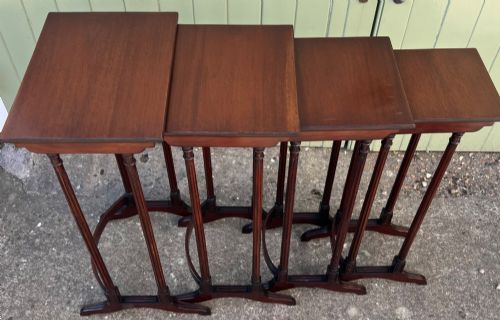
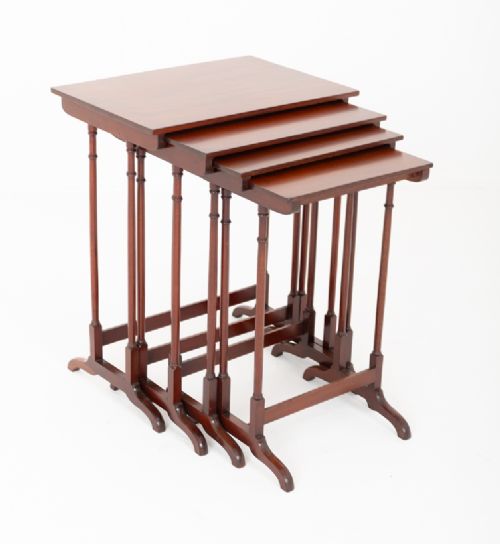
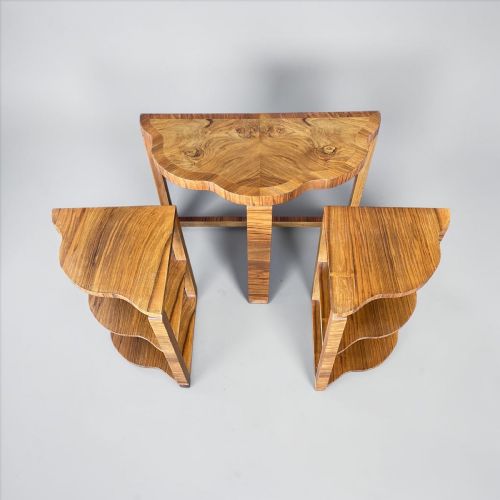
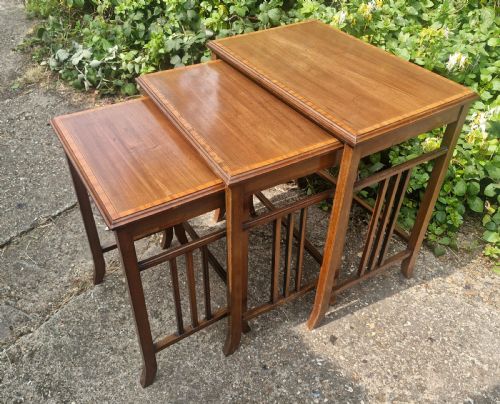
Vintage nested side tables comprise sets of graduating tables designed to slide beneath one another into a single compact footprint. The forms appear most frequently as Edwardian mahogany quartetto sets or 1930s Art Deco designs with three or four graduating tiers.
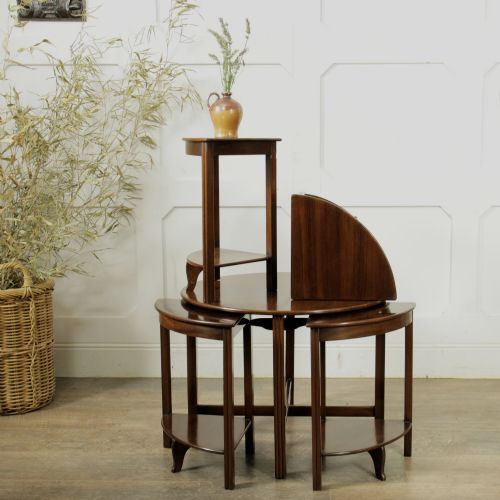
Makers utilised various periods and styles for these multifunctional pieces, ranging from Regency brass-inlaid rosewood to Chinoiserie lacquered surfaces and English Country oak. Sets emerge in configurations of three, four, or five tables, functioning as occasional, coffee, or lamp tables.
The layout accommodates domestic needs by offering multiple tabletops from the footprint of one small occasional table. Buyers encounter circular tops, square tops, and specialised configurations featuring integrated chess boards.
Materials and construction methods
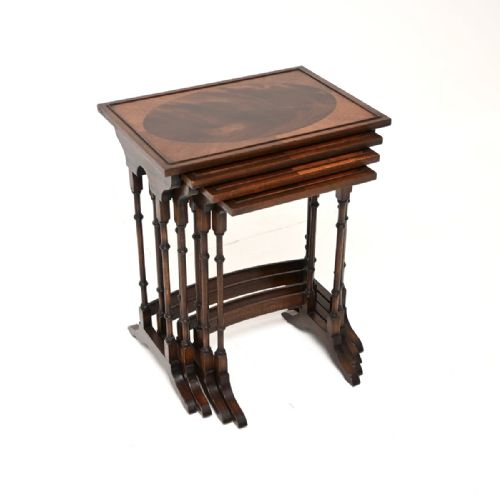
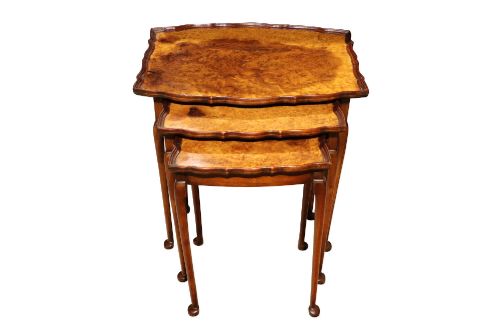
Cabinet makers built these sets primarily using solid hardwoods and decorative veneers such as mahogany, walnut, burr walnut, rosewood, and oak. Workshops applied satinwood cross banding, boxwood stringing, and elaborate marquetry inlay to enhance the timber surfaces.
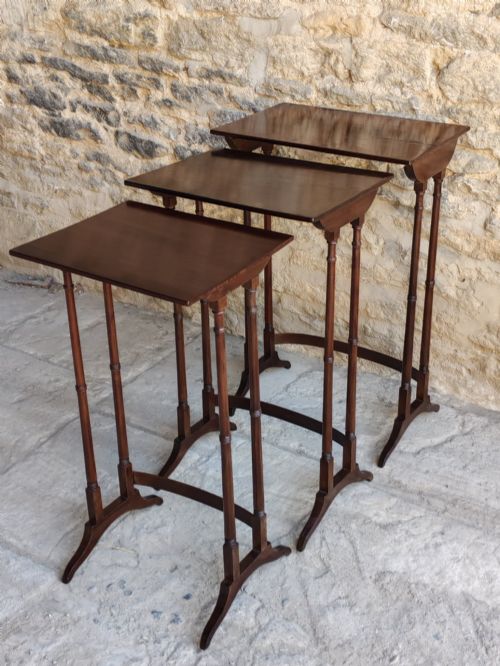
Construction relied on precise proportioning so that each smaller table cleared the frame of the next. Legs range from simple square tapered supports to turned columns and brass-inlaid profiles, ensuring stability across the graduated tiers.
Listings span multiple stylistic revivals, incorporating Edwardian mahogany, Art Deco walnut, Regency rosewood, and Chinoiserie lacquered finishes.
Distinguishing quality in tiered tables
Quality rests on the integrity of the timber selection and the precision of the joinery that allows each table to glide smoothly into position without binding. Superior examples display matched veneer grains across the nested surfaces and crisp inlay work that remains flush with the surrounding wood.
Design ambition separates standard commercial production from workshops associated with known makers and distinctive stylistic execution. Finer sets maintain structural rigidity across the smallest lower tier despite the constraints of reduced scale.
Émile Gallé·Harry and Lou Epstein·The Hille Furniture Company·Heal's
The Vintage Nested Side Tables Glossary
- Quartetto
- A set of four graduating tables designed to nest together. The term originates from nineteenth-century furniture nomenclature.
- Cross banding
- A border of veneer laid perpendicular to the grain of the main surface. This technique creates a contrasting decorative frame around the tabletop.
- Nesting tables
- A group of several tables of descending size that store one beneath another. They provide versatile surface space while occupying minimal floor area.
- Inlay
- Pieces of contrasting timber, shell, or brass fitted flush into the surface to form decorative patterns. Craftsmen secure these elements directly into the primary wood.
Vintage Nested Side Tables: Frequently Asked Questions
How do I care for wooden nested tables?
Maintain finished timber surfaces by dusting with a soft cloth and avoiding direct exposure to heat sources. Gentle application of appropriate wax preserves the polish of the grain.
Lift individual tables rather than sliding them roughly against one another to prevent unnecessary friction wear on the inner frame and legs.
What is a quartetto nest?
A quartetto nest consists specifically of four graduating tables built to slide one inside the next. The configuration appeared frequently in nineteenth-century and Edwardian drawing rooms.
Each table diminishes proportionally in height and width so the entire assembly occupies the visual space of a single small occasional table.
Where can I place nested tables in a room?
These versatile pieces serve well beside seating arrangements where extra surface area is needed temporarily. Individual tables can disperse around a room for drinks or lamps.
When not in use, the entire set stacks together against a wall or beside a sofa to keep walkways clear in smaller living spaces.
How do I identify Art Deco nested tables?
Art Deco examples often feature geometric profiles, exotic timbers like Indian rosewood or teak, and clean lines free of heavy period ornamentation. Some sets incorporate rounded tops or carved details.
Construction from this era frequently reflects streamlined modernism and may bear stamps or labels from prominent commercial furniture makers of the period.