




Edwardian Occasional Table Set
An edwardian occasional table set delivers clever stacking utility, offering multiple surfaces that deploy instantly for tea or display before tucking neatly away.
Edwardian Occasional Table Set
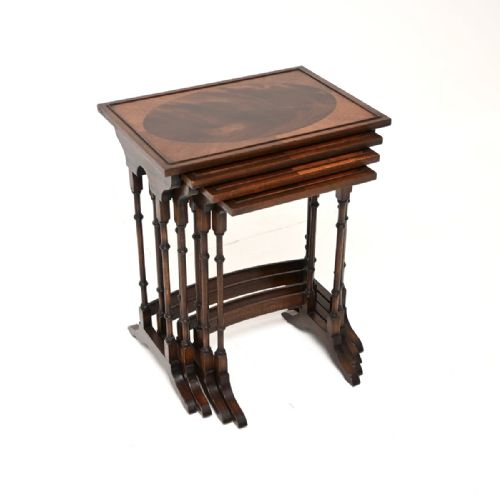
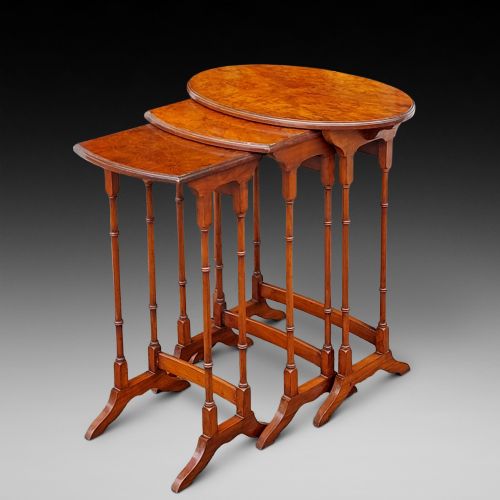
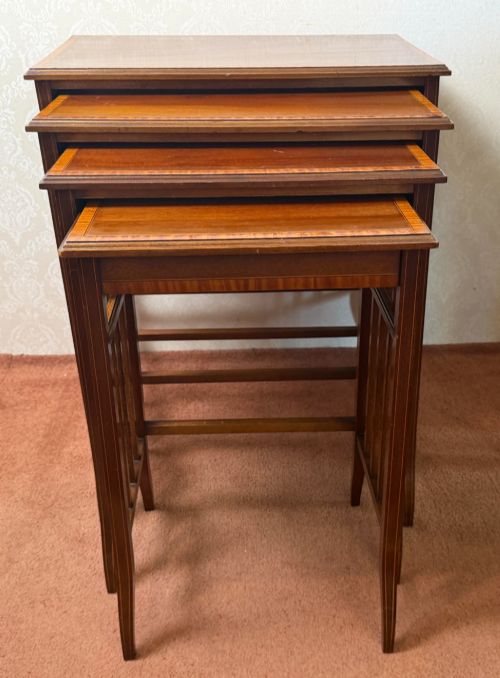
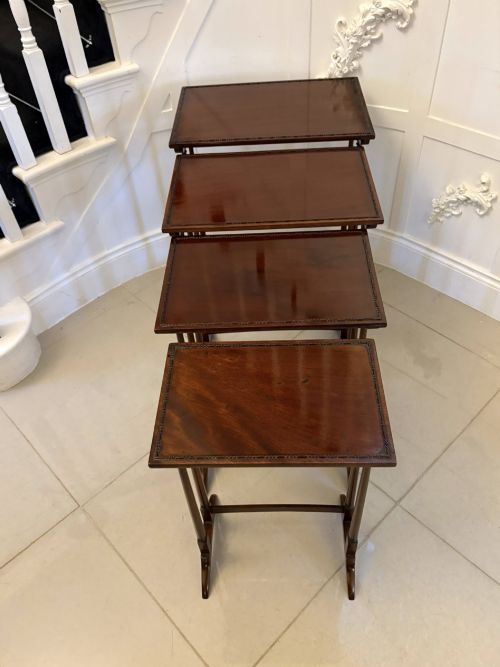
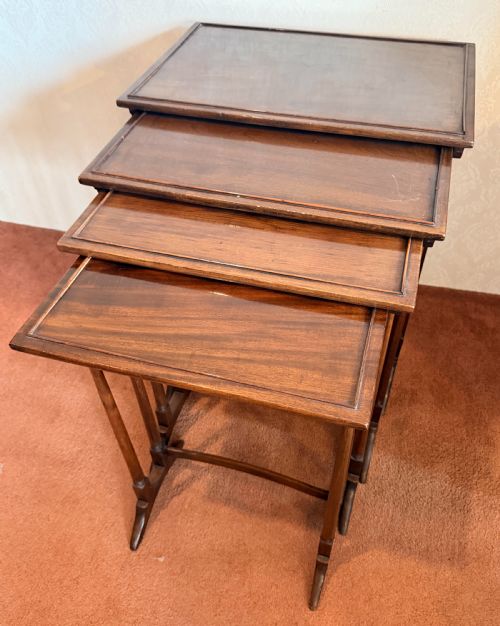
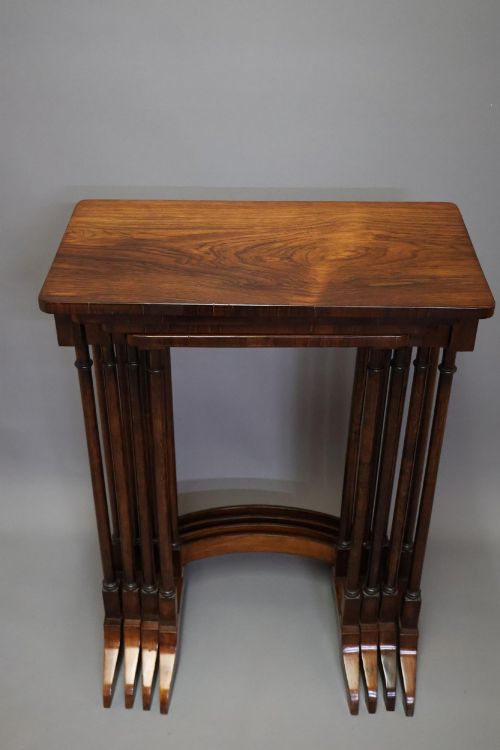
An edwardian occasional table set primarily manifests as a nest of tables, often referred to as a quartetto when comprising four graduated pieces designed to slide one beneath another. While the Edwardian period dominates the selection, pieces stretch from the nineteenth century into the twentieth century, encompassing Victorian, Regency, and Georgian style influences.
The most common configuration on this page is a set of four tables in mahogany, frequently enhanced with satinwood inlay or cross banding. Sets range from circular designs and ovals to traditional rectangular tops supported by square tapered legs.
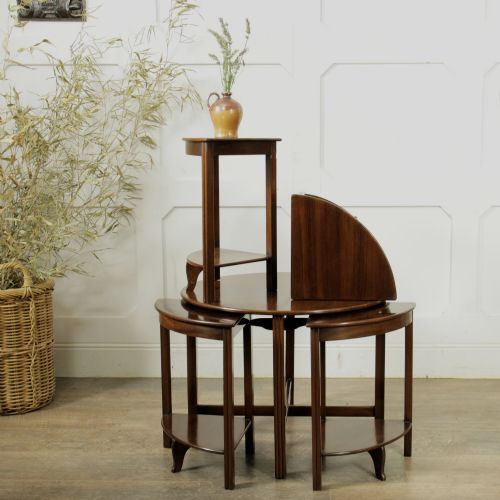
Alternative configurations include trios of tables and occasional pieces finished in walnut, burr walnut, oak, and more decorative Chinoiserie lacquer. These portable surfaces served domestic needs in sitting rooms and drawing rooms, adapting swiftly to social requirements.
Standards of craftsmanship
Quality reveals itself in the crispness of the satinwood inlay, the selection of figured timber veneers such as burr walnut, and the balance of the proportions when fully nested. Superior examples maintain structural rigidity across all tiers without looseness in the joints or binding when sliding the tables apart.
Refinement in leg shaping, such as tapered or slender turned supports, distinguishes finer workshop output from utilitarian alternatives. The preservation of original polished surfaces and intact decorative lacquer further separates standard production from exceptional pieces.
Listings feature woods spanning mahogany, walnut, satinwood, oak, teak, and rosewood, alongside decorative lacquer.
The Edwardian Occasional Table Set Glossary
- Quartetto
- A matched set of four tables designed to graduate in size and nest completely beneath the largest one. This term appears frequently in Edwardian and nineteenth-century descriptions.
- Cross banding
- A border veneer applied around the perimeter of a tabletop with the grain running perpendicular to the centre panel. It frames the primary wood and highlights geometric shapes.
- Satinwood inlay
- Contrasting light-coloured timber inserted into recesses on the primary wood surface to create decorative lines or motifs. Boxwood is frequently used for similar linear stringing.
- Chinoiserie
- European decorative style reflecting Chinese artistic motifs, often rendered in lacquer with raised gilt ornamentation. It appears on select occasional tables from the early twentieth century.
- Occasional table
- A small, portable table intended for specific, intermittent domestic tasks rather than permanent placement. These pieces moved easily around the room for tea, reading, or sewing.
Edwardian Occasional Table Set: Frequently Asked Questions
How do I use a nest of tables?
Deploy the individual tables around the room as separate surfaces for drinks, books, or lamps when entertaining guests. When not in use, slide them sequentially back into the main frame to save floor space.
Position the set beside a sofa or armchair where the smaller tiers can be easily pulled out individually. This arrangement provides flexible tabletop space without cluttering the room.
What is a quartetto set?
A quartetto set specifically consists of four graduated tables designed to stack inside one another. The term derives from musical quartets and gained popularity during the nineteenth and early twentieth centuries.
These sets usually feature a master table large enough to house the three progressively smaller companions underneath. They represent a sophisticated variation of the standard nesting table.
How do I date these tables?
Examine the timber selection, leg profiles, and inlay styles to determine the period. Edwardian pieces often combine lighter mahogany with delicate satinwood stringing and slender tapered legs.
Heavier proportions, darker finishes, and sturdier turned supports frequently point towards Victorian or earlier nineteenth-century origins. Reviewing construction methods inside the aprons also aids in establishing the era of manufacture.
Are these tables sturdy enough for daily use?
Most pieces were built to withstand regular domestic service, utilising sound joinery to support lamps, cups, and decorative items. Care should be taken when moving them to avoid straining the slender leg joints.
Lighter frames benefit from gentle handling rather than heavy weight bearing. Placing them on even flooring ensures the nested tiers rest without undue stress on the frames.