


Vintage Mihrab Prayer Rug
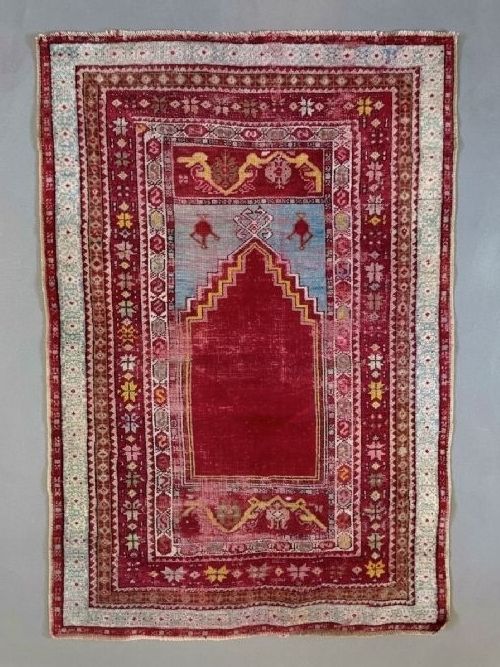
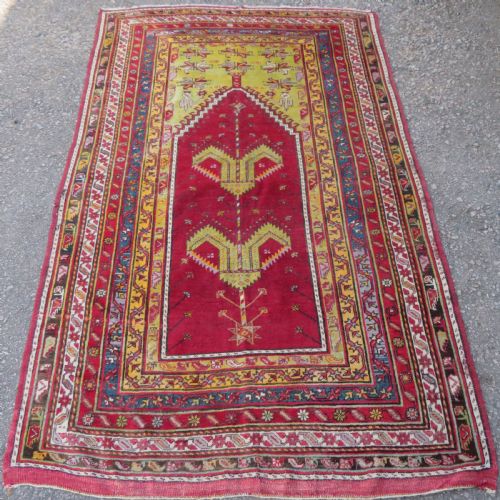
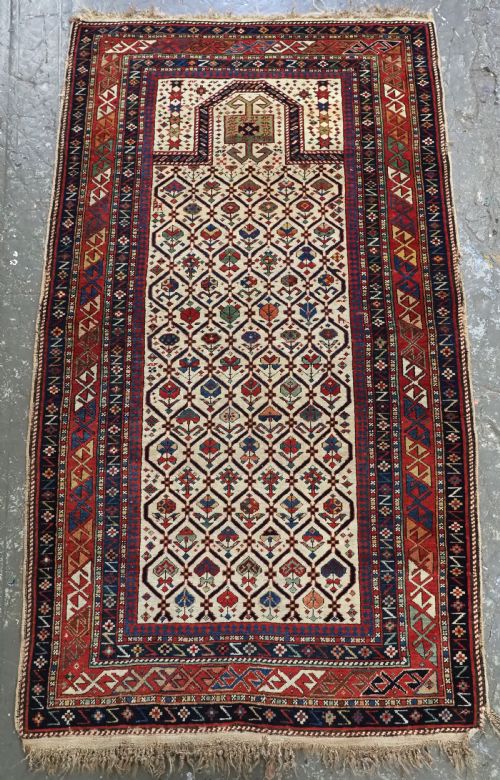
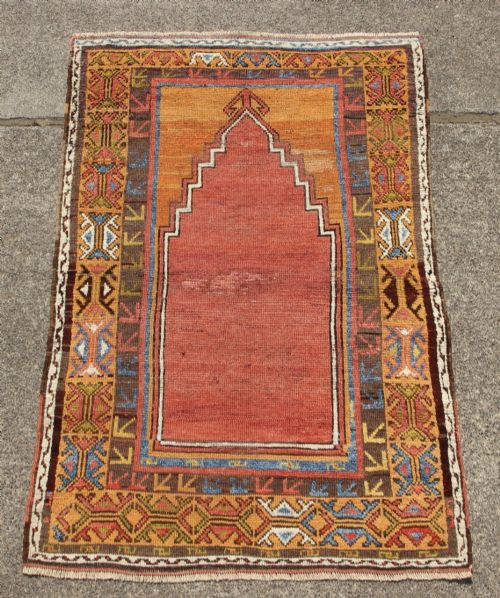
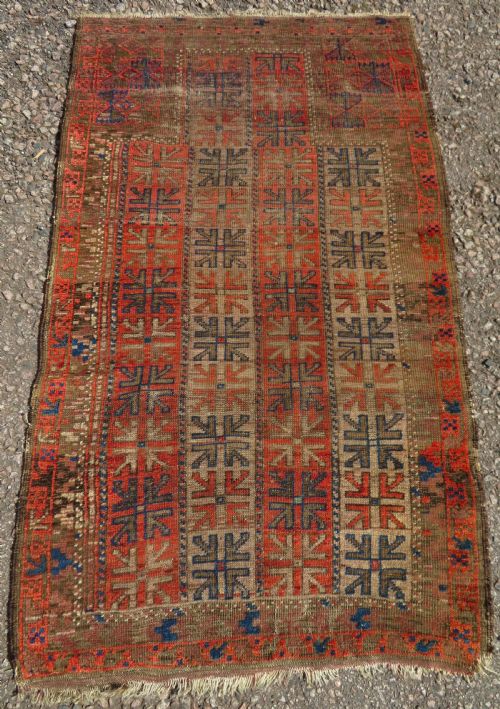
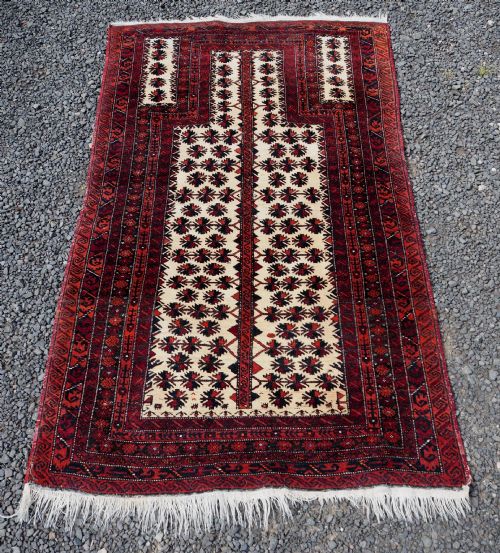
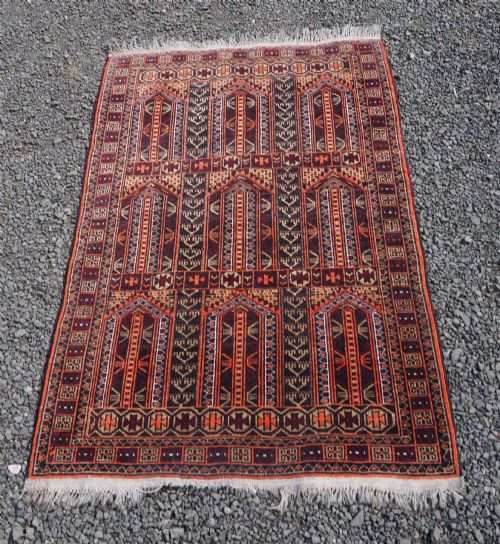
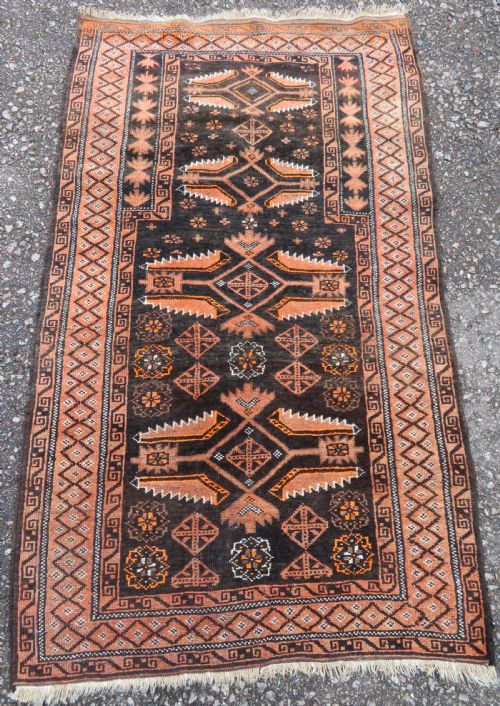
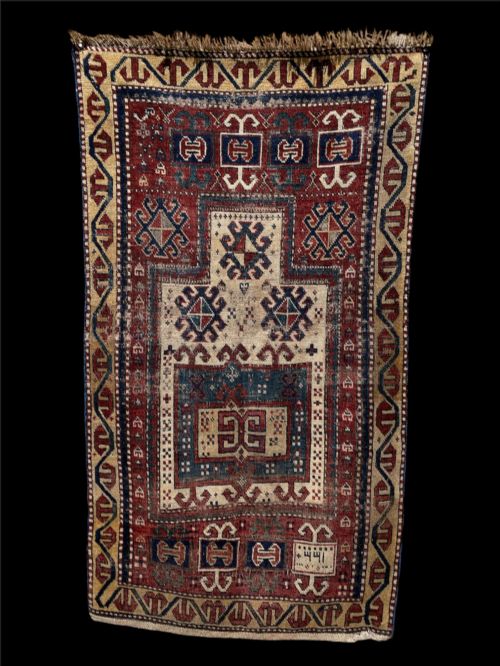
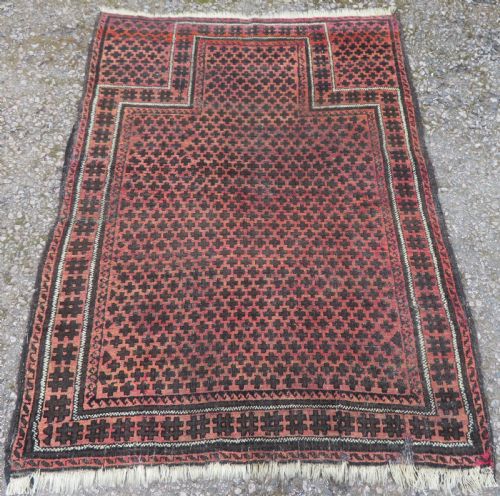
When you choose a vintage mihrab prayer rug, you acquire a textile defined by its pointed architectural niche designed to direct devotion.
Vintage Mihrab Prayer Rug
A vintage mihrab prayer rug is a portable textile featuring a distinct arch motif that traditionally oriented the worshipper towards Mecca. These works emerge from diverse weaving traditions across Anatolia, the Caucasus, Persia, and Central Asia, spanning village and tribal workshops.
The selections available here range from mid-nineteenth-century Anatolian and Caucasian examples to early twentieth-century Afghan and Persian pieces. Buyers frequently encounter regional formats like Baluch, Gendje, and Ghiordes carpets, often woven with distinctive wool piles or silk embroidery on cotton grounds.
How they were made
Weavers constructed these textiles predominantly using wool, hand-spun wool, cotton, and occasionally silk or camel hair for specialised pile and foundation work. Natural dyes provided the foundational palette for regional patterns, yielding rich tones across fields and borders.
Techniques varied from dense pile knots on wool foundations to delicate silk thread embroidery applied to cotton grounds, as seen in Central Asian suzanis. Long kilim ends and mixed techniques such as camel wool integration further characterise regional construction methods.
Vintage Mihrab Prayer Rug Retail Price Guide 2026
Typical asking prices for vintage mihrab prayer rug among the pieces listed under this phrase on Sellingantiques today, from the lower quarter to the upper quarter. They describe what is for sale here now, not the wider market.
Listings feature prayer rugs spanning the nineteenth and early twentieth centuries, constructed from wool, cotton, and silk.
What varies in quality
Quality in these textiles rests upon the precision of the knotting, the complexity of the architectural mihrab design, and the clarity of the natural dyes used in the field. Finer execution shows in the crisp geometry of floral lattices, rams horn motifs, and secondary borders.
The integrity of the materials also dictates the standing of a piece, with hand-spun wool and tight foundations outlasting looser structures. Regional distinctiveness, such as scarce blue grounds or unusual mosque designs, elevates specific examples above standard village output.
Kirsehir·Dagestan·Konya·Baluch·Kashan·Ghiordes·Ladik·Taimani Sistan·Gendje·Kazak·Marasali·Bandirma·Uzbek·Kizil Ayak·Pashtun
The Vintage Mihrab Prayer Rug Glossary
- Mihrab
- The arched niche depicted on a prayer rug, symbolising the direction of prayer. This architectural form is the central visual anchor of the design.
- Suzani
- An embroidered textile panel from Central Asia, often worked in silk thread on a cotton ground. These pieces frequently adopt the prayer format with niche designs.
- Kilim
- A flatweave textile structure lacking a pile, often appearing at the ends of village and tribal rugs. These flatwoven sections protect the main knotted field.
- Ground
- The background colour or surface of the main field within a carpet. Regional preferences often dictate whether this space is blue, red, or yellow.
- Pile
- The upright yarn loops that form the tactile surface of a woven carpet. This material is typically wool, hand-spun wool, or silk.
Vintage Mihrab Prayer Rug: Frequently Asked Questions
How do I identify a mihrab design?
Look for the distinctive pointed arch shape positioned at one end of the rug field. This motif mimics the architectural prayer niche found in mosques.
The arch directs the eye toward the central field, often filled with floral lattices or geometric symbols.
Where were these prayer rugs made?
These textiles originate from weaving centres across Anatolia, the Caucasus, Persia, and Central Asia. Distinct tribal and village groups developed their own local interpretations of the prayer format.
Specific regions like Konya, Ghiordes, and Dagestan produced recognizable styles with unique border patterns and colour palettes.
What materials should I expect?
Pile rugs typically utilise wool, hand-spun wool, cotton foundations, and occasionally camel hair or silk. Embroidered pieces, such as suzanis, feature silk thread worked onto cotton grounds.
Natural dyes provide the traditional colour depth found across these regional textiles.
How do I live with an antique prayer rug?
Place these textiles in low-traffic areas or mount them as wall hangings to protect the historical fibres from excessive wear. Use a quality underlay to prevent slipping and cushion the foundation.
Keep them away from direct sunlight to preserve the natural dyes.