




Blue Wool Prayer Rug
A blue wool prayer rug brings traditional village weaving into a room, offering rich indigo fields and geometric mihrab designs.
Blue Wool Prayer Rug
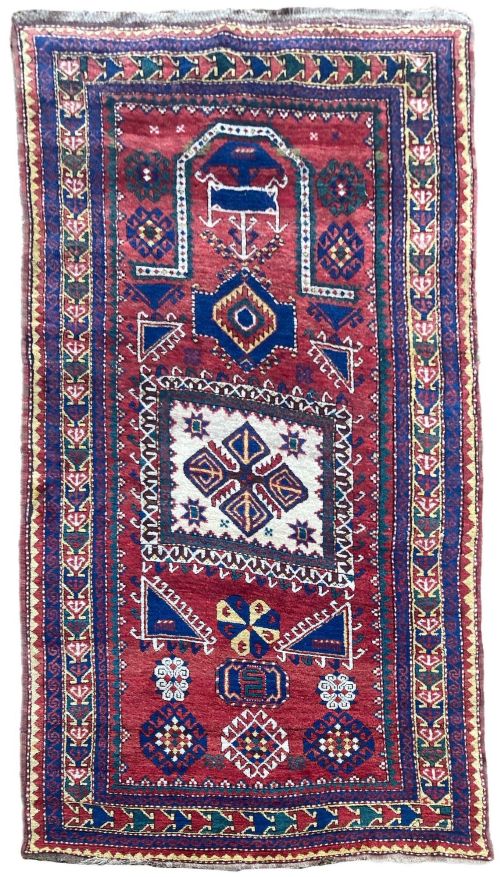
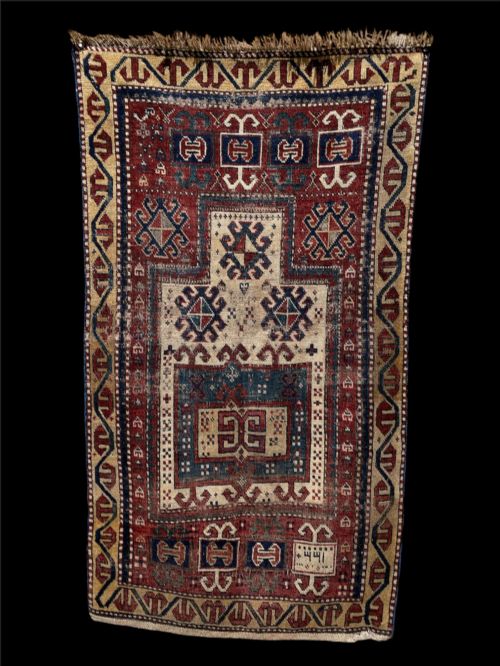
A blue wool prayer rug typically originates from Caucasian, Anatolian, or Persian weaving traditions, featuring the characteristic arched mihrab design intended to direct the wearer during devotion. These portable floor coverings served practical daily use in nomadic camps, village homes, and urban households alike across the nineteenth and early twentieth centuries.
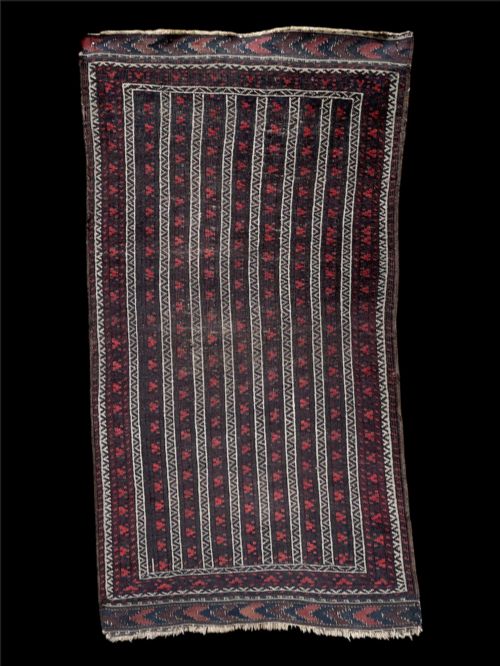
The selection on this page centres heavily on tribal and village output, particularly Baluch, Kazak, and various Turkish and Caucasian types. Collectors encounter pieces spanning from the eighteenth century up to the 1930s, displaying a vast range of regional motifs from geometric octagons to floral mihrabs.
Buyers seeking a blue wool prayer rug will find examples utilising indigo dye fields, alongside ivory, madder red, and secondary accents. Formats range from compact portable mats to larger area rugs, reflecting the distinct utilitarian and aesthetic requirements of each weaving group.
Materials and construction methods
Weavers constructed these textiles predominantly using hand-spun wool on wool or cotton foundations, occasionally incorporating goat hair or angora wool for specific pile details and structural integrity. Natural dye sources provided the deep blue indigo grounds, creating subtle abrash variations where dye uptake shifted across the fleece.
Nomadic and village workshops knotted these rugs by hand onto vertical or horizontal looms, applying dense pile weaves designed to withstand generational use. Edge finishes typically involve overcast selvedges and knotted warps, completing the traditional textile structure.
Blue Wool Prayer Rug Retail Price Guide 2026
Typical asking prices for blue wool prayer rug among the pieces listed under this phrase on Sellingantiques today, from the lower quarter to the upper quarter. They describe what is for sale here now, not the wider market.
Listings span from eighteenth-century Turkish examples to 1930s Anatolian pieces, utilising hand-spun wool, cotton, and goat hair.
Factors influencing quality
Quality in these textiles rests upon the density of the knotting, the purity and depth of the wool fleece, and the stability of the natural dyes used in the field. Superior examples display crisp graphic drawing within the mihrab and borders, whereas lesser pieces may show compressed designs or rigid symmetry.
The handling of the wool itself dictates tactile success, with resilient hand-spun fleeces retaining lanolin and suppleness over centuries. Condition also plays a role, distinguishing structurally intact surfaces from heavy pile loss or compromised foundations.
The Blue Wool Prayer Rug Glossary
- Mihrab
- The arched niche design at one end of a prayer rug, symbolising the direction of prayer towards Mecca. It forms the central focal point of the field.
- Abrash
- The natural variation in colour tone within a single field of a rug, caused by shifts in dye batches or successive lots of hand-spun wool.
- Selvedge
- The bound or reinforced side edges of a carpet that prevent the foundation threads from fraying during daily use.
- Boteh
- A stylised almond or pear-shaped motif of Persian origin, frequently repeated across tribal and village rug fields.
- Kazak
- A durable geometric rug type produced by Caucasian village and nomadic weavers, known for bold primary colours and heavy wool pile.
Blue Wool Prayer Rug: Frequently Asked Questions
How do I identify a prayer rug?
A prayer rug is distinguished by its primary architectural motif, known as a mihrab, which forms a pointed arch at one end of the field. This design indicates the directional nature of the textile, intended to orient the user during daily devotions.
While formats vary, most examples remain compact enough for portability, featuring borders and central fields that focus attention toward the arched apex.
Where were these rugs made?
These textiles originate from distinct weaving regions across the Caucasus, Anatolia, and Persia, produced by village workshops and nomadic tribes. Specific groups include Baluch tribes of East Persia, Caucasian Kazak weavers, and Turkish centres such as Ladik and Kirsehir.
Each region developed local variations in knotting technique, palette, and wool selection, allowing specialists to attribute origins through design motifs.
How should I care for antique wool rugs?
Antique wool rugs require gentle maintenance, beginning with regular, low-suction vacuuming without a rotating beater bar to protect the pile and foundation. Keeping the textile out of direct sunlight prevents natural dyes from fading over time.
Professional specialist cleaning is advised for deep maintenance, ensuring the hand-spun wool and natural foundations remain undamaged by harsh chemical treatments.
What does blue ground mean?
A blue ground describes the predominant background colour of the central field, usually achieved through natural indigo dyeing processes. This deep blue backdrop sets off contrasting motifs in ivory, red, and yellow.
In many regional types, discovering a blue ground adds a layer of visual depth and scarcity compared to standard madder red fields.