
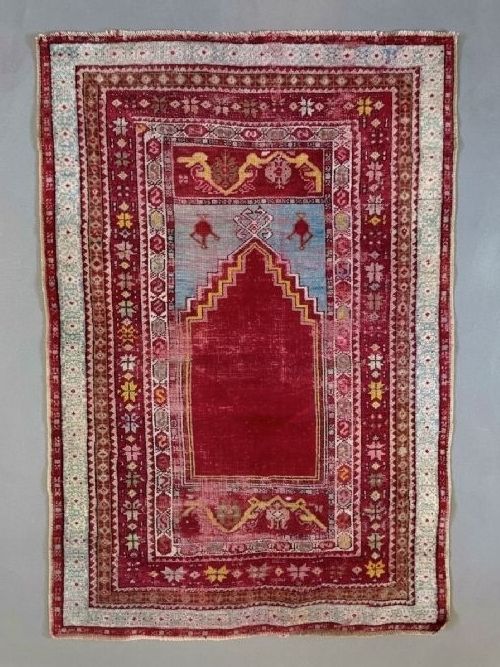


Ottoman Prayer Mat
An ottoman prayer mat is a woven textile featuring a mihrab design, serving historically for daily Islamic worship.
Ottoman Prayer Mat
An ottoman prayer mat is a woven textile defined by a central niche or mihrab design, historically utilised for daily Islamic worship. These rugs originate from various regions including Anatolia, incorporating traditional weaving centres such as Ghiordes, Ladik, Milas, and Konya. The pieces available here span from the eighteenth century through to the early twentieth century, reflecting diverse regional aesthetics.
Buyers will most frequently encounter nineteenth-century examples in wool and cotton, often categorised under broader regional headings such as Anatolian Tribal or Ottoman Turkish. These floor coverings and area rugs typically display distinctive architectural prayer arches, sometimes featuring multi-niche layouts or column motifs. Each piece carries the distinct structural conventions of its specific weaving village or nomadic group.
How they were made
These textiles rely primarily on wool and hand-spun wool foundations and pile, occasionally incorporating silk for finer city pieces such as those from Kayseri. Weavers utilised natural dyes to achieve a spectrum of tones, ranging from deep saturated pigments to softer faded hues over time. Cotton is also utilised within the construction, particularly for structural warps and wefts.
The construction involves hand-knotting techniques executed on vertical or horizontal looms by regional artisans. Village workshops in areas like Milas, Ghiordes, and Ladik adhered to traditional local patterns and border arrangements, passing down specific colour combinations and motifs through generations.
Ottoman Prayer Mat Retail Price Guide 2026
Typical asking prices for ottoman prayer mat among the pieces listed under this phrase on Sellingantiques today, from the lower quarter to the upper quarter. They describe what is for sale here now, not the wider market.
Listings feature eighteenth and nineteenth-century pieces alongside early twentieth-century examples, constructed primarily from wool, hand-spun wool, cotton, and silk.
What varies in quality
The calibre of an ottoman prayer mat rests heavily on the handling of its natural dyes and the crispness of its drawn design. Pieces demonstrating exceptional depth of colour and well-balanced palettes distinguish themselves from simpler or more faded executions. The precision of the knotting and the integrity of the wool pile further determine the structural longevity of the textile.
Design complexity and regional attribution play a significant role in distinguishing standard village weaving from masterworks of classic design. Examples featuring highly articulated prayer arches, detailed star borders, or unusual structural formats like multiple niches command greater attention from collectors.
The Ottoman Prayer Mat Glossary
- Mihrab
- The arched niche depicted on a prayer rug, symbolising the direction of Mecca. This architectural feature orientates the worshipper during ritual prayer.
- Saf
- A multiple-niche prayer rug designed to accommodate more than one person in prayer simultaneously. These continuous carpets display a row of joined arches.
- Ghiordes
- A historic Turkish weaving town renowned for distinctive prayer rug designs. Rugs from this centre often feature prominent floral motifs and double-recessed mihrabs.
- Ladik
- An Anatolian town famous for producing prayer rugs with distinctive tiered arches and tulip motifs. These pieces typically display structured geometric borders.
- Transylvanian
- A term applied to certain Anatolian rugs found historically in European churches of the region. These often feature column designs and specific medallion layouts.
Ottoman Prayer Mat: Frequently Asked Questions
How do I identify a Ghiordes prayer rug?
A Ghiordes prayer rug is typically identified by its distinctive arched mihrab and characteristic floral border arrangements. These pieces often exhibit finely knotted wool pile and traditional Anatolian colour palettes.
Look for specific structural traits associated with West Anatolian weaving centres, including distinct panel designs above and below the main prayer niche.
What is a Ladik prayer rug?
A Ladik prayer rug originates from central Anatolia and is recognised by its stepped prayer arch and stylised tulip motifs. These rugs frequently incorporate pillar or column designs within the field.
The lower panels often display repeating floral patterns that help distinguish Ladik village weaving from neighbouring production centres like Konya or Ghiordes.
Are these rugs suitable for floor use?
These historical textiles can be placed on floors in areas with light foot traffic, provided they are supported by a suitable conservation underlay. Gentle placement helps preserve the hand-spun wool pile and natural dye foundations.
Many collectors also choose to mount these prayer rugs on walls to protect the delicate structural integrity of eighteenth and nineteenth-century foundations.
How do I distinguish regional Anatolian types?
Distinguishing regional types relies on examining the border motifs, colour combinations, and structural characteristics unique to specific weaving towns. Milas rugs often feature distinct star borders, while Kirsehir pieces display specific palette choices.
Analysing the specific form of the prayer arch and the materials used provides further clues to whether a piece originates from West or Central Anatolia.