


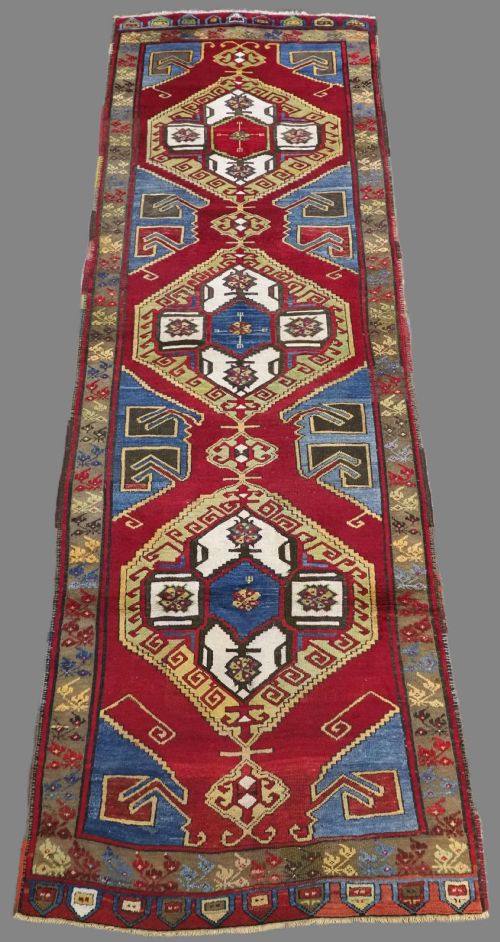


Antique Middle Eastern Carpet
An antique middle eastern carpet brings grounded texture and rich pattern into a room through centuries of weaving tradition.
Antique Middle Eastern Carpet
An antique middle eastern carpet encompasses runner rugs, area rugs, and prayer rugs originating from regions such as Anatolia and Turkoman lands. These pieces reflect distinct tribal and regional identities through traditional layouts.
The buyer on this page is most likely to encounter 19th-century and 1900 examples, including styles like Tribal Kurdish, Ottoman Turkish, and Anatolian. Forms range from specific prayer rugs to classical design runners.
Each antique middle eastern carpet demonstrates the specific design vocabulary of its origin, whether that is a Ghiordes prayer rug, a Ladik or Milas piece, or a Karapinar rug.
How they were made
Makers constructed each antique middle eastern carpet using natural textile materials, predominantly wool and cotton as recorded in the listings. These fibres provided the durable foundation and pile required for heavy floor use.
Weavers employed traditional hand-knotting and weaving techniques passed down through generations in tribal and regional workshops across Anatolia and the broader Middle East.
Antique Middle Eastern Carpet Retail Price Guide 2026
Typical asking prices for middle eastern carpet among the pieces listed under this phrase on Sellingantiques today, from the lower quarter to the upper quarter. They describe what is for sale here now, not the wider market.
Listings feature 19th-century and 1900 pieces utilising wool and cotton materials across runner, area, and prayer rug formats.
What varies in quality
The distinction between tiers of an antique middle eastern carpet lies in the precision of the knotting and the crispness of the classical or tribal design. Finer execution yields sharper geometric and floral motifs.
Material selection and the handling of wool and cotton foundations also divide standard examples from superior ones, influencing the handle, drape, and structural integrity of the textile.
The Antique Middle Eastern Carpet Glossary
- Prayer rug
- A small rug featuring a mihrab or niche design, traditionally used for daily Islamic prayers. These pieces often direct the eye toward a central focal point.
- Runner
- A long, narrow carpet format designed specifically for hallways, corridors, or alongside beds. The proportions suit linear architectural spaces.
- Pile
- The upright yarn loops that form the soft surface of a carpet, created by knotting wool onto the foundation warp and weft threads. Pile density affects wear resistance.
- Warp
- The vertical threads stretched tightly on the loom that carry the structural weight of the carpet. Cotton and wool are typical warp materials.
- Weft
- The horizontal threads passed back and forth through the warp threads to lock the knots in place. This contributes to the structural firmness of the weave.
Antique Middle Eastern Carpet: Frequently Asked Questions
Where were these rugs made?
The pieces originate from regions across Anatolia, Turkey, and broader Middle Eastern tribal territories. Specific origins include workshops and nomadic groups associated with Kurdish, Ottoman, and Turkoman traditions.
Production methods varied by locality, resulting in distinct regional designs such as Ghiordes, Ladik, Milas, and Karapinar rugs.
What materials are used?
Surviving examples rely primarily on wool and cotton for their construction. Wool typically forms the soft surface pile, while cotton or wool serves as the foundational warp and weft threads.
These natural fibres provide the durability necessary for the rugs to survive from the nineteenth century into the present day.
How do I identify a prayer rug?
A prayer rug is typically identified by its distinctive architectural niche design, known as a mihrab, which points in a specific direction during use. Examples like Ghiordes and Ladik prayer rugs showcase this traditional format.
These formats are usually smaller in scale compared to room-sized carpets or long runners.
How should I care for an antique carpet?
Protect the wool and cotton fibres by placing the rug in low-moisture areas away from direct, harsh sunlight to prevent fading. Regular gentle vacuuming without a beater bar removes trapped dust from the pile.
Consult a textile specialist experienced in historic middle eastern carpets for professional washing and conservation.