




Vintage Metal Platter
These vintage metal platter selections span centuries of craftsmanship, offering practical serving surfaces and decorative display chargers in copper, silver plate, and pewter.
Vintage Metal Platter
When you search for a vintage metal platter, you encounter a diverse array of serving trays, decorative plates, and large chargers spanning from the seventeenth century through to the art deco period. The selection includes domestic English pewter plates alongside ornate Middle Eastern copper dishes and Japanese cloisonne enamel pieces.
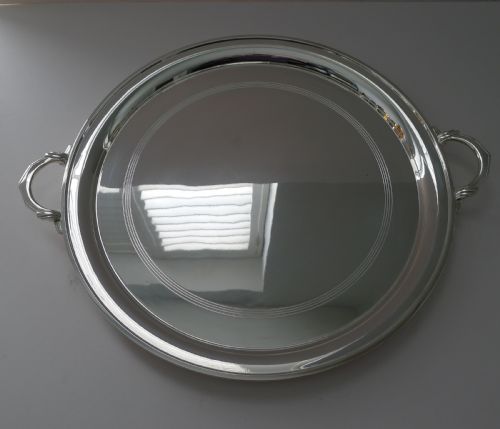
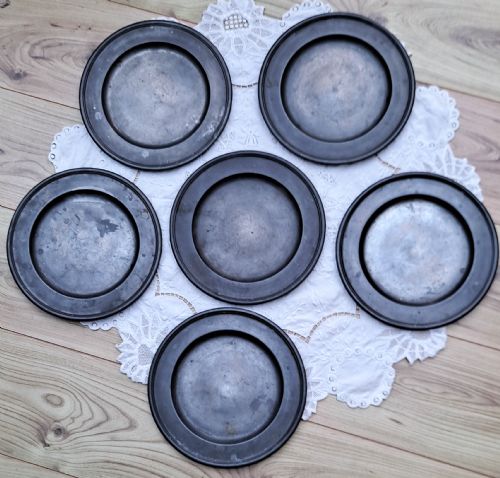
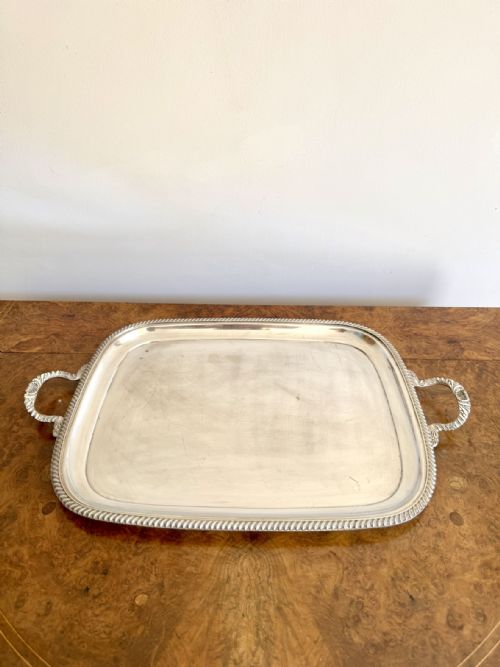
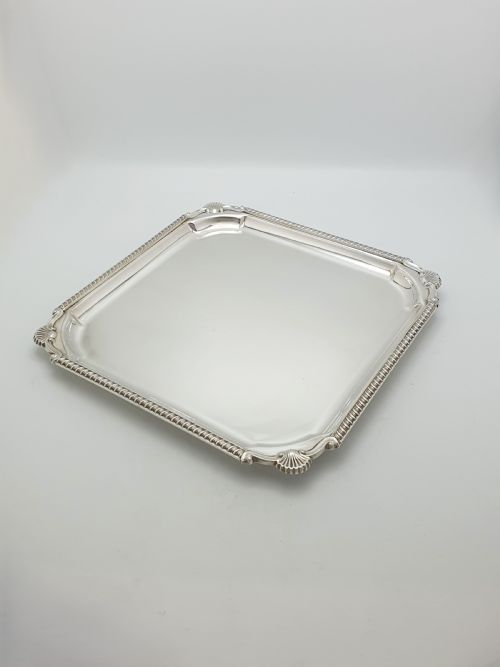
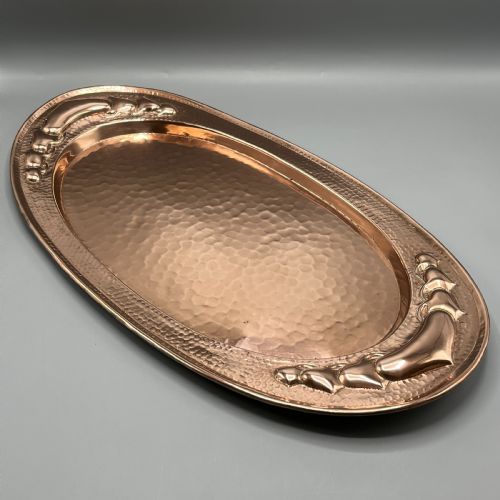
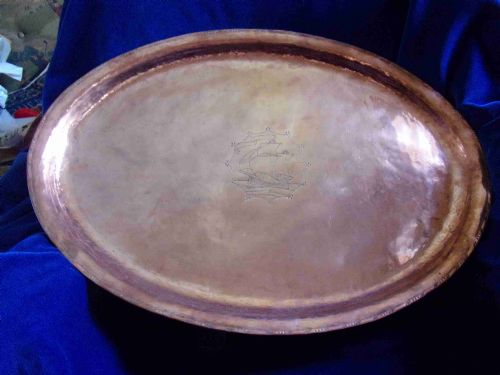
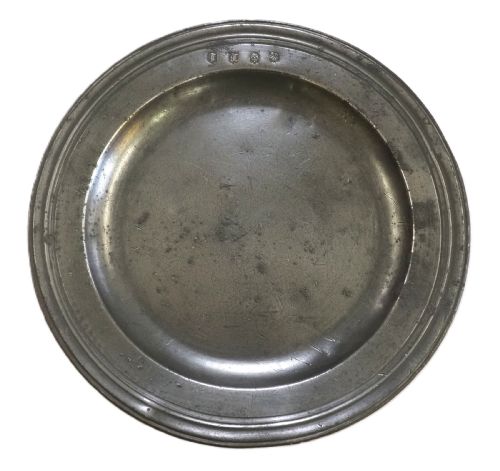
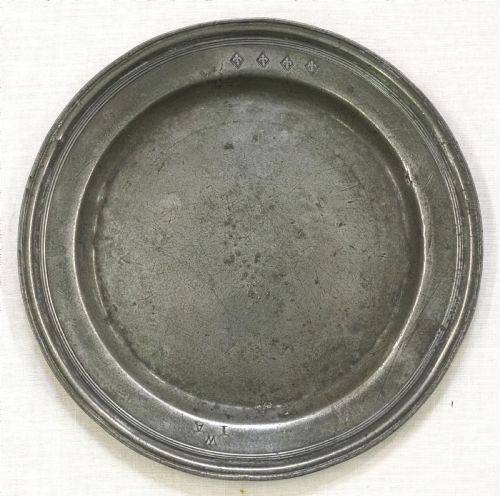
English pewter plates and chargers from the seventeenth and eighteenth centuries represent earlier forms, often featuring plain or reeded rims produced by makers such as John Tubb and William Wright. By contrast, twentieth-century examples lean towards Art Deco cocktail trays in silver plate, alongside Arts and Crafts beaten copper items.
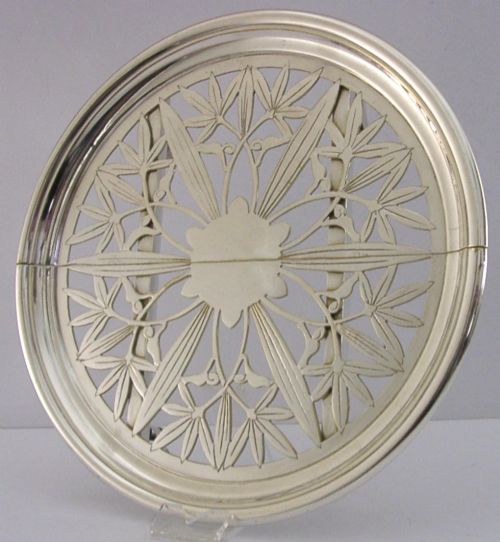
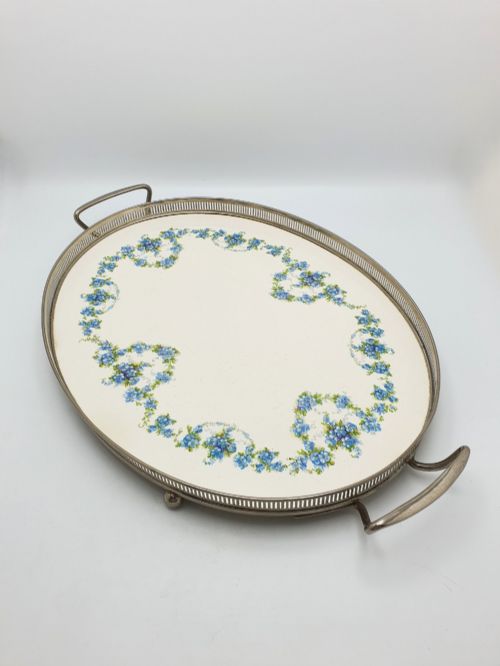
You will also find mixed metal trays, brass chargers, and Japanese lacquer plaques, demonstrating the global reach of these decorative serving objects. Continental European items, including French art deco dish stands and continental oval serving trays with floral centres, further broaden the available forms.
Materials and construction methods
The pieces on this page are constructed from base and precious metals, utilising copper, brass, pewter, silver, and silver plate, alongside EPNS and patinated copper surfaces. Many incorporate decorative techniques such as repousse work, engraving, and silver inlay.
Arts and Crafts and Art Nouveau items often display hand-beaten surfaces and raised foliate motifs, while Japanese plates utilise cloisonne enamel applied to metal bases. Older pewter items rely on casting and reeded rim shaping, whereas Old Sheffield Plate and later silver-plated pieces employ bonded metal techniques.
Several platters feature owls, leaping koi, and leaping dragons, bringing a lively menagerie right to the dining table.
Distinctions in craftsmanship and design
Quality in these metal objects rests upon the crispness of the repousse relief, the depth of the engraving, and the structural integrity of the rim or border. Superior examples show confident hand-working, clean soldered joints, and balanced proportions across circular or oval formats.
In enamelled or inlaid works, such as Japanese cloisonne or Middle Eastern copper dishes, quality is determined by the precision of the wirework, the richness of the colour palette, and the preservation of the surface pattern over time.
Keith Murray For Mappin & Webb·William Wright·Christofle·T & H Compton·John Tubb·Robert Moulins II·Humphrey Evans II·Hugh Wallis·Padley Parkin·Liberty & Co·Faulkner Bronze Company·Kinkozan
The Vintage Metal Platter Glossary
- Repousse
- A metalworking technique where the artisan hammers the metal from the reverse side to form a raised design on the front. This method is frequently seen on Arts and Crafts copper chargers and Middle Eastern brass trays.
- Pewter
- A malleable metal alloy historically composed chiefly of tin, used widely for English plates and chargers. Older examples often display maker marks and reeded rims.
- Cloisonne
- An ancient technique for decorating metal object surfaces, using wire compartments filled with enamel paste and fired. Japanese platters and plates frequently employ this detailed method.
- Old Sheffield Plated
- An early method of fusing a thin layer of silver to a thicker copper base, popular before modern electroplating techniques developed. Items made this way reveal subtle copper undertones where wear occurs.
- Toleware
- Enamelled and japanned metalware produced in imitation of Asian lacquerwork, often richly painted with pictorial scenes. Victorian examples display intricate hand-painted subjects.
Vintage Metal Platter: Frequently Asked Questions
How do I date antique pewter plates?
You can date antique pewter plates by examining the rim style, maker marks, and hammer or reeding details. Early seventeenth-century pieces often feature triple reeded rims and touchmarks specific to individual pewterers.
Later eighteenth-century examples tend towards plain rims and broader diameters, reflecting changing domestic dining fashions and workshop standards.
What is the difference between silver plate and solid silver?
Silver plate involves applying a thin layer of silver over a base metal such as copper, brass, or nickel silver. This technique allowed makers to produce large serving trays and cocktail accessories at a lower cost.
Solid silver pieces consist entirely of the precious metal throughout, though they are much less common among large serving platters due to their weight and material expense.
How were copper chargers used historically?
Copper chargers served primarily as decorative wall display pieces or grand serving platters for formal banquets. Their reflective surfaces and worked reliefs made them focal points in dining rooms.
Middle Eastern and Arts and Crafts examples were often displayed on sideboards or hung on walls to showcase intricate engraving and repousse craftsmanship.
How should I clean antique metal trays?
Antique metal trays require gentle maintenance to preserve their original patination and historic surface finishes. Harsh commercial dips or abrasive polishes can strip away centuries of accumulated character and thin plating.
Instead, use a soft cloth and mild, non-ionic soap where cleaning is strictly necessary, leaving patinated copper and aged silver plate undisturbed.