
Vintage Marble Top Console
A vintage marble top console brings cool stone and solid timber into a room, offering a sturdy surface that anchors an entrance or a reception space.
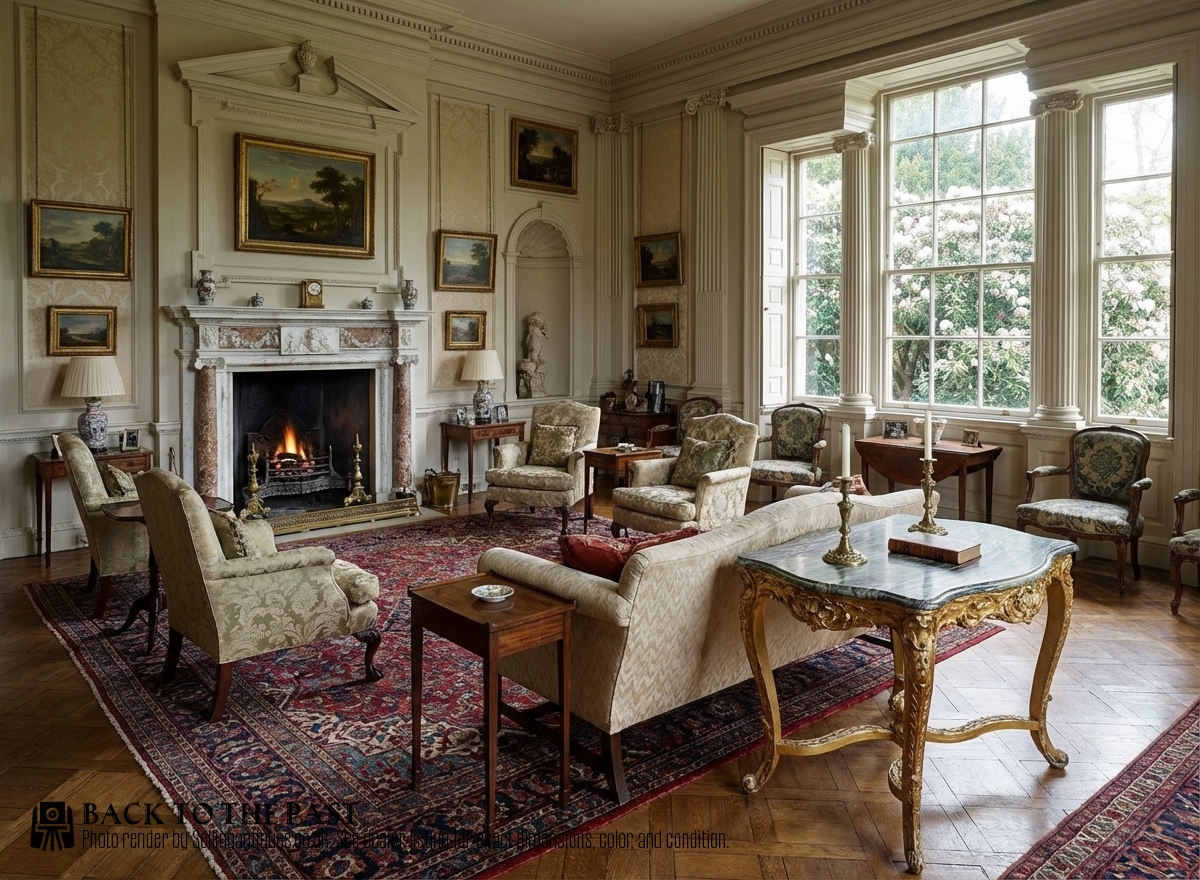
Vintage Marble Top Console
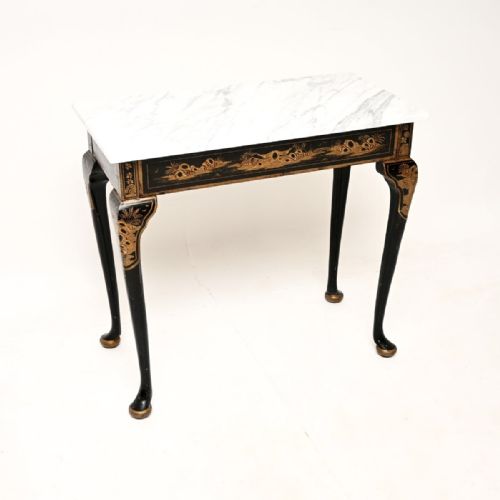
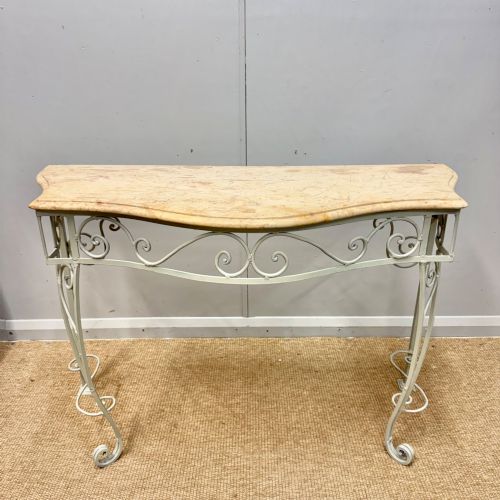
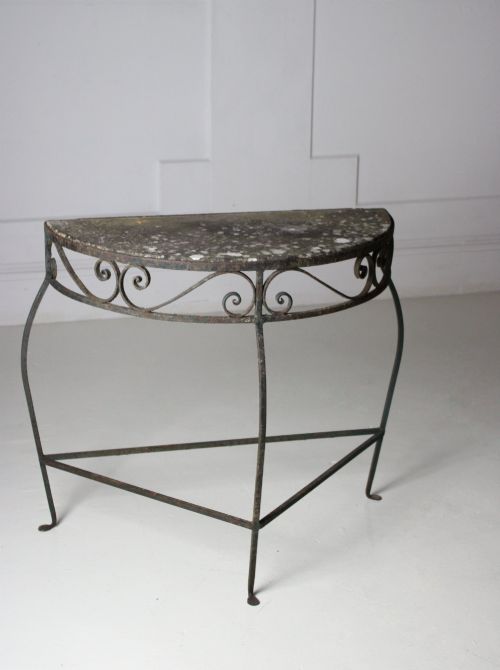
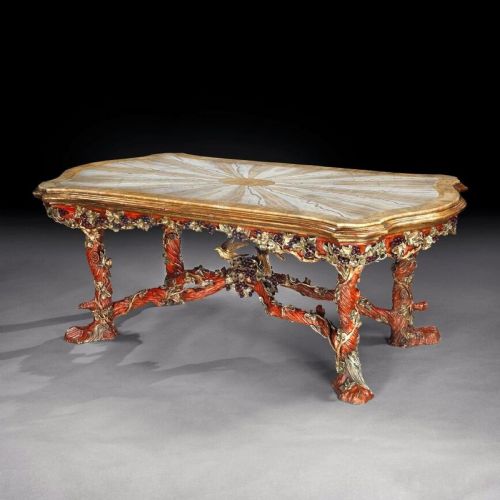
When you search for a vintage marble top console, you encounter a varied group of tables designed for domestic utility and display. The selection spans formal reception pieces to utilitarian preparation tables, originating from French provincial workshops and English parlours alike.
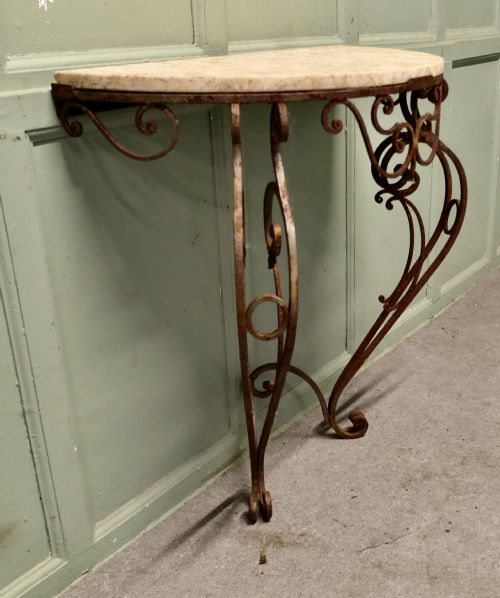
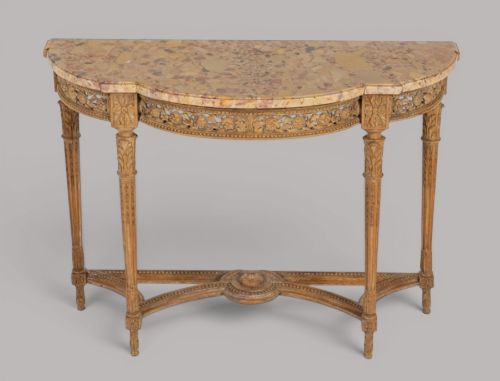
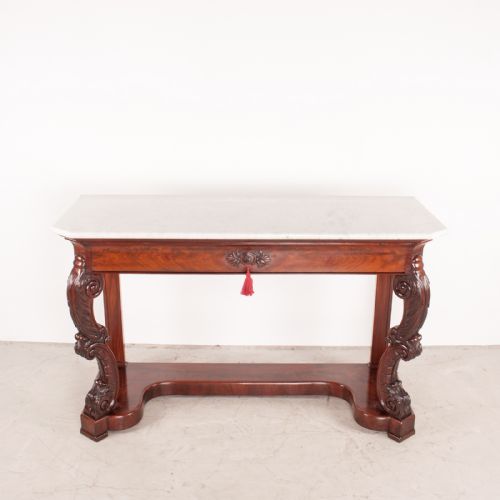
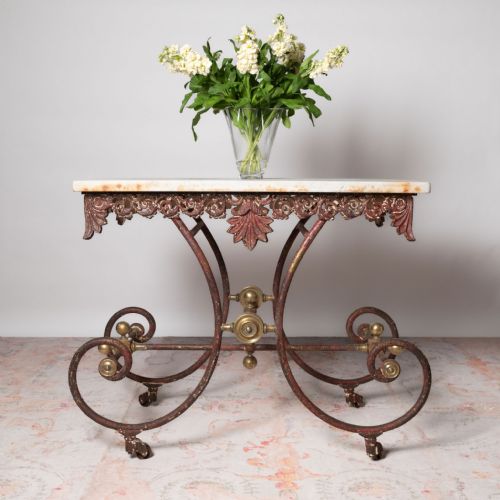
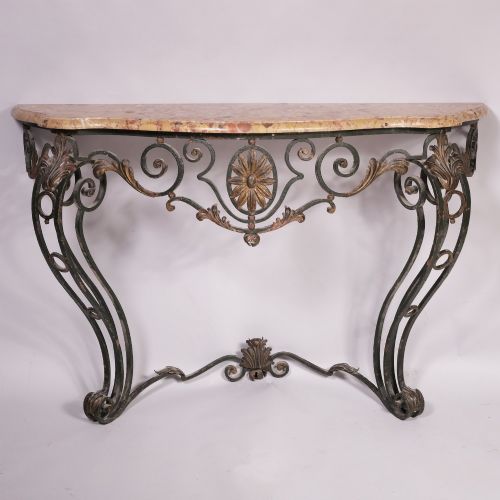
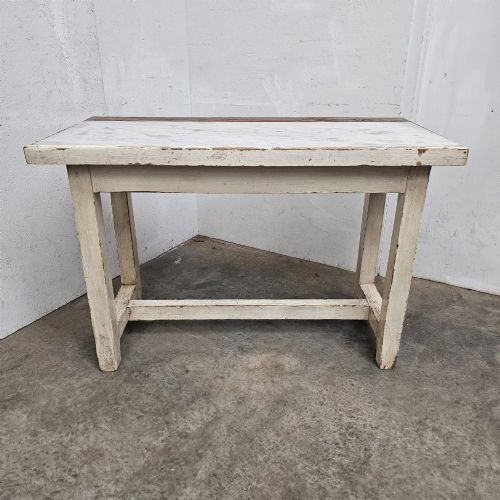
The pieces on this page appear in forms ranging from dedicated console tables and side tables to washstands, hall stands, and charcuterie prep tables. They draw on periods running from the eighteenth century through the Edwardian era up to the nineteen-thirties, reflecting diverse regional tastes.
How they were made
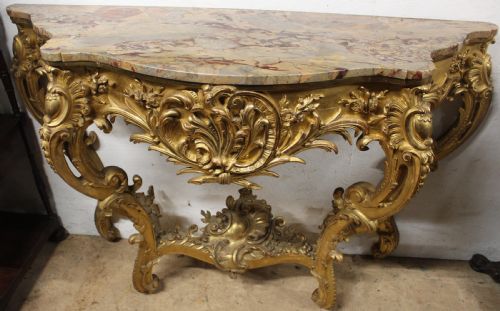
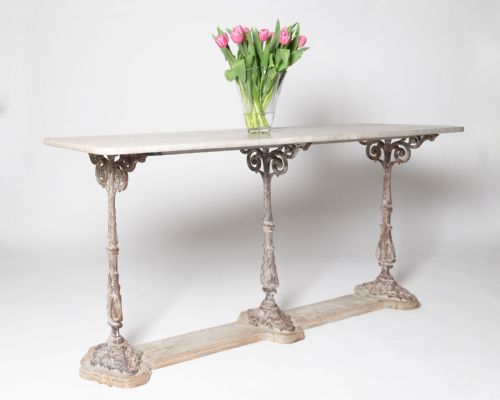
Cabinet makers and ironworkers constructed these tables using heavy structural timbers like mahogany, walnut, oak, and pine, paired with robust metal frames in cast and wrought iron. Giltwood, polychrome painted finishes, and lacquer work often frame the stone inset.
Slabs of marble, fossil marble, onyx, and pink Salome marble rest upon these wooden and metal bases, selected for their weight and cool surface utility. Joinery and metalwork techniques align with the specific period of manufacture, from eighteenth-century Louis XVI framing to Edwardian washstand construction.
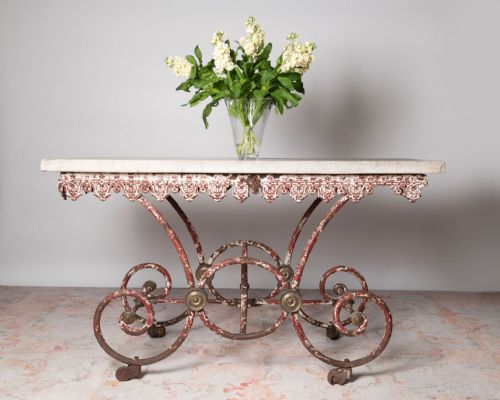
Some tables spent their youth holding raw meats in French butcher shops before retiring to polite modern hallways.
What varies in quality
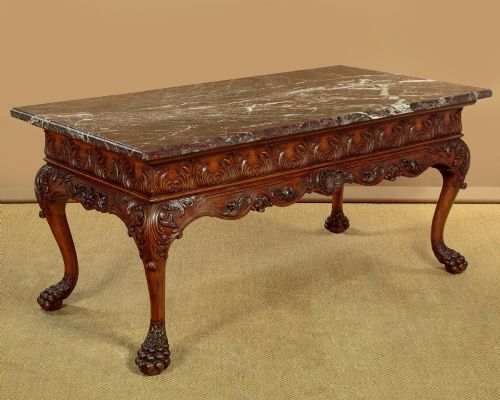
The distinction between standard examples and finer pieces lies in the selection of materials and the ambition of the carving. Carved rosewood, detailed giltwood, and substantial walnut bases indicate higher workshop investment than basic pine or standard oak frames.
The quality of the stone surface itself, the integration of parquetry or satinwood inlay, and the crispness of polychrome or neoclassical detailing separate everyday utility items from more decorative, high-status specimens.
Amleto Bertoni
The Vintage Marble Top Console Glossary
- Console table
- A table designed to stand against a wall, historically supported by brackets or legs at the front. These pieces often anchor hallways or reception rooms.
- Washstand
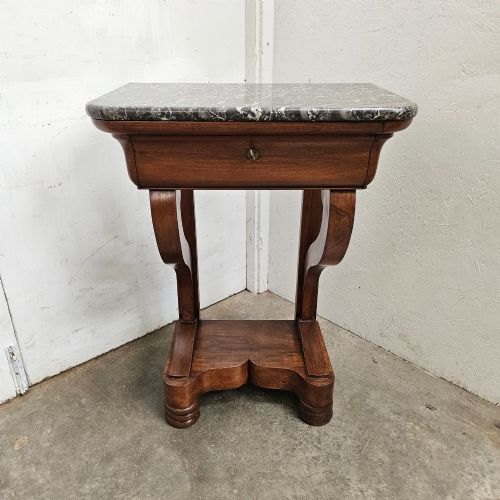
- A domestic piece fitted to hold a basin and pitcher, frequently adapted with a marble top to resist water damage. They date commonly across Victorian and Edwardian periods.
- Giltwood
- Timber that has been coated with gold leaf or a gold-coloured finish. This treatment appears frequently on decorative French Rococo and Neoclassical frames.
- Parquetry
- Geometric wood mosaic work used for decorative patterning on tabletops and surrounds. It demonstrates skilled joinery across various nineteenth-century surfaces.
- Chinoiserie
- European imitation of traditional Chinese artistic motifs and techniques. It appears on lacquered wooden frames from the Victorian era.
Vintage Marble Top Console: Frequently Asked Questions
How were console tables originally used?
Console tables served primarily as decorative furniture against interior walls, often holding ornaments, mirrors, or lighting fixtures in formal rooms.
In larger houses, grander examples occupied entrance halls and reception spaces to impress arriving visitors with carved detail and polished stone.
Can I use a washstand as a console?
Washstands adapt well to modern hallways and living spaces because their dimensions and stone surfaces match the function of a standard console table.
The original splashbacks and basin cutouts can be accommodated or disguised with decorative objects and mirrors placed above them.
What is the difference between a console and a prep table?
Console tables lean towards decorative display, featuring carved wood, gilt finishes, or refined walnut and mahogany structures for domestic parlours.
Prep tables, such as charcuterie or patisserie variants, prioritize utilitarian strength with heavy wrought iron, scrubbed wood, and thick working marble.
How do I identify a Victorian marble top table?
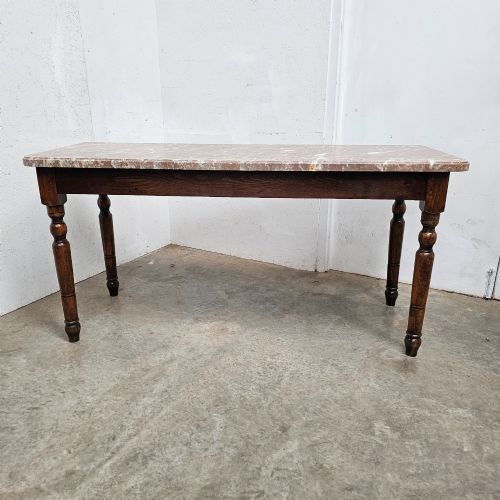
Victorian examples often employ dense timbers like burr walnut, mahogany, or oak, combined with heavier proportions and darker finishes.
Stylistic cues draw upon earlier revivals, sometimes incorporating neoclassical motifs, heavy turned legs, or functional lower shelves typical of the period.