





Vintage Mantelpiece Figurine
These vintage mantelpiece figurine selections bring character to a hearth, spanning earthenware pottery, bronze animalier studies, and glazed ceramic pairs.
Vintage Mantelpiece Figurine
A vintage mantelpiece figurine sits atop a fireplace as an ornamental display, drawing on centuries of domestic decoration. When searching this phrase, you encounter everything from earthenware Staffordshire dogs to bronze animalier groups and Art Deco female dancers.
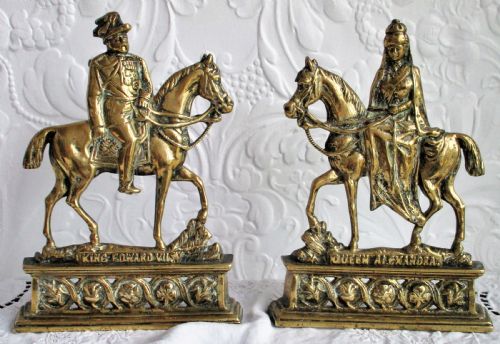
The Staffordshire pottery dog or cat pair remains the most common form on this page, originating from nineteenth-century English kilns. These earthenware figures often feature hand-painted details, copper lustre glazes, or simple black and white markings intended for bilateral symmetry on a shelf.
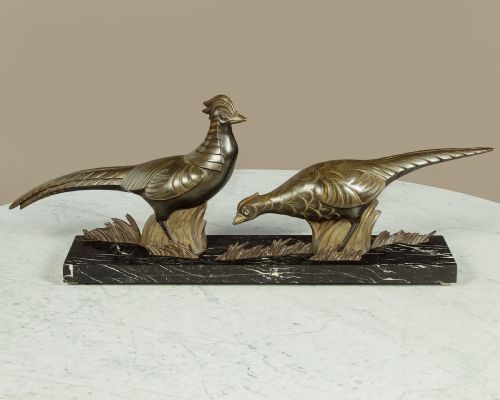
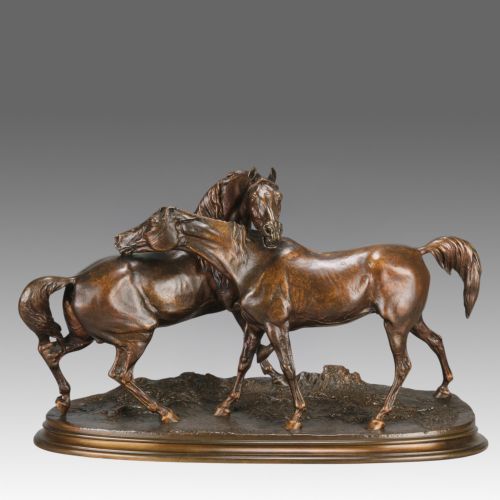
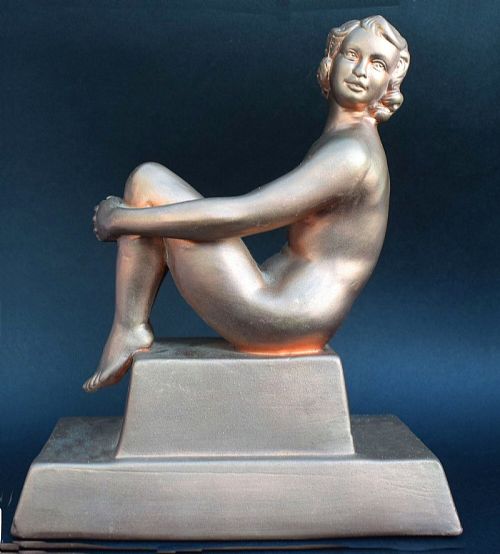
Beyond earthenware, bronze and spelter sculptures appear frequently from the Art Deco period and the nineteenth century. These metal works depict human figures, stags, deer, and literary or classical subjects, frequently mounted on marble or onyx bases.
Materials and construction methods
Pottery figures rely on earthenware clay shaped in moulds, then finished with glazes, enamel paint, or metallic lustre. Staffordshire pieces utilise slip-casting or pressing techniques before undergoing kiln firing, with decorators applying hand-painted eyes and collars afterwards.
Bronze and spelter sculptures employ the lost-wax casting method or metal moulding to capture fine details in human and animal forms. Spelter acts as a cheaper zinc-based alternative to bronze, often finished with paint or chrome plating to simulate more expensive metals.
Marble and onyx provide heavy, stable bases for many twentieth-century metal sculptures, contrasting with the softer earthenware bodies of Victorian chimney ornaments. Wood appears occasionally in the form of carved folk art decoys and rustic water birds.
Among the menagerie of fierce lions and noble stags, a cheerful wooden decoy duck stands ready to guard the mantelpiece.
Assessing quality and craftsmanship
Metal castings vary according to the sharpness of the surface chased after casting and the quality of the underlying alloy. Genuine bronze retains finer anatomical details and patination compared to softer, painted spelter alternatives.
The integrity of the material foundation, whether earthenware, marble, or bronze, dictates the physical presence of the object. Heavier stone bases and well-preserved glazes elevate the overall execution of the sculpture.
P J Mêne·Sibylle May·Richard Eckert·Edouard Drouot·C Masson·Royal Doulton·Royal Dux·Beswick·J C De Blezer
The Vintage Mantelpiece Figurine Glossary
- Staffordshire figure
- An earthenware ceramic ornament produced in the English potteries, most famously including seated dogs and flat-back historical figures intended for mantel placement.
- Animalier
- A nineteenth-century artistic style focusing on the realistic depiction of animals, particularly predators, stags, and horses in bronze.
- Spelter
- A zinc alloy used as a substitute for bronze in decorative sculptures, typically electroplated or painted to resemble genuine bronze.
- Copper lustre
- A ceramic glaze technique producing a metallic, reflective sheen on earthenware pottery through the application of metallic salts during firing.
- Bisque
- Unglazed porcelain fired once to a porous, matte state, frequently used for Victorian portrait figures and decorative mantel ornaments.
Vintage Mantelpiece Figurine: Frequently Asked Questions
What are Staffordshire dogs?
Staffordshire dogs are earthenware mantelpiece figures shaped as spaniels, produced in pairs to face one another on either end of a fireplace.
Potters painted these ornaments by hand, adding characteristic gold lockets, black patches, or copper lustre glazes during the nineteenth century.
How do I identify spelter?
Spelter is a softer zinc-based metal alloy that feels lighter than bronze and often shows a painted or electroplated surface finish rather than a natural metal patina.
Sculptors utilised spelter extensively for affordable Art Deco figures mounted on marble and onyx bases.
Where should I place these figures?
These decorative objects sit securely on mantelpieces, bookshelves, and side tables where their scale can be appreciated at eye level.
Pairs look balanced when flanking a central clock or mirror, while single bronzes function well as standalone desk or shelf accents.
Are these figures fragile?
Ceramic and porcelain pieces are susceptible to chipping or cracking if dropped or struck against hard surfaces.
Metal sculptures and wooden folk art decoys offer greater durability, though painted surfaces on spelter require gentle dusting without abrasive cleaners.