


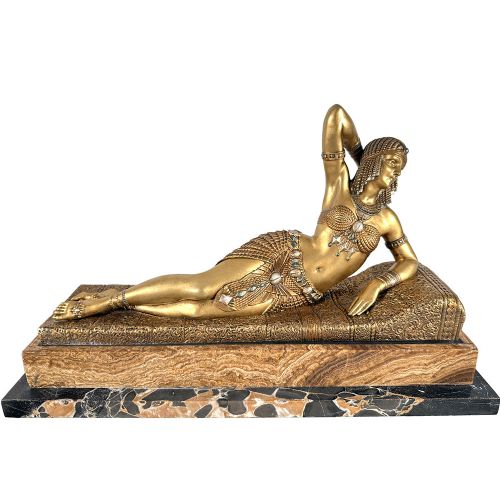


Bronze Female Nude Statuette
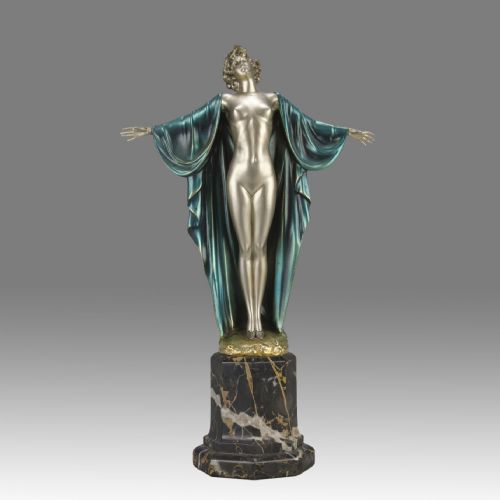
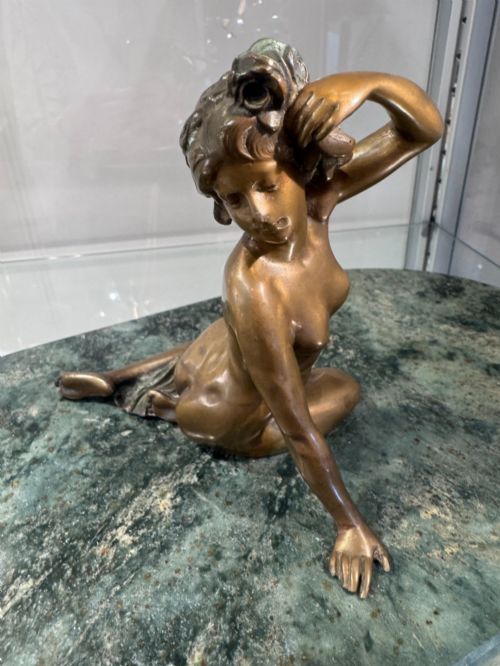
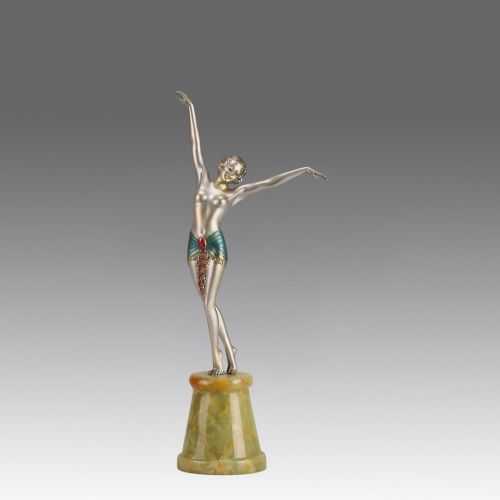
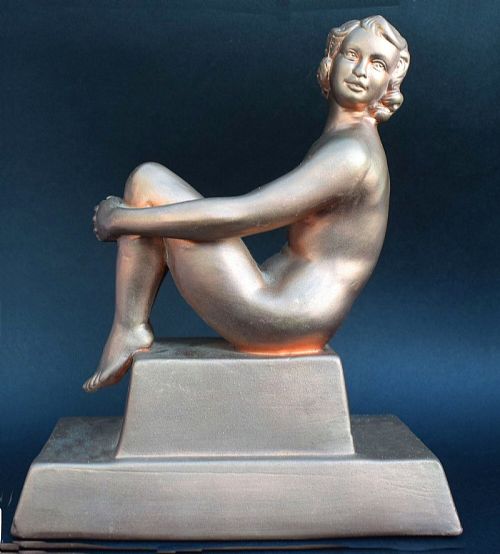
A bronze female nude statuette captures the human form through metal, offering sculptural grace for domestic display.
Bronze Female Nude Statuette
A bronze female nude statuette encompasses figures rendered in metal from the nineteenth century through the art deco period. Buyers encounter standing, seated, and dancing subjects executed in styles ranging from art nouveau curves to neoclassical discipline.
The selections on this page draw heavily from French, Austrian, and wider European workshops of the late nineteenth and early twentieth centuries. Figures frequently incorporate natural stone elements, pairing cast metal directly with marble or onyx bases.
Makers ranged from academic nineteenth-century sculptors to prominent twentieth-century modernists working within defined aesthetic movements. The resulting objects function primarily as cabinet bronzes or mantel ornaments designed for interior display.
Materials and casting methods
Foundries utilised traditional metalcasting techniques to produce these figures, often employing the lost-wax method for intricate detail. Molten bronze was poured into moulds, subsequently cooled, and hand-finished with chisels and files.
Surface finishes vary between natural patination, cold-painted polychrome pigments, silvered applications, and gilt treatments. Many examples are mounted upon heavy stone plinths of marble or onyx to provide stability and visual contrast.
Listings span several decades, featuring materials such as bronze, marble, onyx, enamel, and silvered bronze across diverse artistic styles.
Distinctions in craftsmanship
Quality rests in the fidelity of the casting and the sensitivity of the final chasing work on the metal surface. Superior examples retain crisp anatomical definition and delicate facial expressions without soft contours caused by worn production moulds.
The integrity of the patina or painted surface and the quality of the stone base significantly influence the overall standard of an individual statuette. Original finishing and authentic period mounts distinguish high-grade sculptural output from later or lesser commercial editions.
Rudolf Küchler·Ferdinand Preiss·Josef Lorenzl·Demetre Chiparus·Claire Jeanne Roberte Colinet·Bruno Zach·Pierre le Faguays·Gustav Adolf Daumiller·Mario Korbel
The Bronze Female Nude Statuette Glossary
- Patinated bronze
- Bronze that has been treated chemically to produce a specific surface colour, ranging from dark brown to green tones. This layer protects the metal while enhancing the visual depth of the sculpture.
- Cold-painted bronze
- Metalwork decorated with paint applied after casting and left to dry without high-temperature firing. This technique was widely utilised by Austrian foundries during the early twentieth century.
- Grand Tour
- The nineteenth-century practice where travellers collected small-scale bronze reductions of classical antiquities as souvenirs. These miniature figures were typically acquired in Italy or France.
- Spelter
- An alloy of zinc and other metals frequently used as a substitute for bronze in decorative figures. It is lighter in weight and softer than true bronze.
- Lost-wax casting
- A historic method where a wax model is encased in clay, melted out, and replaced with molten metal. This process allows for precise capture of fine sculptural detail.
Bronze Female Nude Statuette: Frequently Asked Questions
How do I clean a bronze statuette?
Dust the surface gently with a soft, dry brush to remove accumulated particles without disturbing the underlying patination.
Avoid using water, chemical solvents, or abrasive polishes, as these treatments strip original finishes from the metal.
What is cold-painted bronze?
Cold-painted bronze refers to figures finished with non-fired pigments applied directly to the metal surface after casting.
This method allowed for vibrant polychrome details, particularly popular among Austrian makers during the early decades of the twentieth century.
Why are some figures mounted on marble?
Marble and onyx bases provided structural stability for slender statuettes while adding decorative weight and visual contrast.
Many art deco and art nouveau pieces integrated stone plinths as a formal component of the overall sculptural design.
How can I tell art deco from art nouveau?
Art nouveau statuettes typically display flowing, asymmetrical lines inspired by organic plant forms and natural curves.
Art deco figures favour geometric discipline, stylised drapery, and streamlined silhouettes characteristic of the interwar period.