
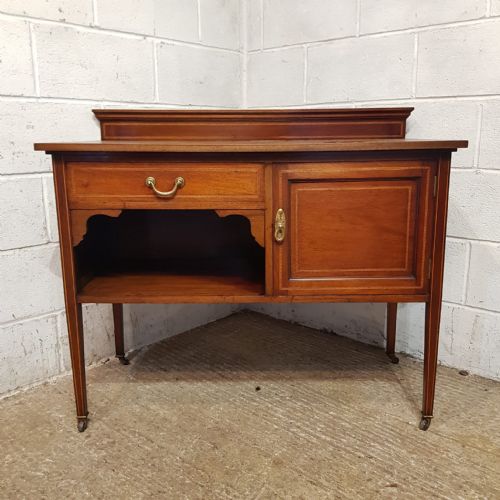
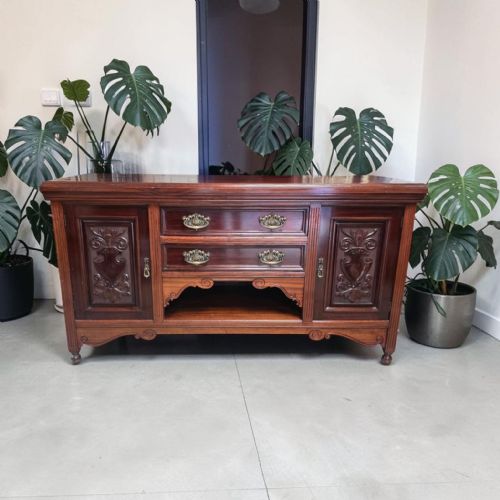
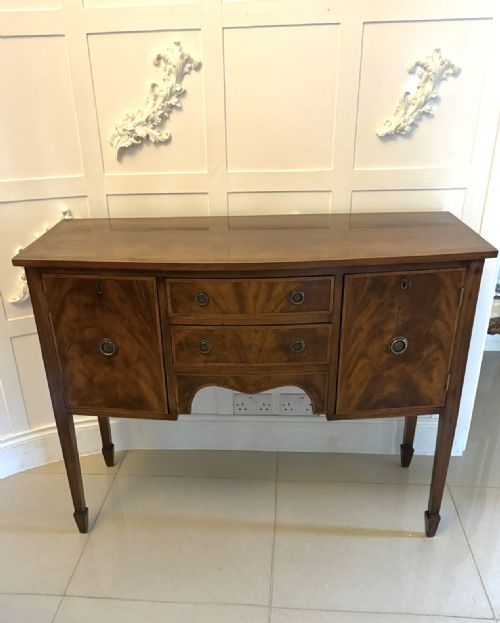
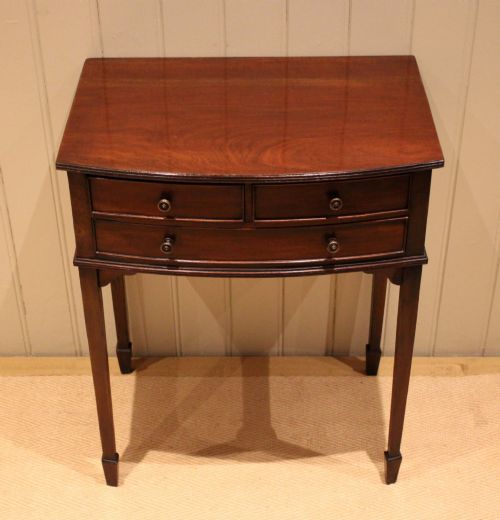
Vintage Mahogany Sideboard Table
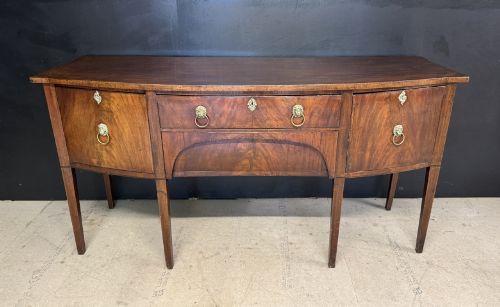
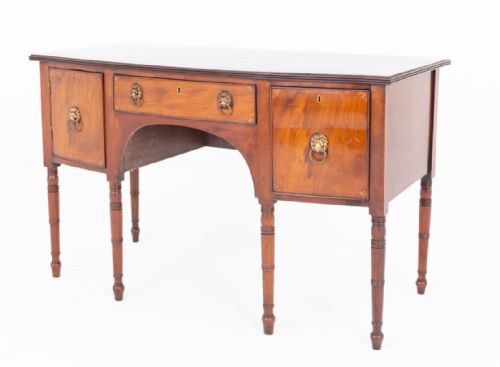
A vintage mahogany sideboard table brings rich timber grain and classic storage to a dining room or hallway.
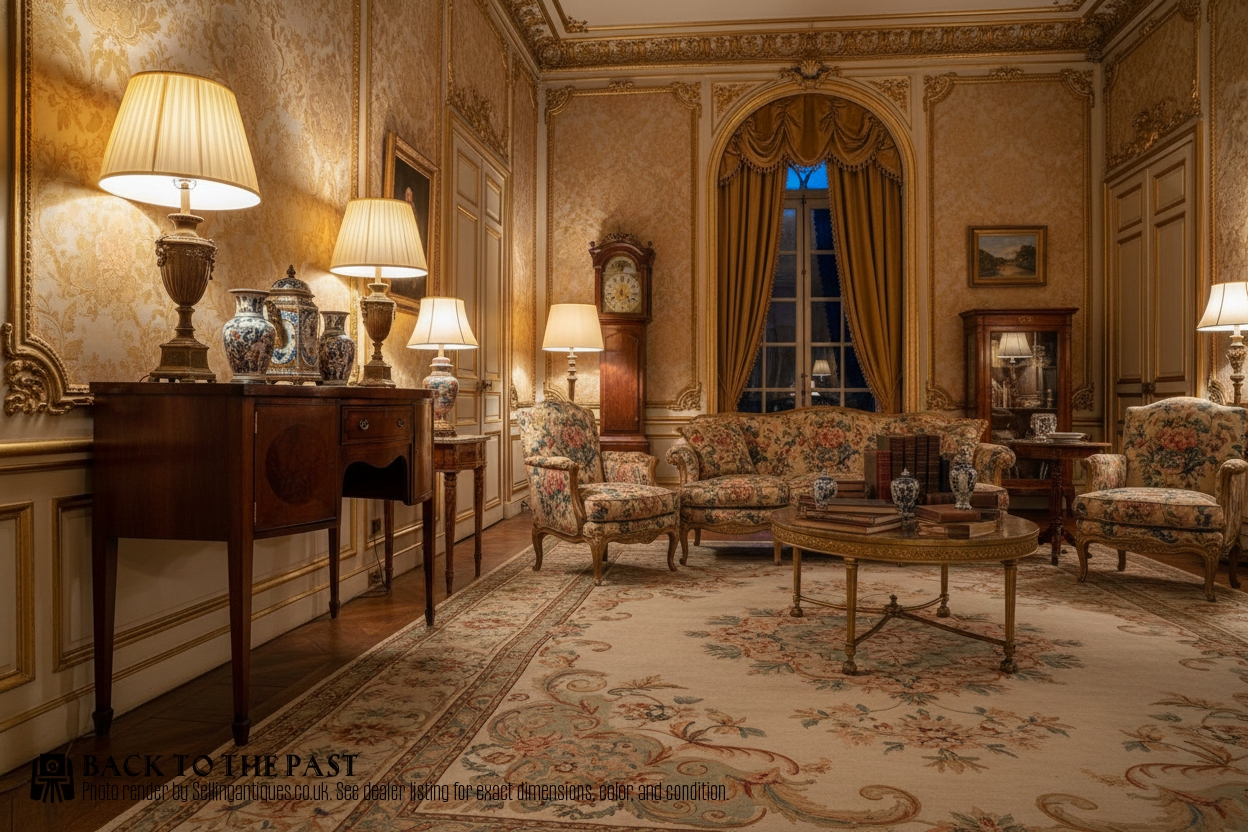
Vintage Mahogany Sideboard Table
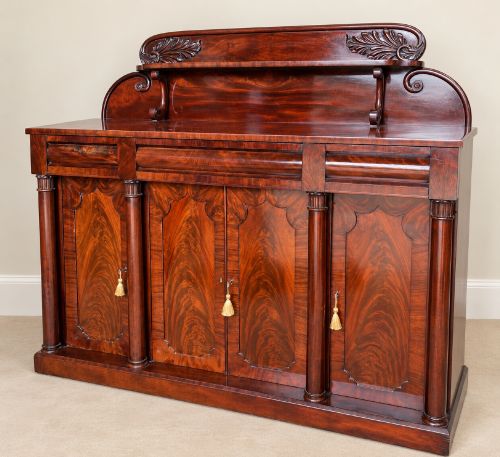
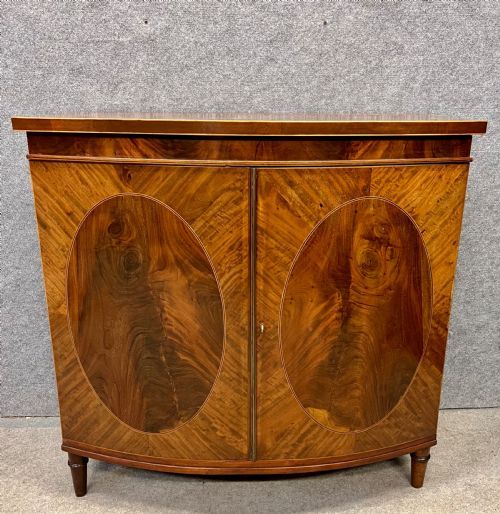
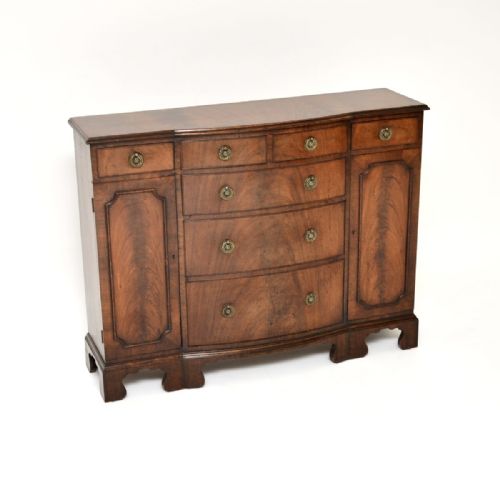
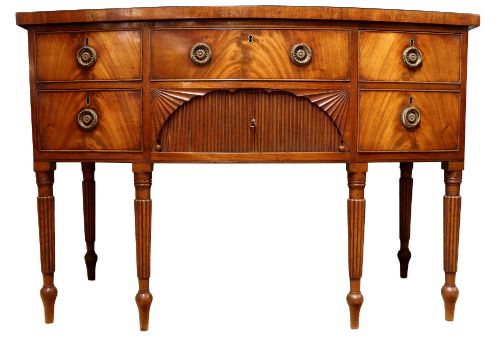
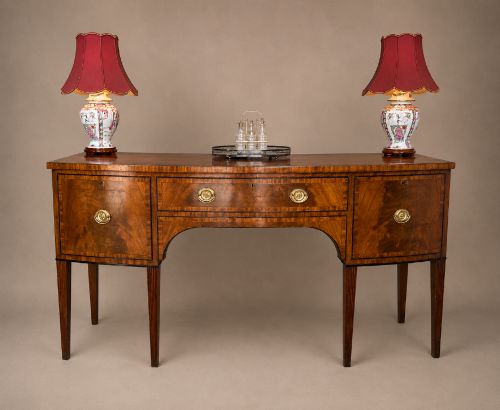
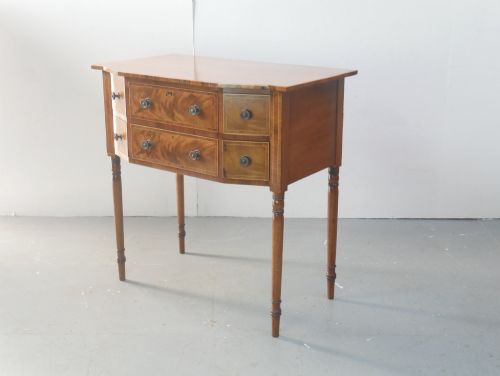
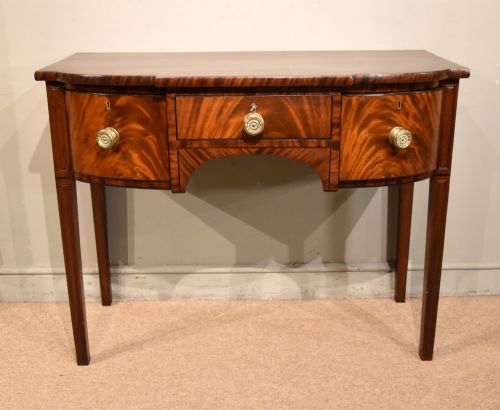
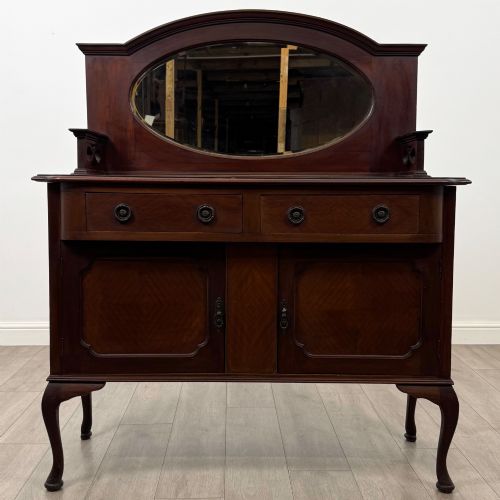
A vintage mahogany sideboard table serves as a substantial serving piece and storage unit, combining the utility of a cabinet with the refined display surface of a table. When you search for a vintage mahogany sideboard table, you encounter forms ranging from bow-fronted servers to breakfront buffets and demi-lune cabinets.
The pieces on this page span several distinct eras, notably the Georgian, Victorian, and Edwardian periods, alongside later revivals. Georgian and Regency pieces offer classical proportion, while Edwardian and Sheraton Revival examples often feature delicate inlaid details.
Makers and workshops utilised mahogany timber extensively, frequently selecting flame veneers to create striking visual movement across drawer fronts and cabinet doors. Alongside formal dining room sideboards, related forms such as console tables and washstands appear within these listings.
Materials and construction methods
Cabinet makers constructed these pieces primarily using solid mahogany and flame mahogany veneers, often laying thin sheets of figured timber over secondary woods to achieve a dramatic grain pattern. This technique allowed craftsmen to showcase rich natural figures while maintaining structural stability.
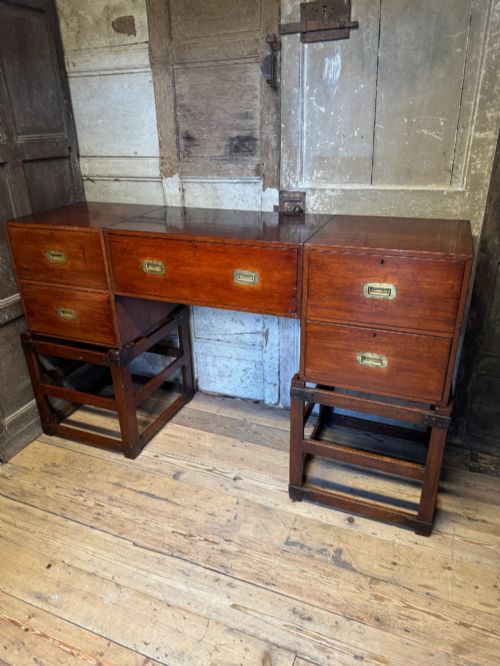
Decoration relied heavily on contrasting timber inlays and stringing, incorporating materials such as satinwood, boxwood, and various dark woods to outline drawers and panels. Brass hardware, including ring pulls, lion mask handles, and campaign-style flush mounts, provides functional contrast to the dark timber.
Structural elements reflect traditional joinery, with dovetailed drawer construction and framed panels that accommodate the natural movement of timber over time. Finishers applied shellac-based polishes to deepen the reddish-brown tone of the mahogany and protect the surface.
A Victorian metamorphic buffet quietly transforms its formal serving surface into hidden tiers for the serious Victorian dinner party.
Assessing quality in mahogany case pieces
Quality reveals itself in the selection and book-matching of wood veneers, where superior examples display symmetrical, highly figured flame patterns across entire drawer banks. Lesser pieces rely on plain timber or show mismatched grain transitions.
The crispness and integration of wood inlay work distinguish high-tier examples, where contrasting stringing sits flush with the primary mahogany surface without visible gaps. Hardware originality and the weight of cast brass fittings also indicate the original tier of manufacture.
Internal construction, including secondary woods used for drawer linings and the presence of hand-cut dovetails, separates workshop-built furniture from later mass-produced alternatives.
M. D. Miller & Sons·Bowman Brothers
The Vintage Mahogany Sideboard Table Glossary
- Bow front
- A convex curved front profile popular in sideboard design from the Georgian period onward. This shape softens the corners of a room and creates interior depth.
- Breakfront
- A cabinet design where the central section projects forward from the flanking wings. It adds architectural presence to larger dining room pieces.
- Demi-lune
- A half-moon shape utilised for tables and small cabinets designed to sit flat against a wall. This profile suits narrow hallways and smaller dining spaces.
- Inlay
- A decorative technique where contrasting materials are inserted into recessed cavities within the wood surface. Common contrasting woods include boxwood and satinwood.
- Flame mahogany
- A veneer cut from the fork of the mahogany tree where branches meet the trunk. It yields a distinctive, flame-like pattern prized by cabinet makers.
- Serpentine
- A furniture front characterised by a wavy outline featuring a convex centre flanked by concave curves, or vice versa. This complex shape requires advanced woodworking skill.
Vintage Mahogany Sideboard Table: Frequently Asked Questions
How do I date a mahogany sideboard?
Dating relies on examining construction methods, timber selection, and stylistic details. Hand-cut dovetails and solid secondary woods often point to earlier periods, while machine-cut joints and specific revival styles suggest Edwardian or later manufacture.
Hardware styles and the presence of makers' marks or stamps also assist in establishing a reliable timeline for each individual piece.
What is the difference between a sideboard and a buffet?
Historically, sideboards often featured more architectural legs and open lower structures, whereas buffets tended to be heavier case pieces with cupboards extending closer to the floor. Over time, the terms became largely interchangeable in furniture descriptions.
Both forms were designed for dining rooms to store linen, cutlery, and serving dishes while providing a surface for food presentation.
How do I care for vintage mahogany furniture?
Maintenance involves keeping the timber away from direct sunlight and heat sources to prevent the wood and veneer from drying out or cracking. Regular dusting with a soft, dry cloth preserves the polished surface.
Applying occasional specialist wax feeds the finish and maintains the deep reddish-brown lustre without building up heavy chemical residues.
Where should I place a demi-lune sideboard?
A demi-lune sideboard works well in entrance halls, living rooms, or smaller dining spaces because its flat back fits snugly against a wall while the curved front minimises sharp corners. Its shallow depth provides a surface for lamps or decorative objects without blocking walkways.
Pairing the piece with a matching mirror creates a balanced focal point in a hallway or dining area.