
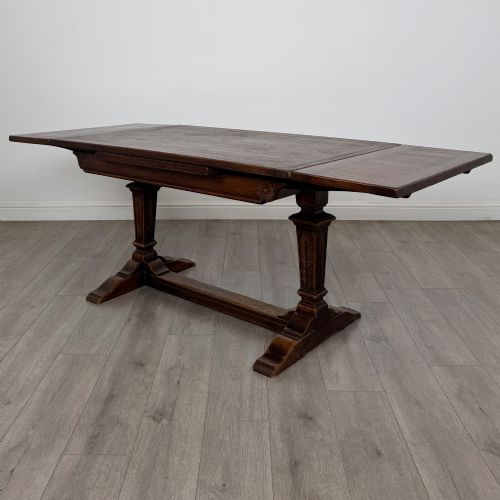
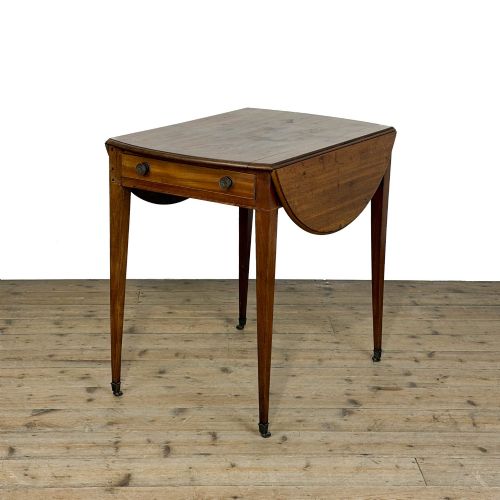
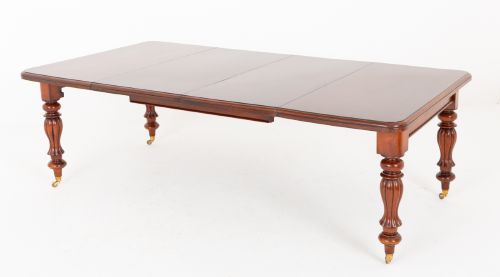
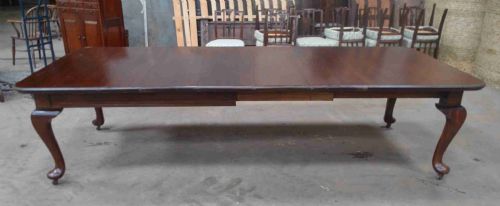
Vintage Leaf Dining Table
A vintage leaf dining table expands to suit your dining room, uniting period character with practical hospitality.
Vintage Leaf Dining Table
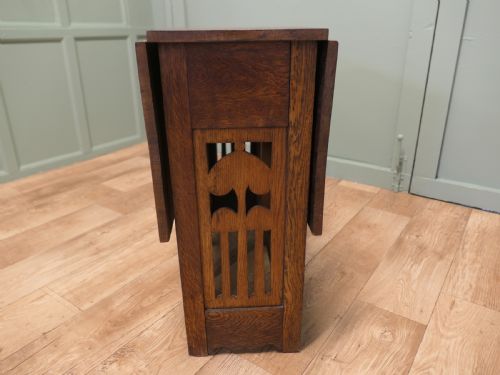
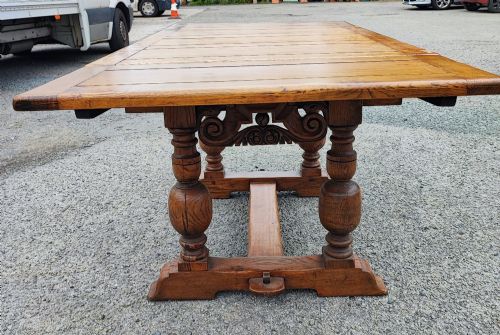
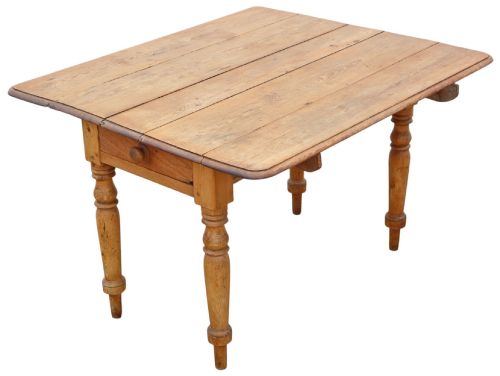
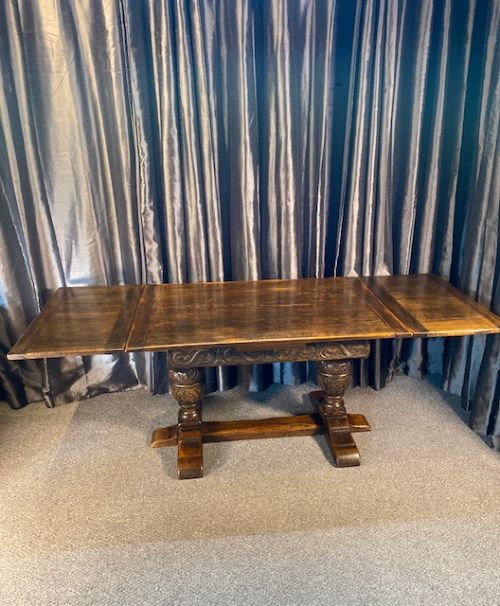
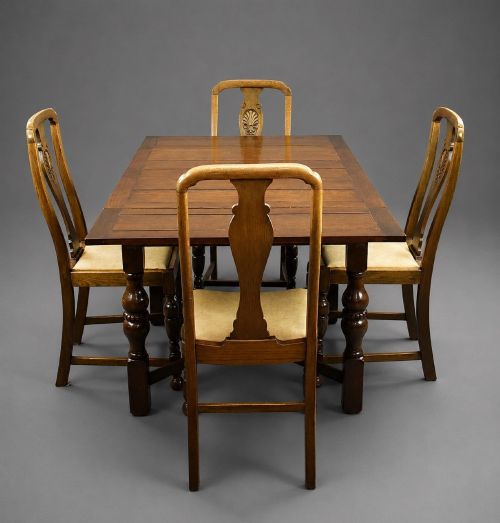
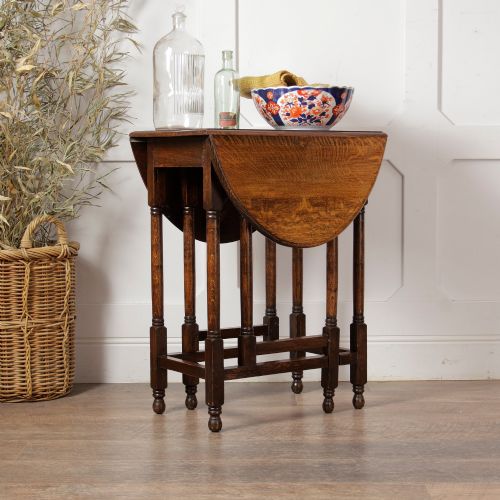
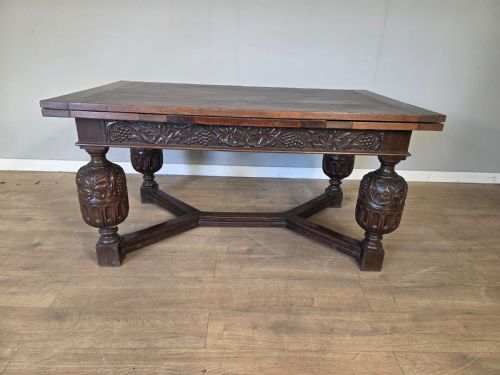
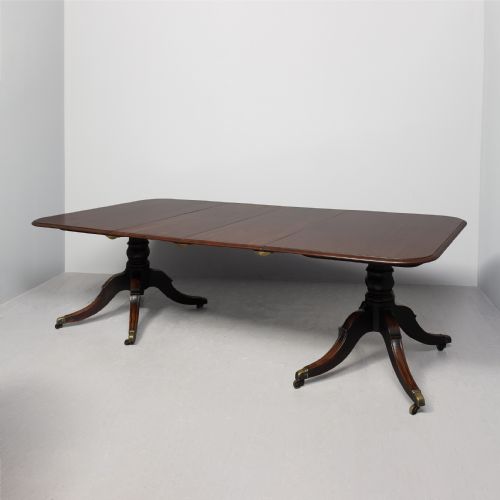
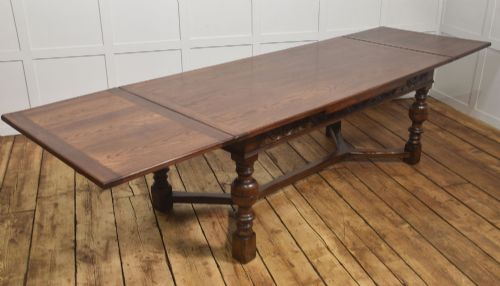
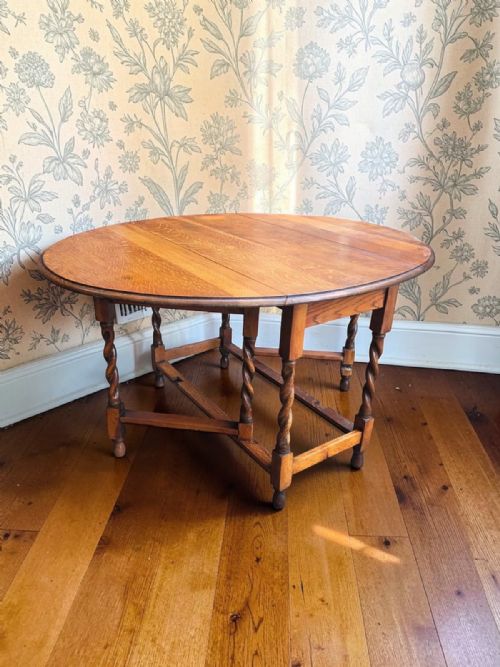
When you search for a vintage leaf dining table, you find a variety of timber furniture designed to expand when guests arrive. The options on this page range from compact gateleg and drop-leaf designs to substantial refectory and twin pillar tables with extra leaves.
Oak and mahogany dominate the selection, appearing across centuries from the seventeenth century through the Victorian era and into the 1920s and 1930s. You will encounter draw-leaf mechanisms, drop-leaf actions, and tables fitted with removable leaves supported by pillars or additional legs.
Craftsmanship and timber
The engineering of the draw-leaf or drop-leaf action determines daily utility. Smooth runners, tight joints when closed, and stable support when fully extended separate standard pieces from superior examples of period cabinet making.
The listings span from 17th-century gateleg designs to 1930s walnut parquetry, showing oak and mahogany as the primary timbers.
The Vintage Leaf Dining Table Glossary
- Draw leaf table
- A table with self-contained leaves stored beneath the main top that pull out to extend the surface. This mechanism allows the table length to increase without requiring separate loose leaves to be stored elsewhere.
- Gateleg table
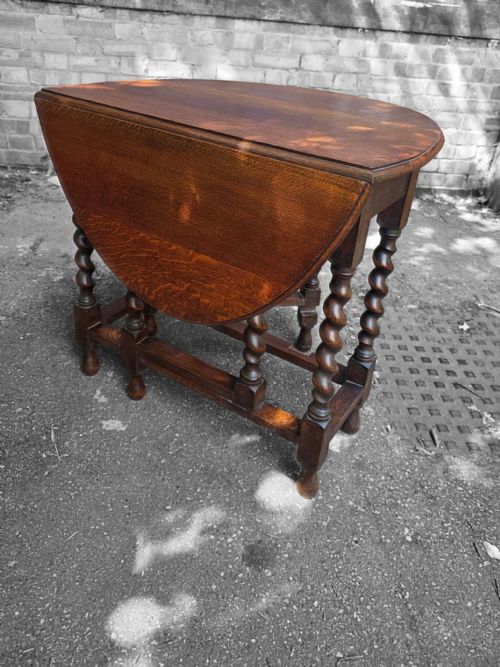
- A drop-leaf table where hinged legs swing out like a gate to support the raised leaves. This design provides a large surface area when open and folds compactly when not in use.
- Barley twist
- A type of turning shaped to resemble a spiral rope or twist. This decorative woodworking technique appears frequently on the legs of seventeenth-century and revival oak furniture.
- Parquetry
- Geometric mosaic woodwork used for decorative surface patterns. It appears on tabletops to create visual interest through contrasting wood tones.
Vintage Leaf Dining Table: Frequently Asked Questions
How do draw leaf tables work?
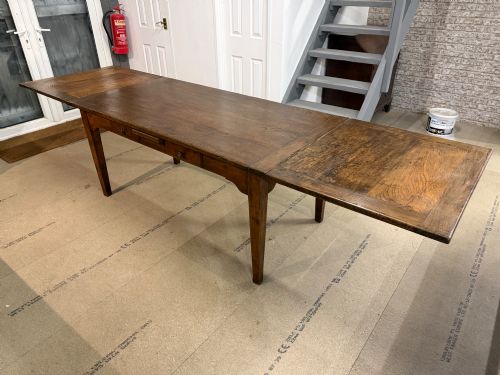
Draw leaf tables feature two sliding leaves stored directly beneath the main tabletop. When you pull them from the ends, the main top rises slightly before dropping into place to create a flush, extended surface.
This ingenious mechanism means the extra leaves remain attached to the table frame at all times. It removes the need to store separate boards in a cupboard.
What is a gateleg table?
A gateleg table is a form of drop-leaf table where hinged legs swing outward from the centre frame. These pivoting legs form a gate-like structure that locks into position to support the folding flaps.
When the leaves are dropped down against the sides, the table occupies a minimal footprint. This made them exceptionally useful in smaller historical interiors where floor space was at a premium.
How do I care for antique timber?
Antique timber surfaces benefit from regular dusting with a soft, dry cloth and occasional applications of traditional beeswax. Avoid placing wooden tables near direct heat sources or in strong sunlight, which can dry out the wood and cause splitting.
Using placemats and coasters protects the polished finish from moisture and heat marks. Gentle maintenance preserves the natural patina built up over decades of use.
How can I tell the period?
Dating a table involves examining the timber species, the turning style of the legs, and the construction methods used underneath. Oak is more common in seventeenth-century and Arts and Crafts revival pieces, while mahogany dominates eighteenth-century and Victorian formal dining furniture.
Hardware such as brass hinges, drawer construction, and the specific mechanism of the leaves also offer clear clues. Comparing these physical characteristics against known historical styles helps establish an accurate date of origin.