


Regency Telescopic Table
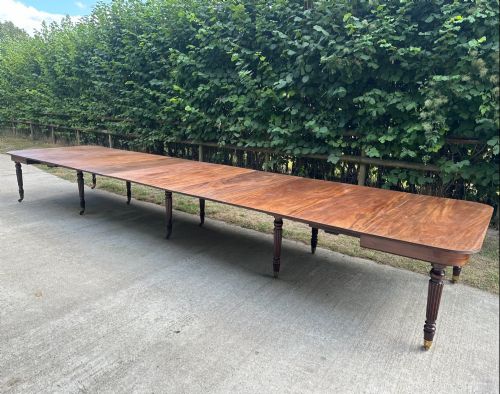
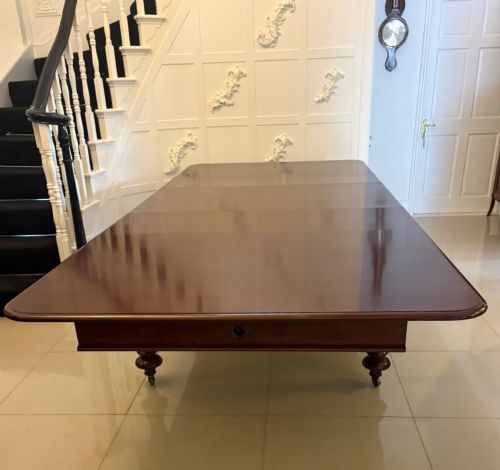
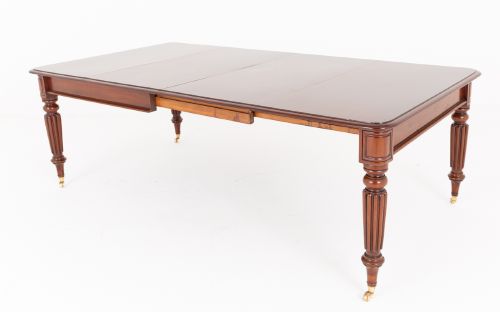
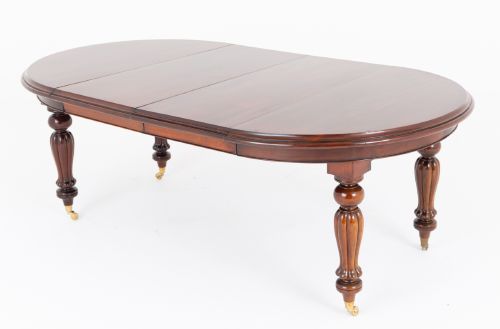
A regency telescopic table brings ingenious mechanical action and rich timber to the dining room, offering adaptable dining space for gatherings large and small.

Regency Telescopic Table
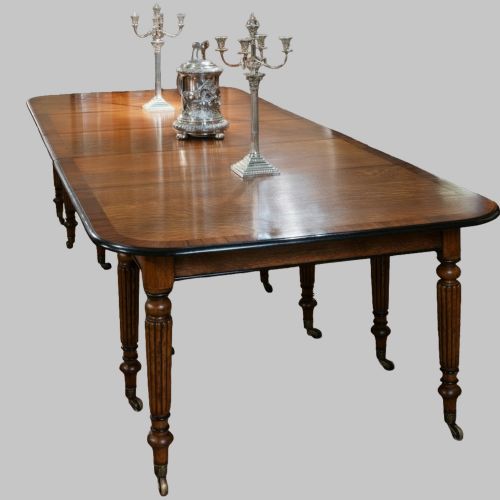
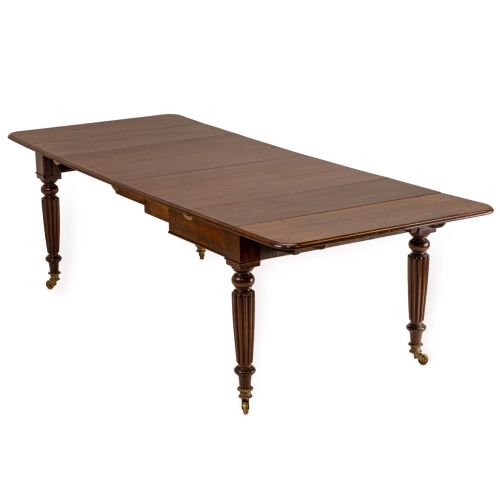
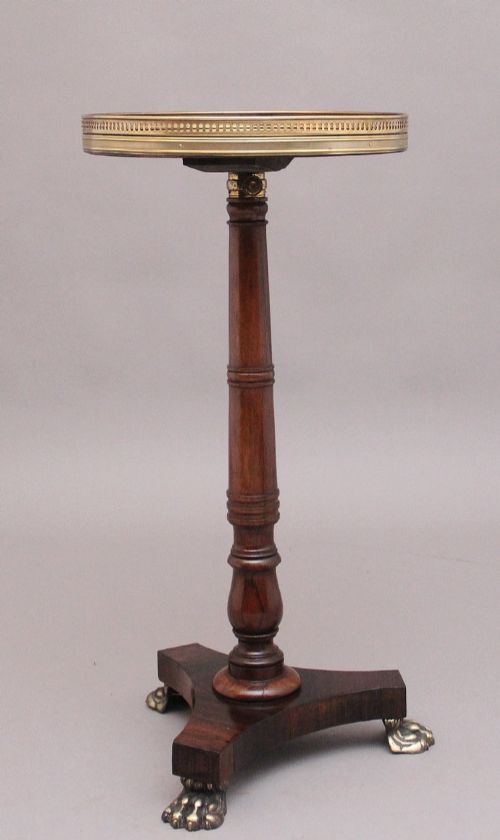
When you search for a regency telescopic table, you encounter substantial dining tables and occasional pieces spanning the Georgian, Regency, William IV, and Victorian periods. The selection here predominantly comprises large mahogany extending dining tables alongside smaller occasional tables and telescopic candlesticks.
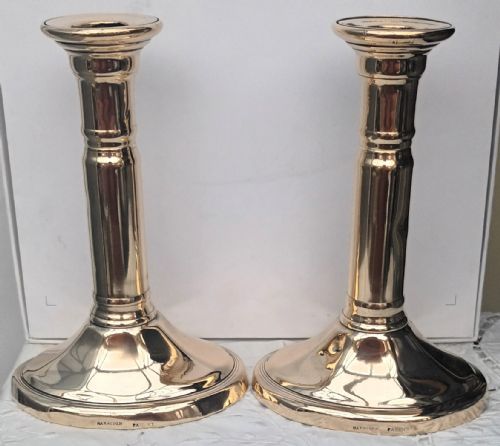
Makers and workshops of the era, notably Gillows, engineered clever extending mechanisms to allow these timber tables to accommodate numerous guests. You will also find occasional rosewood tables and brass or Sheffield plated candlesticks employing telescopic actions.
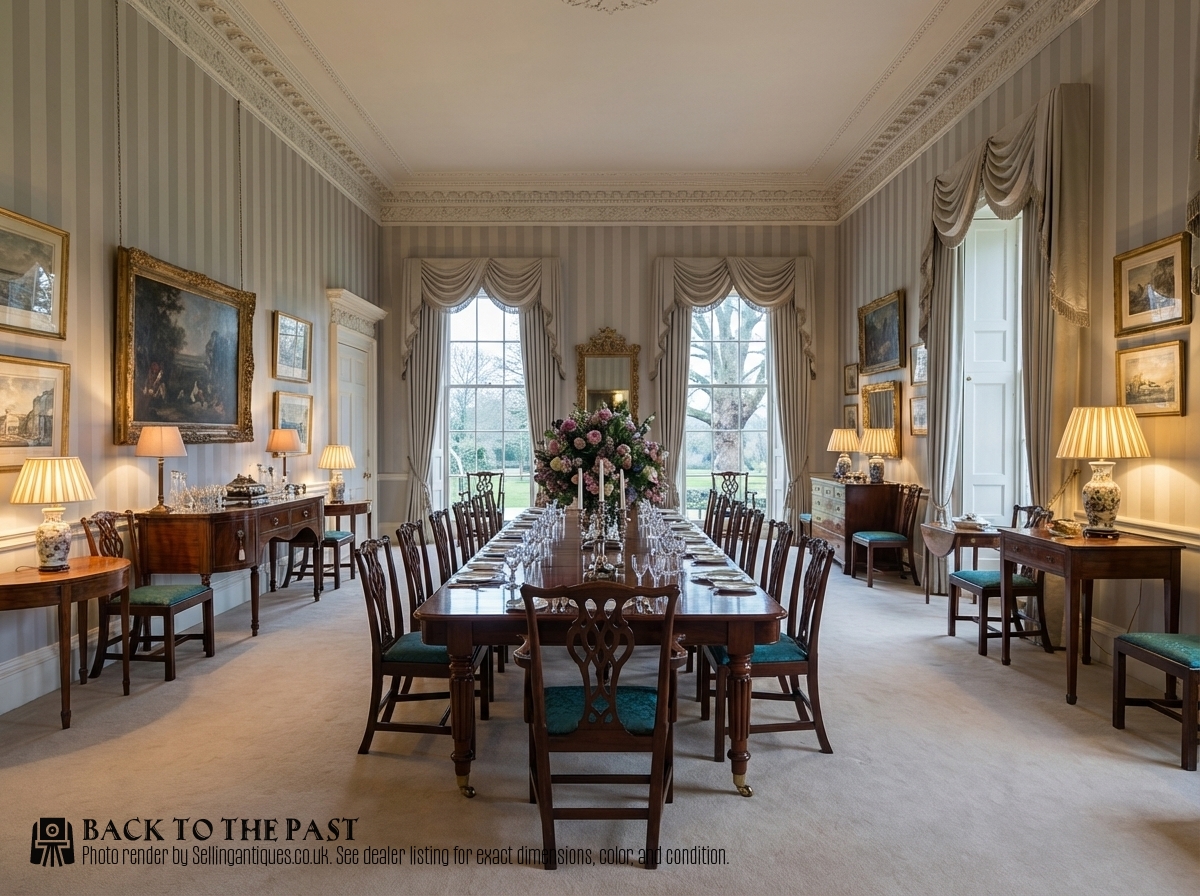
The forms range from narrow dining tables seating ten to fourteen people up to imperial banquet sizes. These pieces bridge formal dining utility with ingenious 19th-century cabinetmaking.
Materials and mechanism construction
Cabinetmakers predominantly utilised figured mahogany and rosewood, selecting dense timber for both stability and visual depth on the tabletop surfaces. Oak often forms the secondary framing and internal supports hidden beneath the polish.
Metamorphic and extending actions rely on precision metalwork, incorporating brass and copper components to allow smooth sliding adjustments. Sheffield plate and silver plate appear on related telescopic lighting pieces from the same era.
Regency Telescopic Table Retail Price Guide 2026
Typical asking prices for regency telescopic table among the pieces listed under this phrase on Sellingantiques today, from the lower quarter to the upper quarter. They describe what is for sale here now, not the wider market.
Listings feature mahogany, rosewood, oak, brass, copper, and Sheffield plate across pieces spanning the Georgian, Regency, William IV, and Victorian periods.
Assessing quality in extending tables
Quality rests heavily on the sophistication of the patent extending mechanism and how smoothly the timber leaves integrate into the frame. Superior examples maintain structural rigidity and alignment across the entire span, even when extended to seat over a dozen people.
The selection of figured mahogany veneers and the crispness of turned or reeded legs distinguish workshop production. Pieces bearing stamps or clear attribution to makers like Gillows or Thomas Treherne demonstrate higher standards of period craftsmanship.
Gillows·Thomas Treherne·Harrison
The Regency Telescopic Table Glossary
- Telescopic table
- A table featuring an extending mechanism that allows sections to slide outward to insert additional leaves. This action increases the surface area for dining.
- Imperial action
- A specific extending mechanism associated with high-end 19th-century workshops, designed to support multiple leaves smoothly. It provides robust stability for large banquet tables.
- Figured mahogany
- Timber cut to reveal distinctive grain patterns such as flame or fiddleback. Cabinetmakers prized this wood for its decorative surface appeal on tabletops.
- Sheffield plate
- A composite material formed by fusing a thin sheet of silver to a thicker copper base. Makers utilised this technique for candlesticks and hardware before electroplating methods developed.
- Metamorphic furniture
- Pieces designed to transform their shape or function through mechanical ingenuity. This category includes tables and stands that alter height or length.
Regency Telescopic Table: Frequently Asked Questions
How do you extend a regency telescopic table?
The mechanical action typically involves sliding the main sections apart along internal wooden runners or metal tracks. Additional leaves drop into the central gap to expand the surface.
Once the leaves are secured in place, the mechanism locks to maintain a stable and even tabletop for dining.
What periods do these tables come from?
The pieces originate primarily from the Georgian, Regency, William IV, and early Victorian eras spanning the 18th and 19th centuries. Styles overlap these periods, reflecting shifting tastes in cabinetmaking.
Makers active during these decades applied patent extending actions to both formal dining tables and smaller occasional furniture.
How many people can these dining tables seat?
Capacities vary widely depending on the number of removable leaves and the original length of the frame. Smaller formats seat around four to eight guests comfortably.
Larger banquet versions extend to accommodate ten, fourteen, or even fifteen diners for substantial gatherings.
What timber was used for these tables?
Mahogany is the primary wood seen across the majority of dining tables, frequently selected for its deep colour and durability. Figured varieties and rosewood appear on premium surfaces.
Secondary timbers like oak are often found in the internal framing and structural underpinnings of the extending mechanism.