

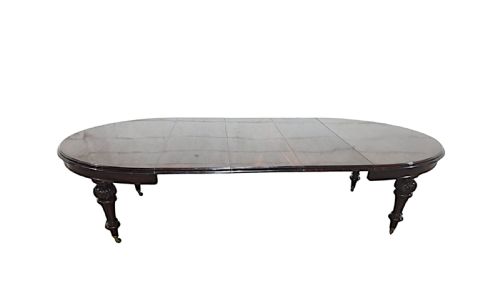
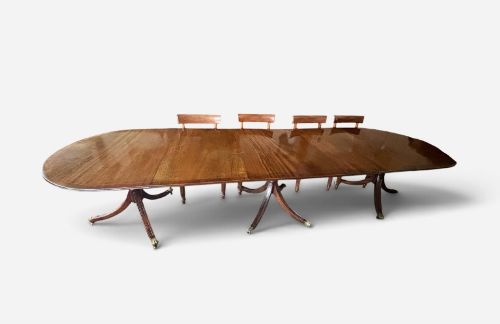
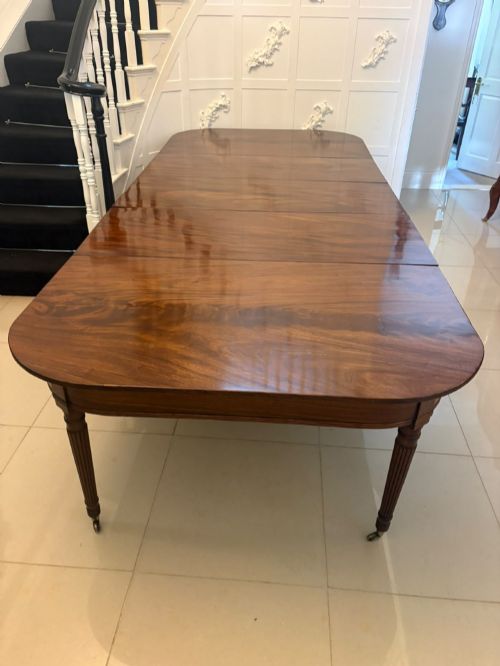
Regency Banquet Table
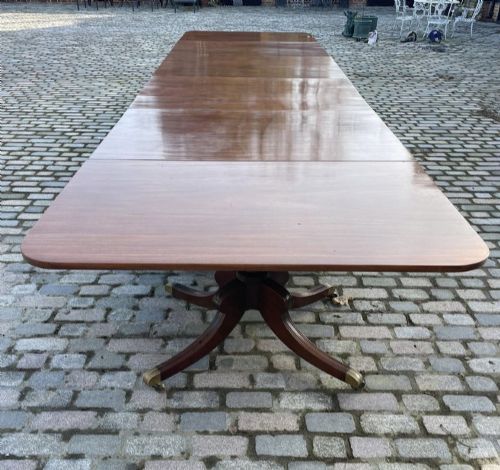
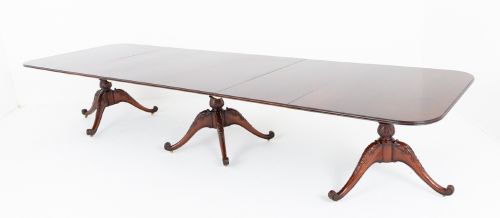
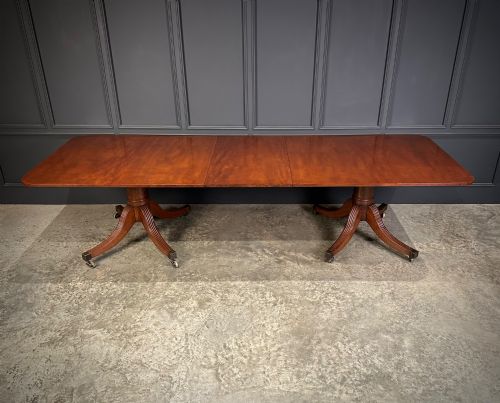
A regency banquet table is a grand dining piece built for large gatherings, prized for its versatile extending pedestals and rich mahogany timbers.
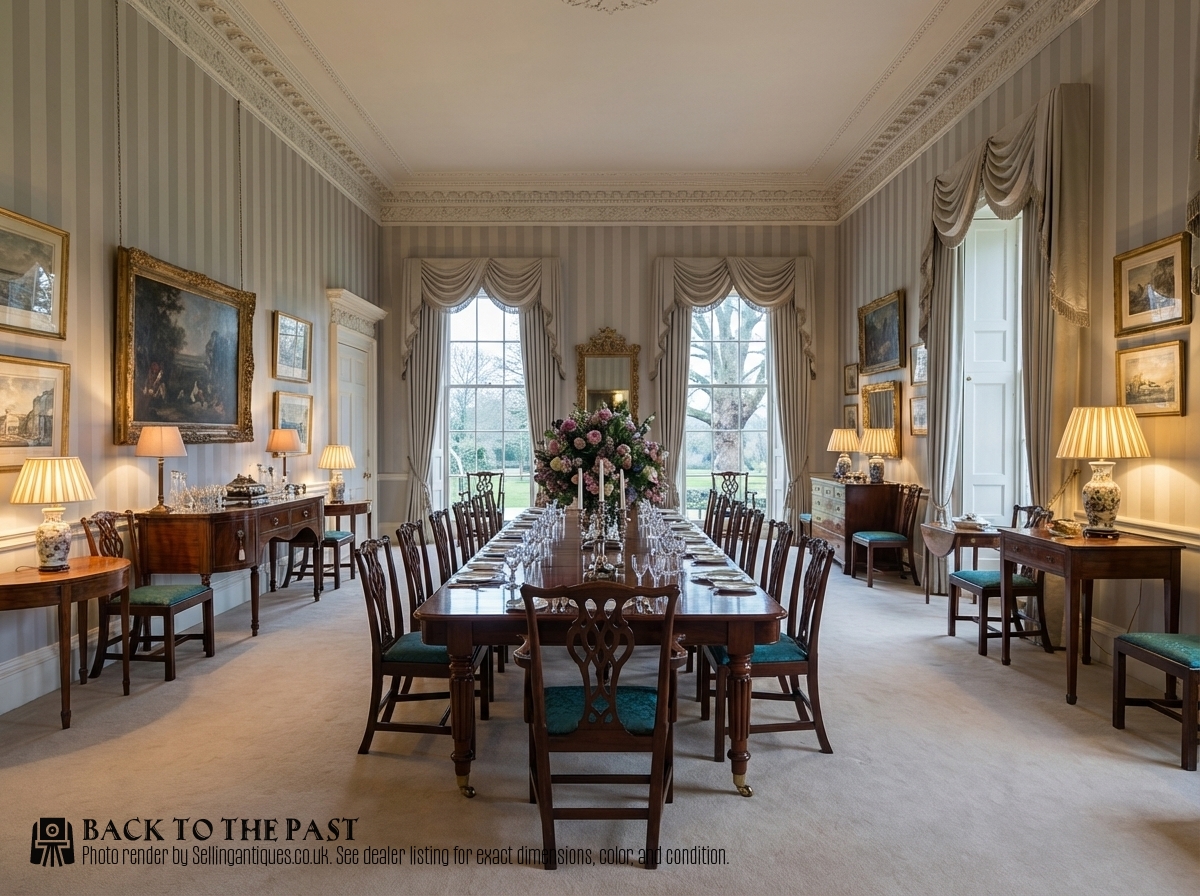
Regency Banquet Table
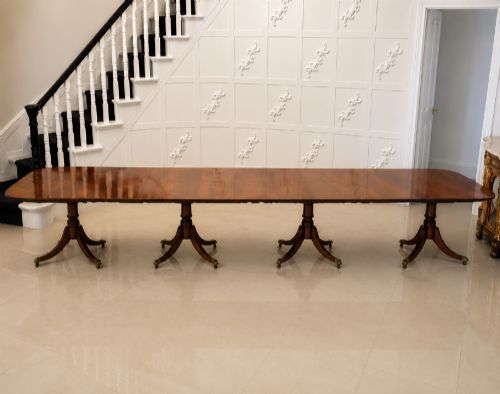
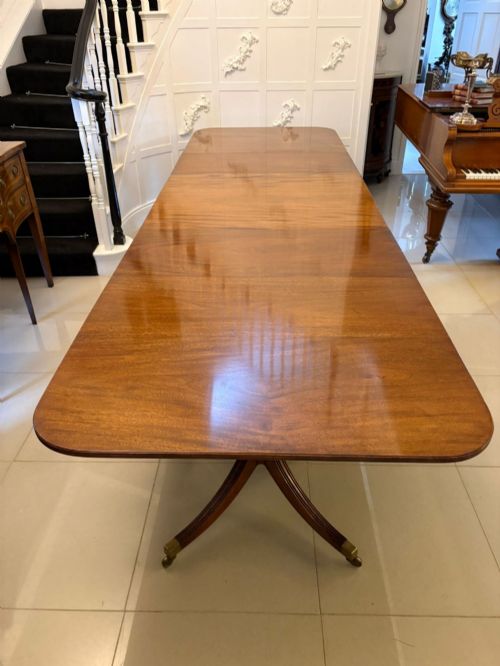
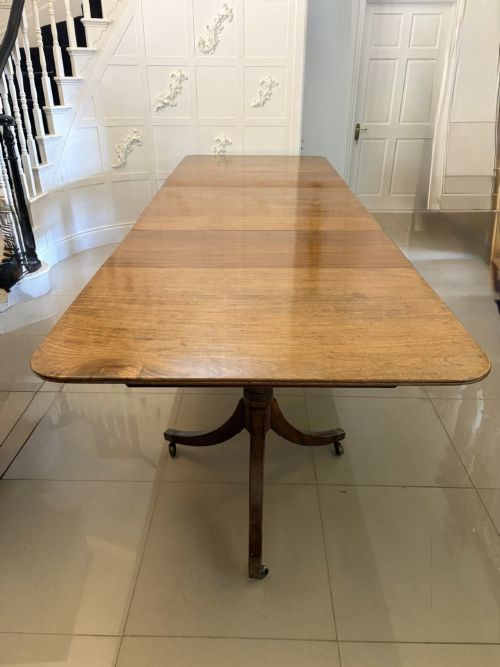
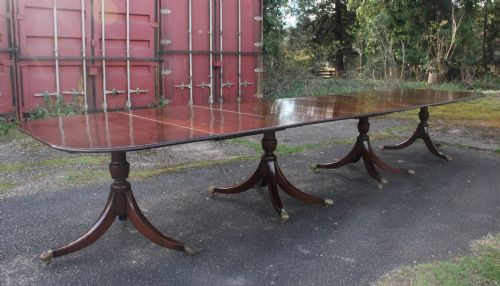
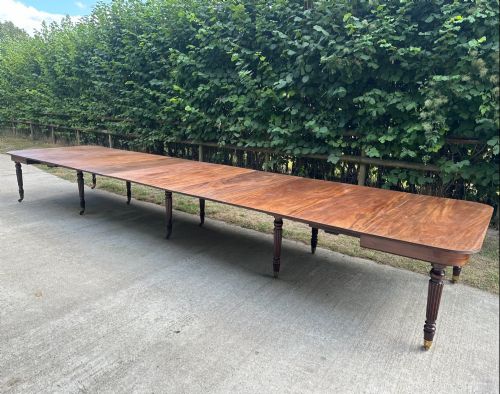
A regency banquet table provides substantial seating capacity through multiple pedestals and removable leaves, designed to accommodate large dinner parties. These tables span from twin pillar setups seating ten guests up to monumental four-pillar formats holding over twenty-four people.
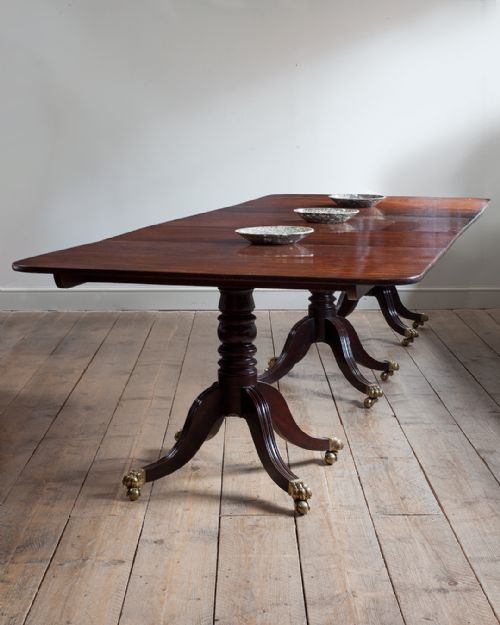
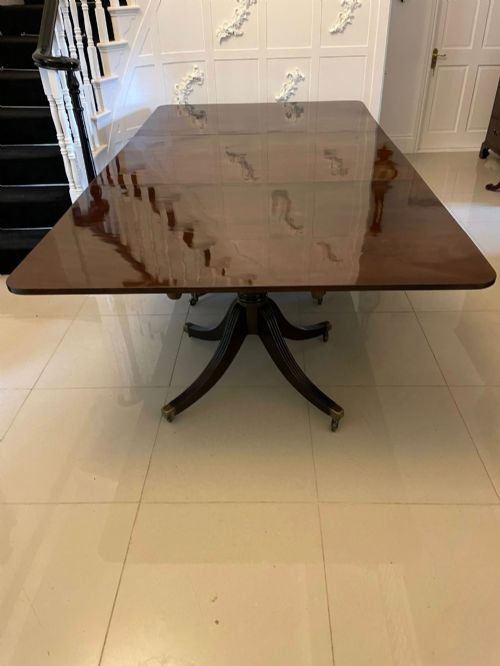
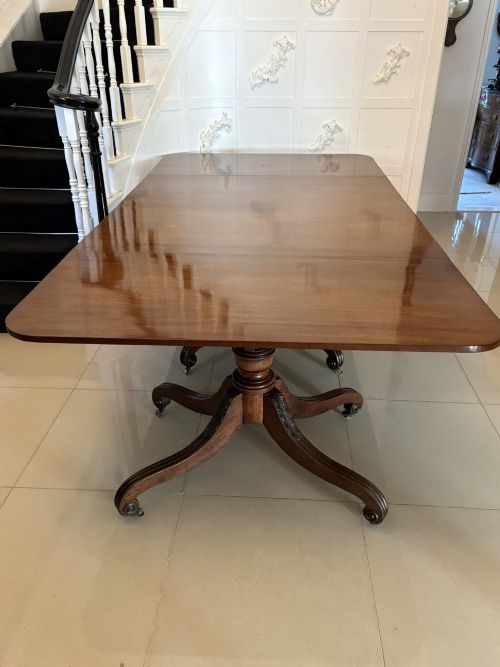
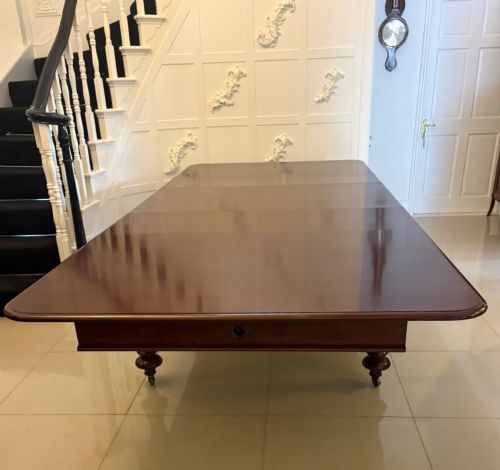
The most common version met on this page is the multi-pillar mahogany extending dining table originating from the nineteenth century or built in later revival styles. These pieces combine pedestals with brass castor fittings and leaves that alter the length according to requirement.
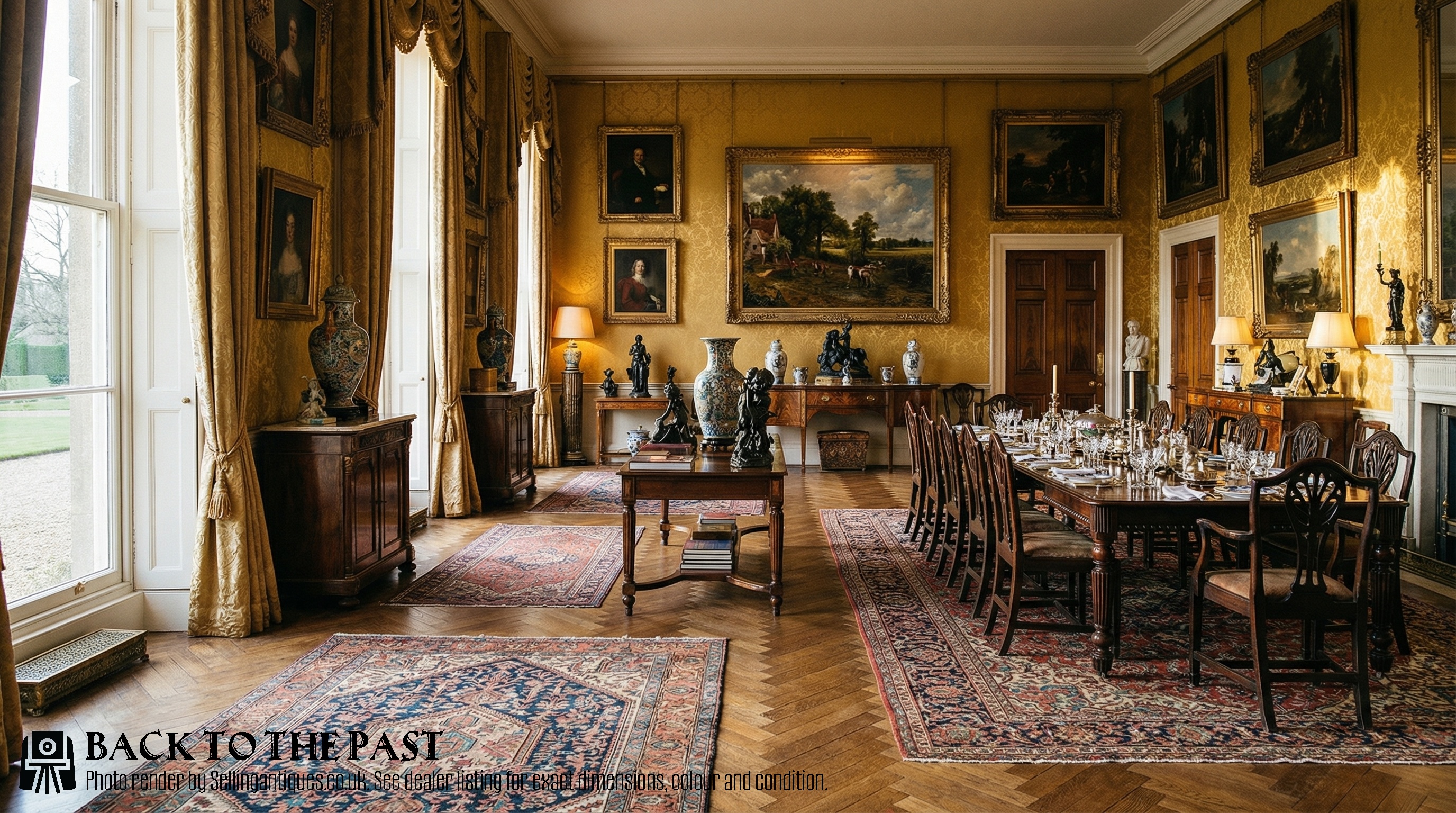
How they were made
Cabinet makers utilised solid and figured timbers, predominantly mahogany, Cuban mahogany, flame mahogany, rosewood, walnut, and oak, often paired with brass for castors and extension mechanisms. Timber selection focused on grain patterns such as flame figures, which added visual depth to the top surface.
Construction relied on heavy central pedestals supporting long tops, secured with internal mechanisms that allowed extra leaves to drop in smoothly. Joinery techniques ensured stability across extended lengths, balancing heavy timber tops upon reeded legs and pillar bases.
Several tables accommodate upwards of twenty-eight diners, requiring serious architectural planning just to get the furniture through the front door.
What varies in quality
The distinction between tiers rests upon the choice of timber figure, such as highly figured flame mahogany versus plain stock, alongside the precision of the pedestal carving and reeded leg detail. Superior examples display careful grain matching across added leaves and original brass fittings.
Proportion and scale dictate the standing of a piece, where balanced multi-pillar configurations maintain structural integrity without sagging across long spans. Maker attribution also separates standard workshop output from documented cabinet maker productions.
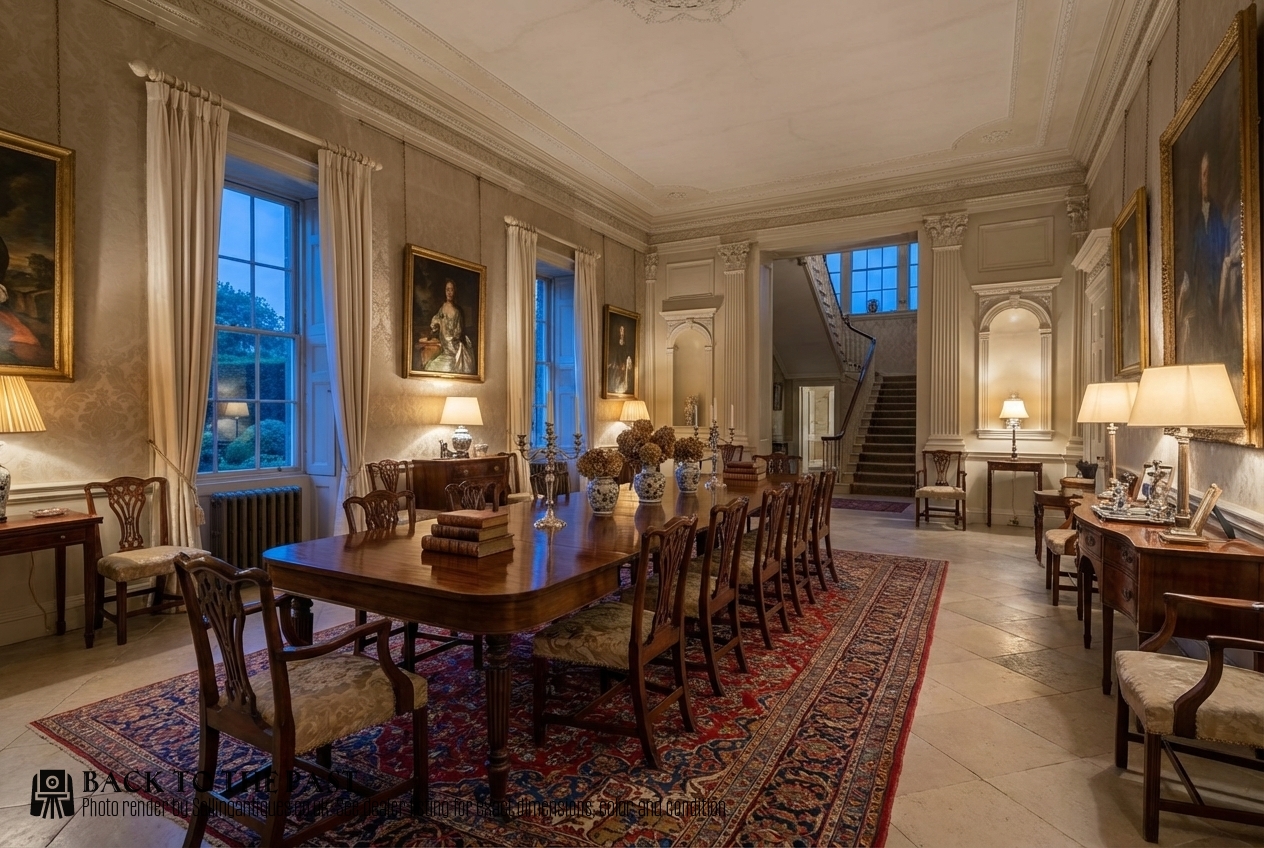
Gillows·Whytock And Reid·William And Gibton
The Regency Banquet Table Glossary
- Pedestal
- A central column support resting on legs, typically numbering between two and four on larger extending tables to distribute weight evenly.
- Leaf
- A removable section of timber inserted into the centre of an extending table to increase its overall length for dining.
- Reeded
- A decorative moulding consisting of parallel convex rounded parallel beads carved directly into the wooden legs or pillars.
- D-End
- A table end shaped in a semi-circle resembling the letter D, often found on modular dining furniture that separates into smaller console sections.
Regency Banquet Table: Frequently Asked Questions
How do these tables extend?
These tables extend through a system of central pillars and pull-out frames that accept removable timber leaves. Operators slide the pedestals apart to drop additional leaves into the centre.
Metal clips or brass pins often secure the leaves together to maintain a flat surface across the extended length.
What rooms suit a four pillar table?
Four pillar tables require large dining spaces or long reception rooms due to their substantial length, which frequently exceeds five metres. Sufficient clearance around the perimeter allows guests to sit comfortably.
Placement takes into account the permanent footprint as well as the extended state when additional leaves are fitted.
How do I identify a revival piece?
Revival pieces date from later periods such as the early twentieth century while adopting the proportions and stylistic markers of earlier nineteenth century models. Examination of the timber age, construction hardware, and internal rails reveals the manufacturing era.
Cabinet making methods evolved over time, leaving distinct tool marks and assembly traits characteristic of specific decades.
How should mahogany surfaces be maintained?
Mahogany surfaces require regular dusting with a soft cloth and occasional waxing to nourish the timber grain and preserve the polish. Avoiding direct sunlight prevents uneven fading across the removable leaves.
Using protective mats under hot dishes and liquids safeguards the polish from heat rings and moisture damage.