
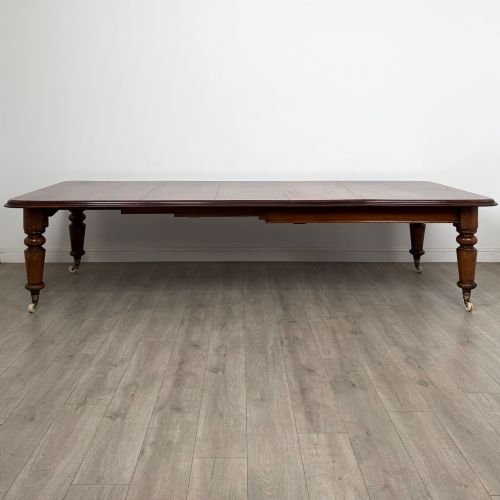


Dark Wood Banqueting Table
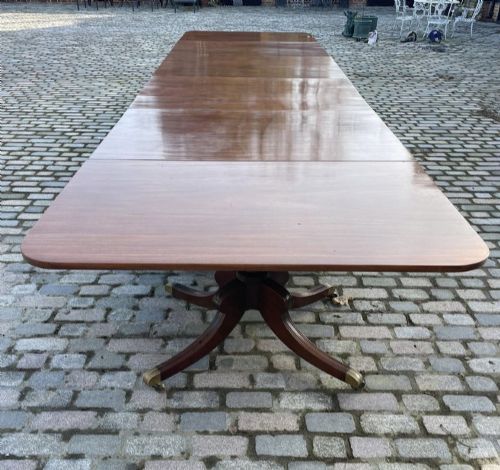
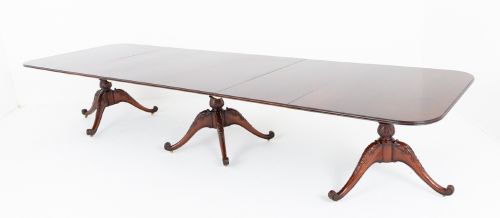
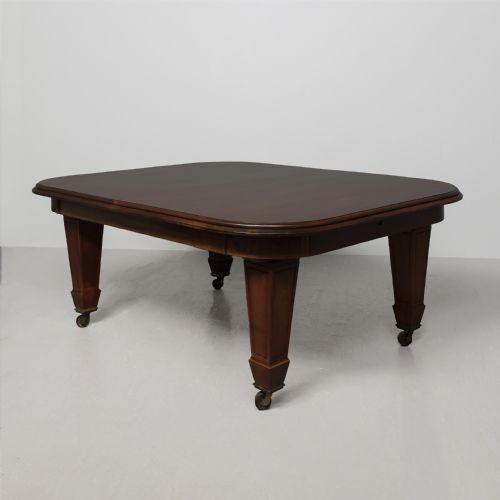
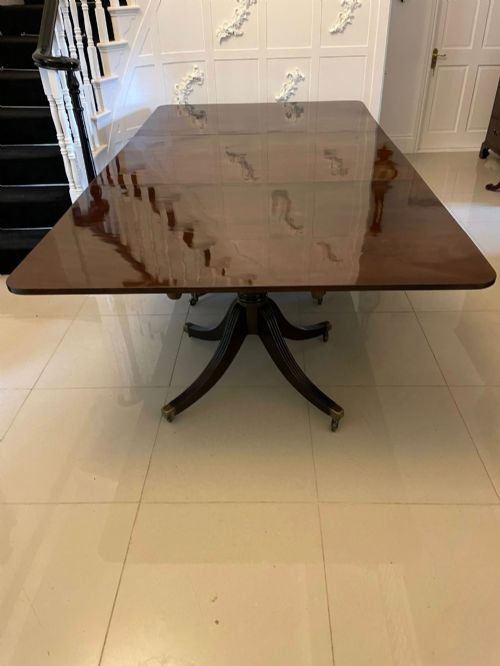
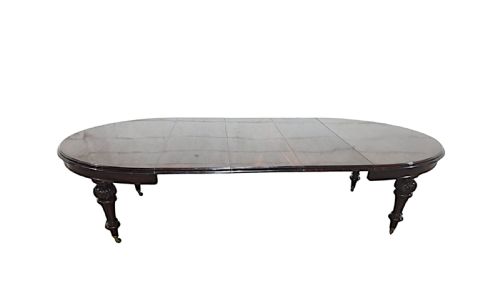
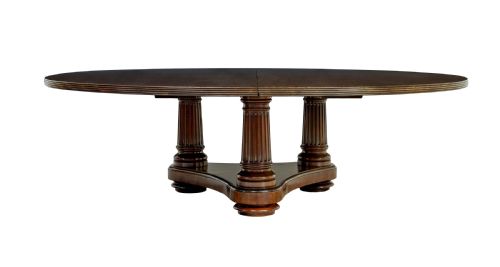
A dark wood banqueting table brings scale and substance to large rooms, usually arriving as an extending mahogany or oak pillar table from the Georgian, Victorian or Regency periods.
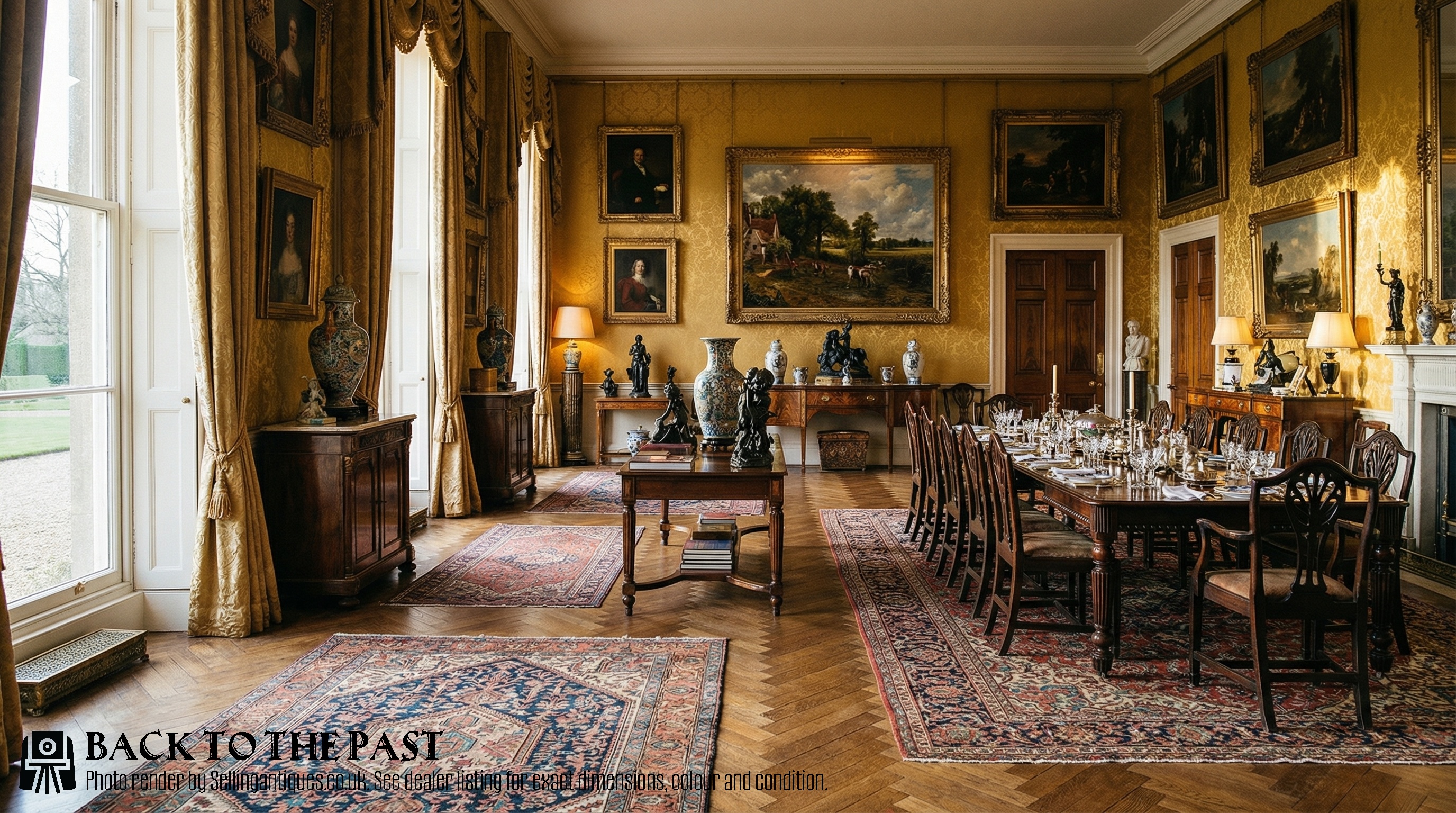
Dark Wood Banqueting Table
When you search for a dark wood banqueting table, you encounter large dining furniture designed to seat ten to twenty-eight people. These pieces emerge predominantly from the nineteenth century, spanning Georgian, Regency, William IV and Victorian eras.
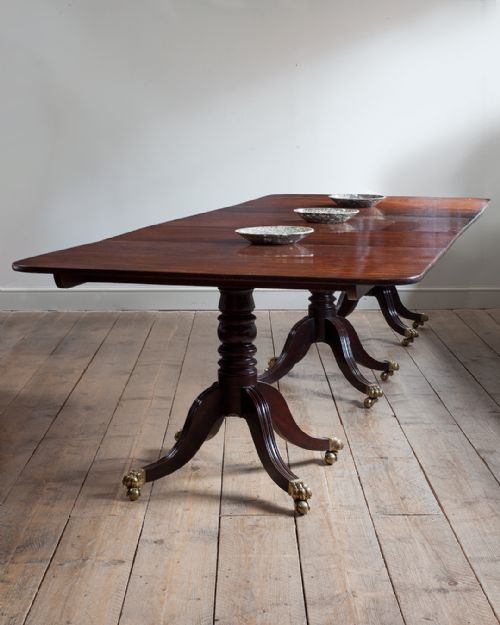
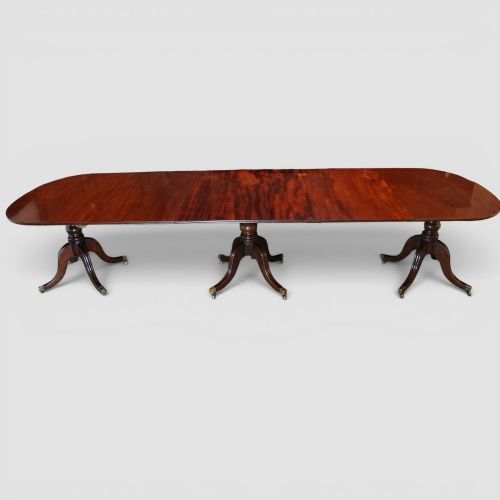
The format you meet most often on this page is the mahogany pedestal table supported by three or more pillars with brass castors. Alternatively, refectory and six-leg formats appear in solid oak or Cuban mahogany, constructed for grand proportions.
Makers such as Gillows and Waring and Gillow are represented alongside Irish workshops and standard nineteenth-century cabinet makers. Many examples include original extra leaves to adjust the length for formal gatherings.
How they were made
The construction relies heavily on figured mahogany, Cuban mahogany and solid oak, complemented by brass mechanisms, bronze feet and occasional rosewood or walnut veneers. Timber selection focused on rich grain patterns, particularly on table tops and friezes.
Joinery methods include pillar and claw supports, screw-action extending mechanisms, and drop-in leaves supported by telescopic frames or extra legs. These engineering solutions allowed heavy timber tops to extend safely while maintaining level surfaces.
A Crown Estate Victorian ships refectory table listed here includes bronze feet, designed to withstand rolling seas in official service.
What varies in quality
Quality rests in the choice of timber figure, the stability of the pedestal bases, and the presence of matching original leaves. Finer pieces display heavily figured mahogany boards selected from a single log and balanced pillar carvings.
The sophistication of the extending mechanism also separates standard production from workshop attribution. Pieces with patented actions and robust brass castors demonstrate superior original manufacturing standards.
Gillows·Waring and Gillow·William and Gibton
The Dark Wood Banqueting Table Glossary
- Pedestal table
- A table supported by one or more central pillars rather than four corner legs. This design became standard for large nineteenth-century dining furniture to maximise legroom.
- D-End table
- A dining table whose end sections form a semi-circle resembling the letter D. These sections often detach to function as side tables.
- Imperial action
- A mechanical extending system used in nineteenth-century tables to open the top evenly while supporting multiple leaves. It allowed large furniture to expand smoothly.
- Refectory table
- A long, narrow dining table traditionally built with solid timber and stretcher supports. Examples on this page include robust oak and ships furniture variants.
- Cuban mahogany
- A dense, dark timber harvested in the Caribbean, prized for deep colour and fine grain. Cabinet makers utilised it for grand Victorian and Georgian dining pieces.
Dark Wood Banqueting Table: Frequently Asked Questions
How do I seat twenty people?
Tables of grand proportions, reaching lengths past fifteen feet with multiple original leaves, accommodate large gatherings comfortably. Many examples specify seating capacities ranging from twelve up to twenty-eight guests.
Ensure your dining room dimensions leave sufficient clearance around the perimeter once the table is fully extended with all leaves inserted.
How does the extending mechanism work?
Nineteenth-century extending tables typically utilise screw actions, telescopic runners or drop-in leaves supported by extra legs or pillars. Winding handles expand the frame smoothly to accept the matching leaves.
Regular maintenance of the internal wooden tracks and brass fittings ensures the mechanism operates without binding.
How do I identify a Regency table?
Regency and Regency style tables frequently feature triple or twin pedestals with reeded edges, brass claw feet, and heavy pillar supports. The timber is commonly dark mahogany with distinctive figuring.
Proportions tend to be neoclassical in influence, reflecting the design vocabulary of the early nineteenth century.
What maintenance does mahogany require?
Dark mahogany benefits from regular dusting with a soft cloth and occasional application of traditional beeswax to nourish the timber. Avoid placing these tables in direct sunlight or near heat sources to prevent timber movement.
Using heat-resistant mats protects the French polished surface from moisture and hot serving dishes.