


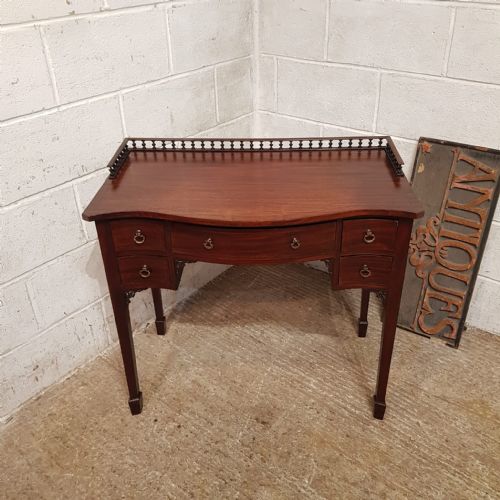

Vintage Ladies Writing Bureau
A vintage ladies writing bureau offers compact elegance for correspondence, combining fine timbers and fitted pigeonholes into a diminutive desk.
Vintage Ladies Writing Bureau
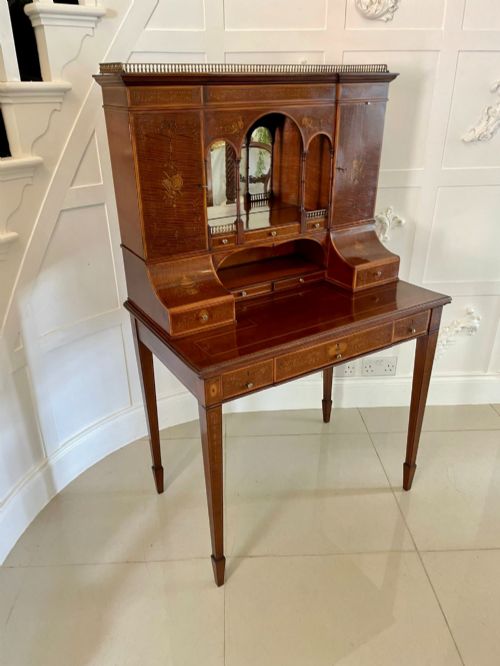
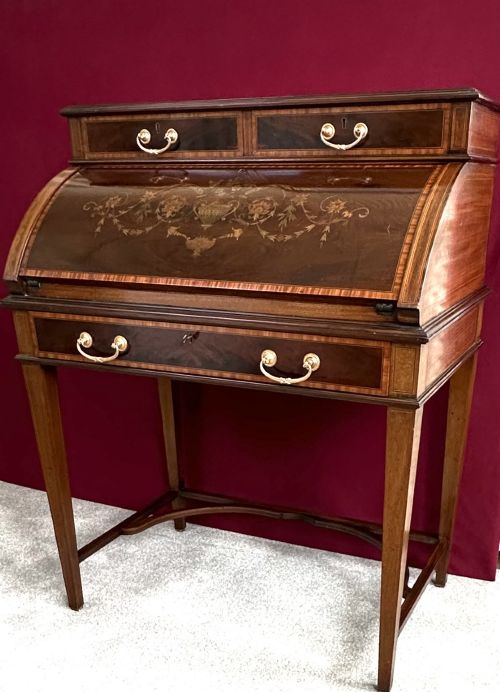
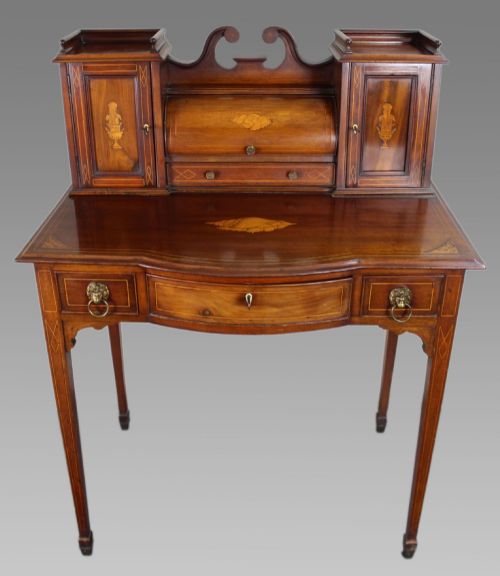
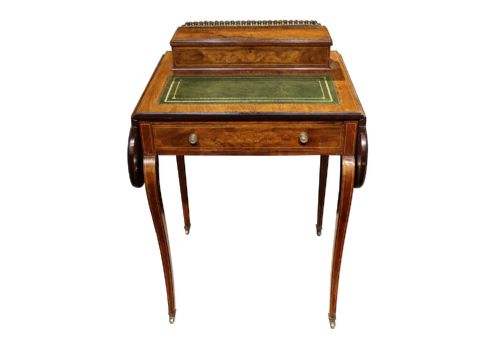
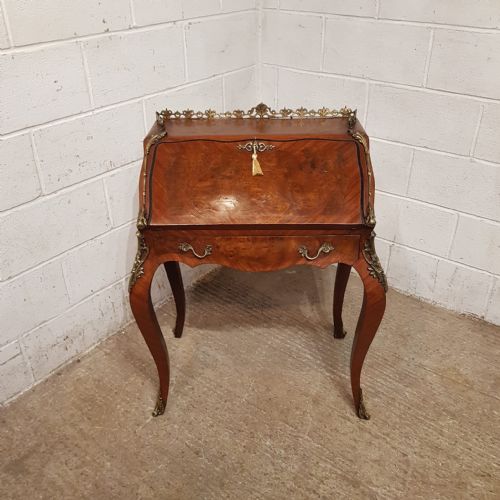
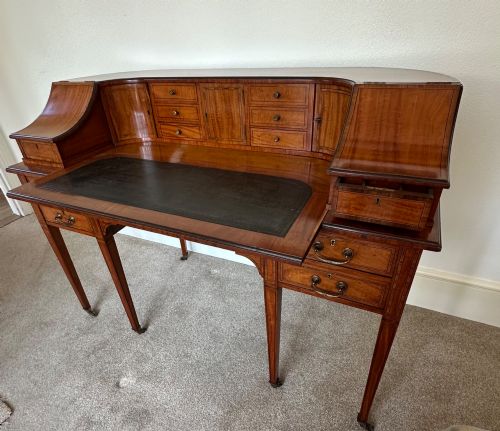
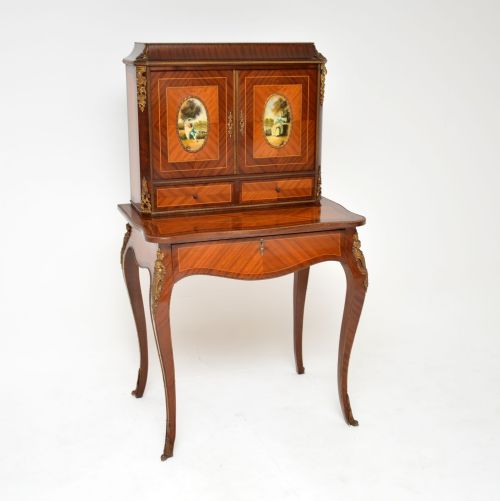
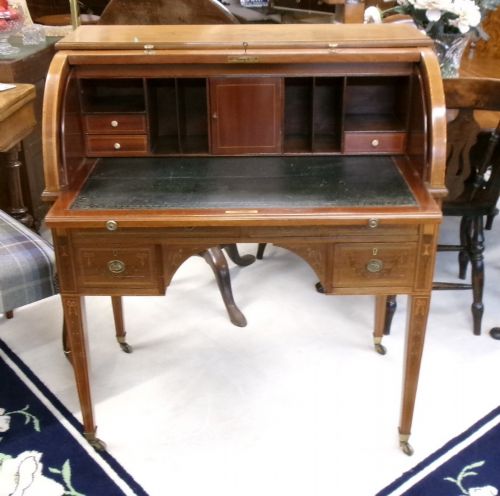
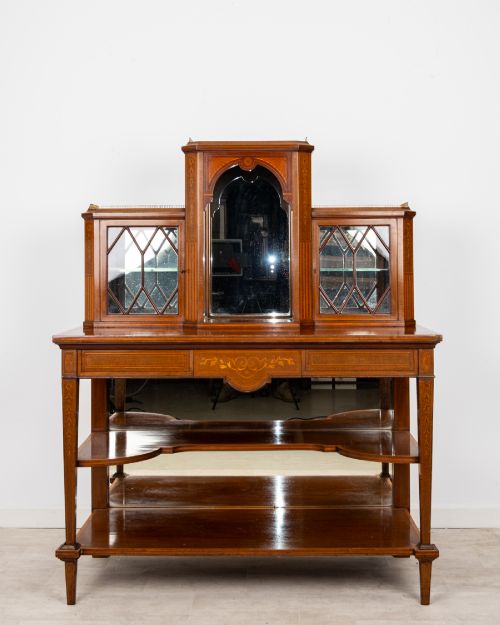
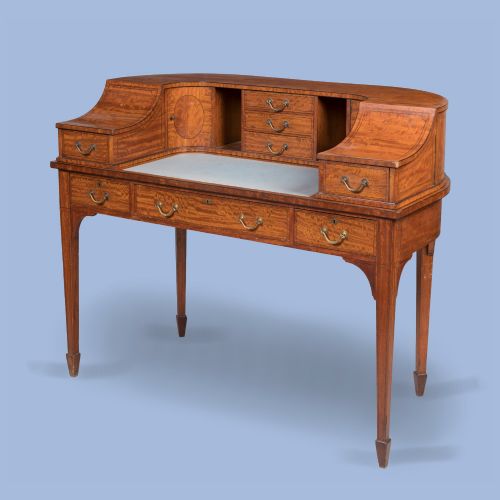
A vintage ladies writing bureau provides a dedicated writing surface tailored for private correspondence and small-scale administration. These pieces span several distinct forms, including fall-front bureaux, bonheur du jour desks, and Carlton House writing cabinets.
Most examples encountered here originate from the Edwardian era and the late nineteenth century. Makers frequently deployed compact proportions to suit boudoirs and drawing rooms rather than grand libraries.
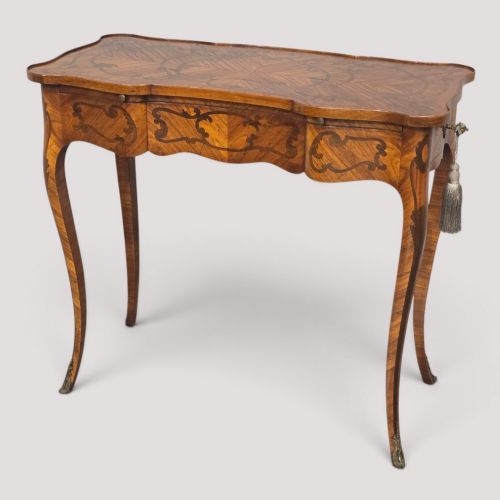
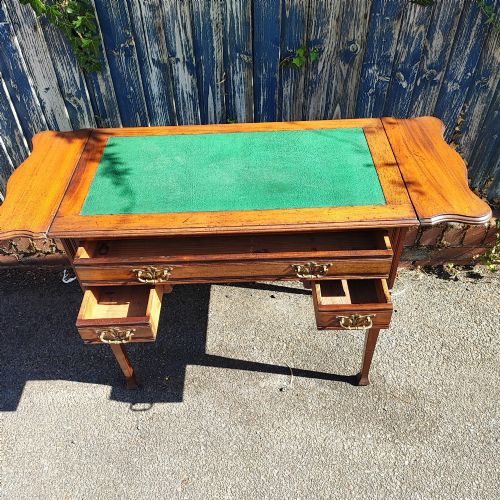
The assortment includes freestanding mahogany tables alongside French-influenced marquetry bureaux de dame. Buyers choose them to introduce character and practical desk space into domestic interiors without dominating a room.
Materials and construction techniques
Cabinetmakers utilised rich primary timbers such as mahogany, walnut, and satinwood, frequently enhanced by contrasting crossbanding and intricate marquetry. Many surfaces feature flame mahogany veneers or burr walnut selections chosen for their striking grain patterns.
Fine brass handles, ormolu mounts, and leather writing inserts punctuate the design. Interiors typically incorporate oak-lined drawers alongside small pigeonholes and drop-front mechanisms constructed to operate with precision.
Listings feature woods such as mahogany, satinwood, walnut, and kingwood, spanning Victorian, Edwardian, and revival styles.
Evaluating craftsmanship and detail
Quality rests upon the selection of timber veneers and the crispness of any inlaid decoration. Superior examples display thoughtful grain matching across the fall-front or desktop rather than random patterning.
Internal joinery and drawer construction reveal the maker's hand, where solid secondary woods like oak indicate a higher standard of manufacture. Original brass hardware and well-fitted interior compartments further distinguish finer pieces.
The Vintage Ladies Writing Bureau Glossary
- Bureau de dame
- A lady's writing desk, often featuring a sloping fall-front or a cylinder top concealing fitted drawers and pigeonholes.
- Bonheur du jour
- A light, elegant writing desk standing on slender legs, typically fitted with a small cabinet or tiered superstructure on top.
- Carlton House desk
- A distinctive writing desk with a curved superstructure of small drawers and compartments enclosing the rear and sides of the writing surface.
- Marquetry
- Decorative woodwork where pieces of veneer are fitted into a ground to form intricate pictorial or geometric patterns.
- Crossbanding
- A narrow strip of veneer applied around the border of a panel, arranged so its grain runs at right angles to the central wood.
Vintage Ladies Writing Bureau: Frequently Asked Questions
Where should I place a ladies writing bureau?
These compact desks suit sitting rooms, bedrooms, or quiet corners where space is limited.
Their finished backs often allow them to sit freestanding in the centre of a room rather than pushed against a wall.
How do I maintain the leather writing surface?
Gentle dusting and occasional specialist leather care will keep the writing insert supple and prevent cracking.
Avoid placing damp items or direct heat sources onto the leather to preserve its tone.
What is the difference between a bureau and a writing table?
A bureau typically encloses its writing surface behind a sloping fall-front or cylinder lid when not in use.
A writing table provides an open, fixed top, sometimes augmented by side flaps or small storage drawers beneath.
How do I identify an Edwardian bureau?
Edwardian pieces often feature lighter satinwood or mahogany veneers combined with delicate stringing and floral inlay.
They frequently display slender tapered legs and refined brass hardware characteristic of the period.