




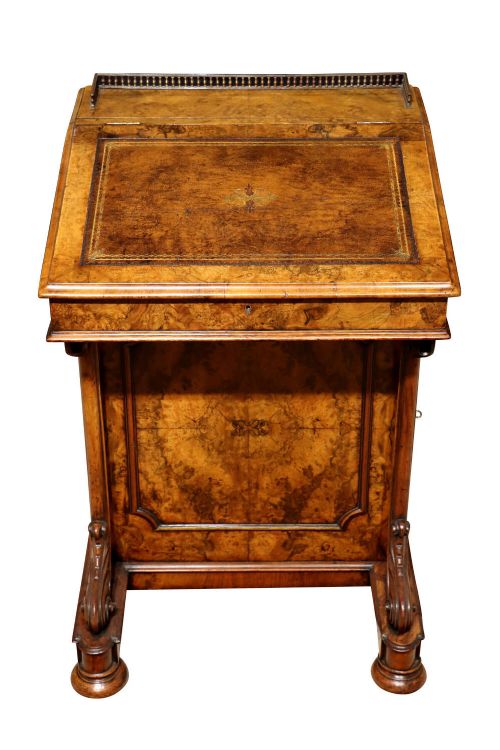


Walnut Ladies Bureau Desk
A walnut ladies bureau desk brings compact elegance to a study, offering a private writing surface scaled specifically for domestic use.
Walnut Ladies Bureau Desk
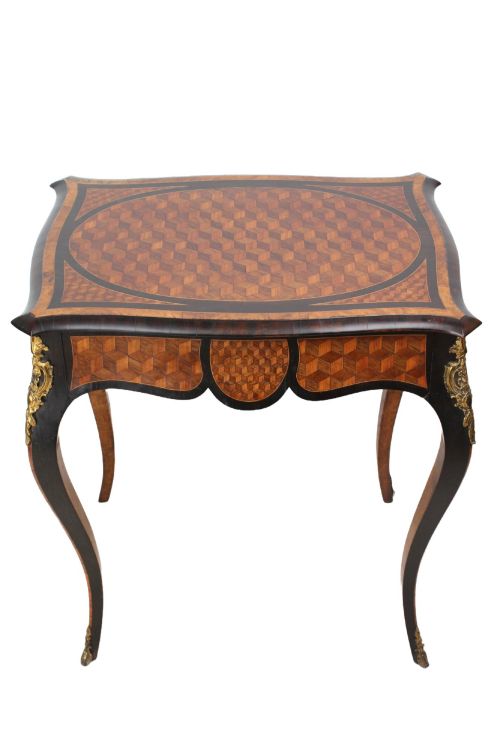
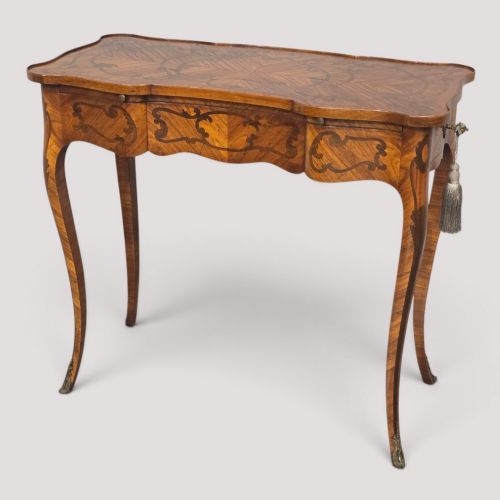
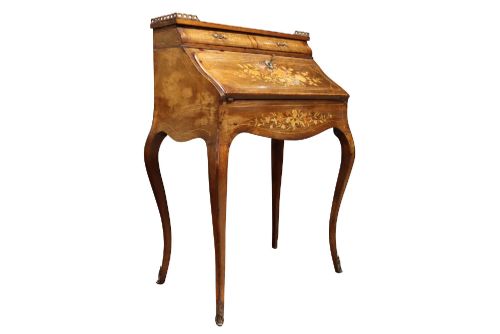
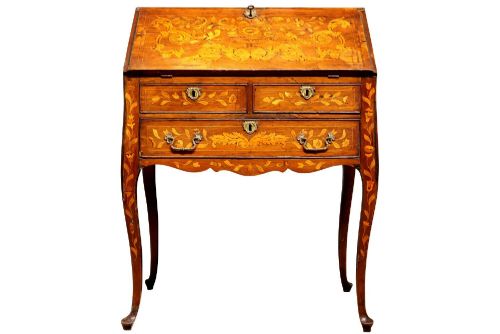
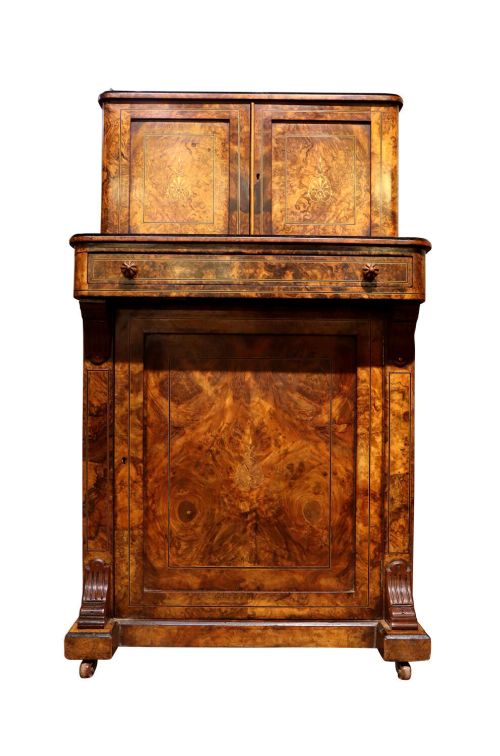
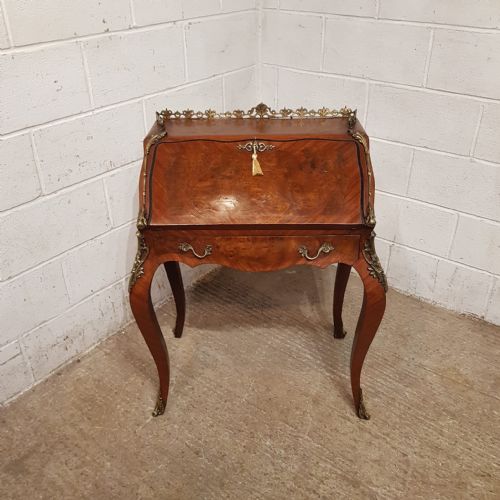
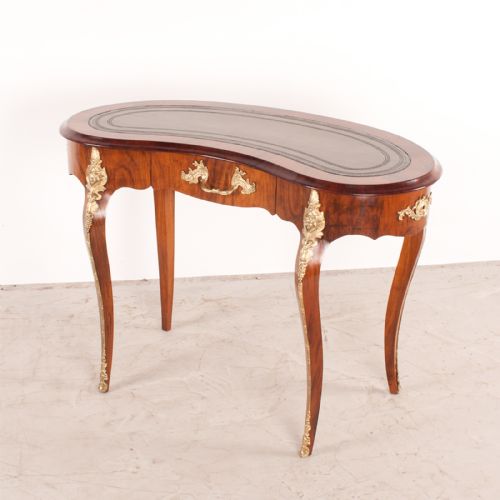
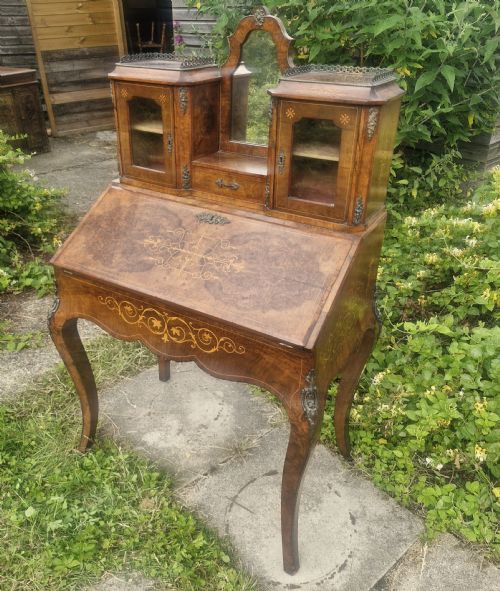
When you search for walnut ladies bureau desk, you enter a domain of refined writing furniture predominantly dating from the Victorian era and the nineteenth century. These pieces encompass writing tables, davenports, and particularly the bonheur du jour, which pairs a sloped or flat writing surface with small upper compartments. Such items reflect the domestic writing habits of the period, executed in substantial yet delicate proportions.
The aesthetic vocabulary draws heavily on French Revival and Louis XV influence, manifesting in serpentine lines, cabriole legs, and elaborate floral marquetry. Alongside these continental expressions, English iterations from makers such as Gillows and Edwards & Roberts appear regularly. The material palette leans decisively towards burr walnut, valued for its swirling grain patterns.
Materials and Technique
Cabinet makers constructed these desks using a solid timber framework overlaid with figured walnut and burr walnut veneers. Marquetry details, often incorporating floral motifs or geometric patterns, required precise hand-cutting of contrasting woods like satinwood. This veneer work was then smoothed and polished to highlight the natural grain.
Metalwork played a defining structural and decorative role, with brass handles, hinges, and gilt ormolu mounts securing and ornamenting the exterior. Interiors frequently reveal secondary timbers alongside satinwood fitted compartments, small drawers, and occasionally leather writing inserts. Every component was assembled by hand to ensure both stability and visual harmony.
Listings feature walnut, burr walnut, kingwood, and rosewood across nineteenth-century and early twentieth-century periods.
Markers of Excellence
Distinction in these desks rests upon the choice of timber and the precision of the marquetry. Exceptional examples employ highly figured burr walnut across the primary surfaces, matched symmetrically by skilled artisans. The complexity and execution of the inlay work separate standard production from master craftsmanship.
Secondary detailing dictates the standing of a piece, from the weight and chasing of the ormolu mounts to the complexity of the internal fittings. Desks retaining their original brass hardware, clean leather surfaces, and well-organised satinwood interiors demonstrate superior original intent and preservation.
JAS Shoolbred·Edwards & Roberts·Gillows
The Walnut Ladies Bureau Desk Glossary
- Burr walnut
- A decorative timber cut from the abnormal growth or burl of a walnut tree. It yields highly figured, swirling grain patterns prized for cabinet making.
- Marquetry
- The art of applying decorative pieces of veneer to a structural structure to form intricate pictures or geometric designs. Artisans cut various woods to fit together precisely.
- Ormolu
- Gilt bronze mounts applied to furniture for decorative effect. The technique involves treating brass or bronze with a gold amalgam.
- Davenport
- A small, compact writing desk featuring a sloping lid that lifts to reveal storage, with drawers accessed from the side. It became particularly popular during the Victorian period.
- Escritoire
- A writing cabinet or desk equipped with a sloping flap that conceals pigeonholes and small drawers. The term derives from the French word for writing.
Walnut Ladies Bureau Desk: Frequently Asked Questions
What is a bonheur du jour?
A bonheur du jour is a light ladies writing desk featuring a small set of drawers or a cabinet mounted on top of the writing surface. These pieces were designed for correspondence and light reading in a boudoir or drawing room.
Originating in France, the form gained popularity across Europe during the nineteenth century. They combine delicate proportions with functional compartments for stationery and personal papers.
How do I date a walnut writing desk?
Dating relies on examining construction methods, hardware styles, and timber choices. Victorian examples often display rich burr walnut veneers paired with elaborate ormolu mounts or French revival styling.
Later nineteenth-century pieces may incorporate specific marquetry patterns or bear stamps from known cabinet makers. Secondary woods inside the drawers also offer clues regarding the period of manufacture.
Where were these desks used?
These desks were designed for private domestic spaces rather than formal libraries. Ladies used them in bedrooms, boudoirs, and withdrawing rooms for writing letters and managing correspondence.
Because of their compact dimensions, they fit easily into residential interiors without dominating a room. They served as both functional writing surfaces and decorative furniture.
What is burr walnut veneer?
Burr walnut veneer is a thin slice of wood taken from the knotty growth on a walnut tree. This irregular growth produces dense, swirling grain patterns that create a highly decorative surface when polished.
Cabinet makers applied these veneers over a stable structural timber base. The resulting surfaces showcased complex natural patterns that straight-grained walnut could not achieve.