
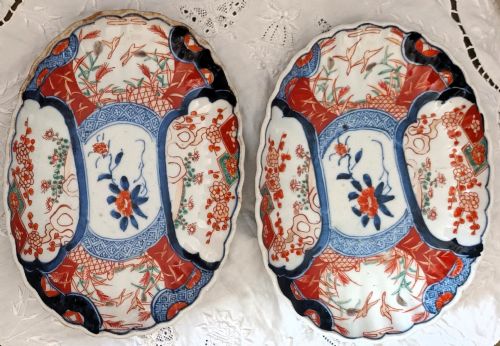


Vintage Imari Serving Dish
A vintage imari serving dish brings striking cobalt blue and iron red patterns to the table, combining bold decorative presence with practical service.
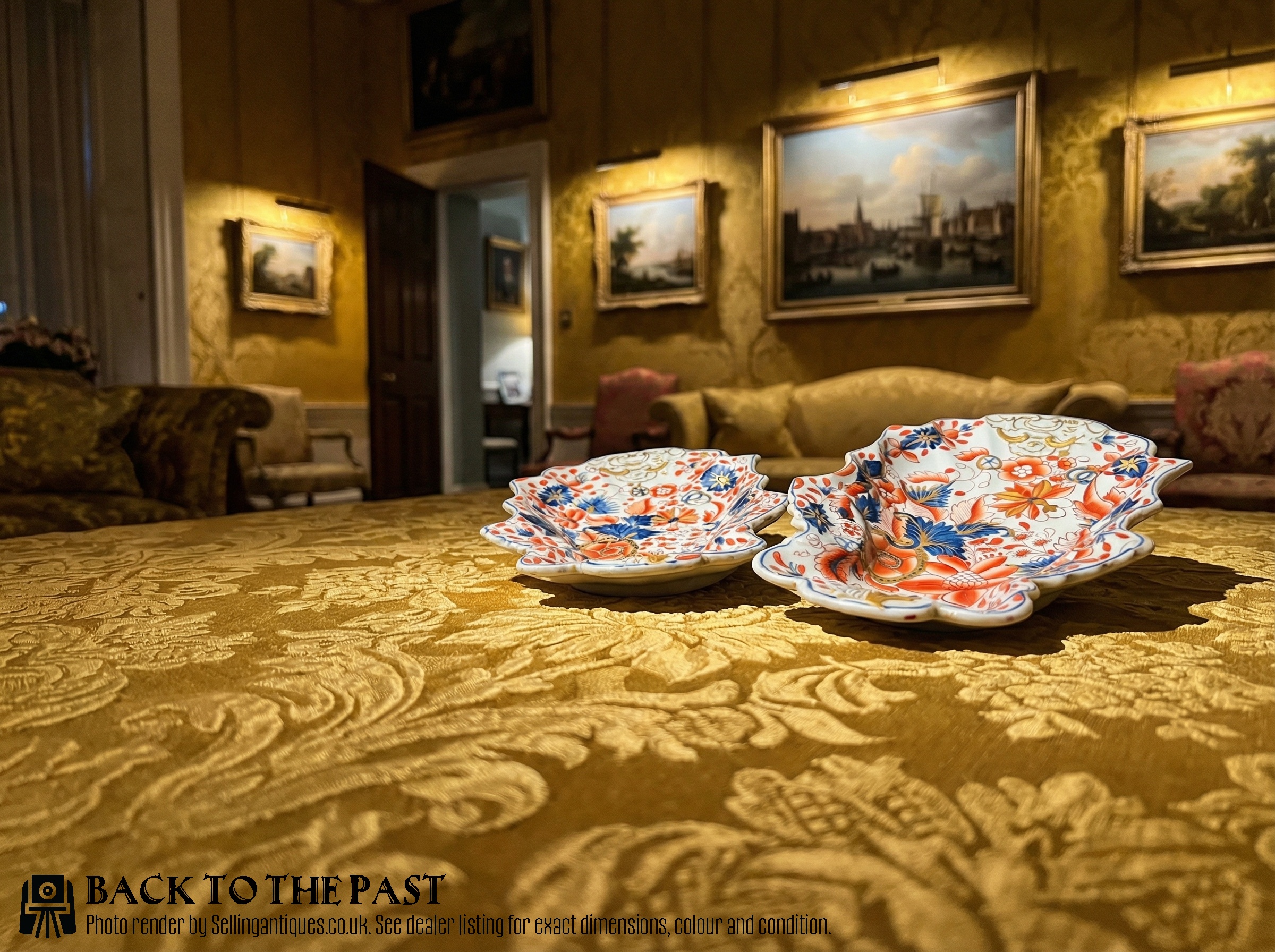
Vintage Imari Serving Dish
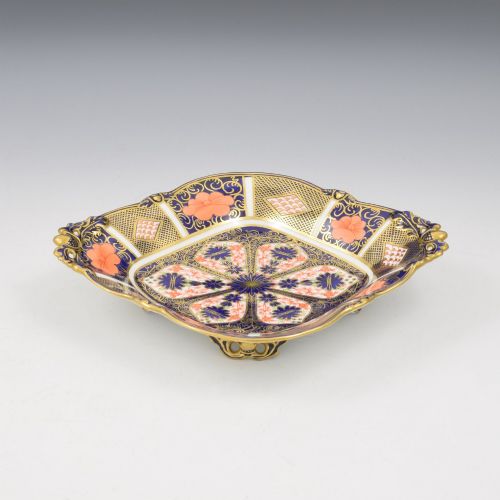
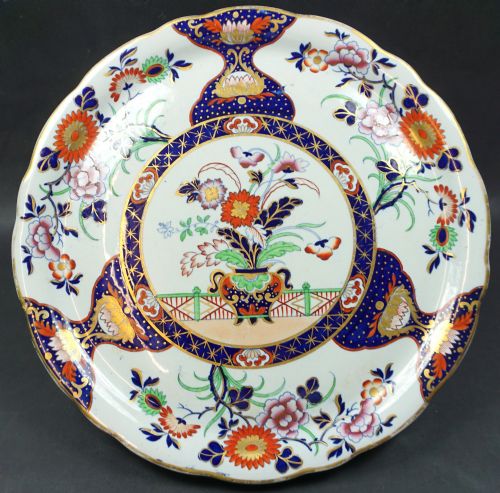
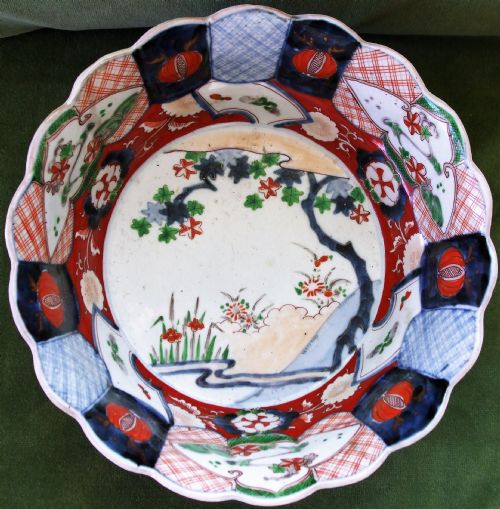
A vintage imari serving dish spans Japanese export pieces from the Meiji period and 1900, alongside English interpretations in ironstone and porcelain. You will find square plates, scallop-edged bowls, boat-shaped dishes, and large chargers designed for both display and use.
The English tradition adapts the characteristic palette onto robust ironstone tureens and bone china trays. These pieces reflect broader historical styles like Regency and Victorian alongside direct Japanese imports.
Assessing quality and execution
Quality rests in the crispness of the hand-painted brushwork and the precision of the enamel registration against the porcelain or ironstone ground. Superior examples display deep, vibrant cobalt tones and rich, intact gilding.
The weight and balance of the ceramic body, particularly in larger chargers and tureens, mark the distinction between standard commercial output and finer artisan production.
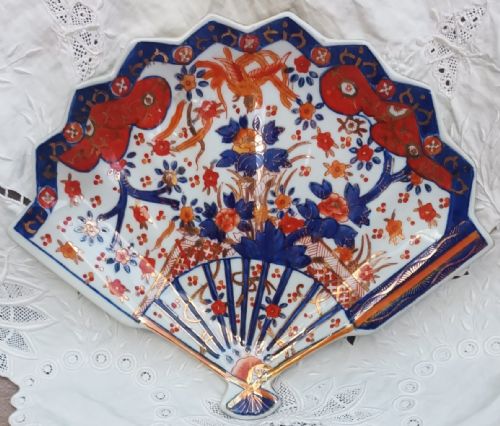
Boat-shaped dishes and fan-shaped plates bring unexpected geometry to the table, proving that antique dining was wonderfully varied.
Royal Crown Derby·Hicks & Meigh·Masons
The Vintage Imari Serving Dish Glossary
- Imari
- A style of Japanese export porcelain originating from Arita, characterised by a palette of cobalt blue, iron red, and gold.
- Ironstone
- A heavy, durable type of earthenware patented in the nineteenth century as a resilient alternative to porcelain.
- Charger
- A large decorative plate or serving platter intended for display or ceremonial use rather than daily dining.
- Tureen
- A deep, covered serving dish used traditionally for soups, stews, or sauces at the table.
- Enamel
- Opaque glass-like material applied over the glaze and fired at a low temperature to add colour to ceramics.
Vintage Imari Serving Dish: Frequently Asked Questions
Can I use these dishes for serving food?
Many of these pieces were made as functional tableware, including tureens, platters, and bowls designed to present food at the table.
Check each piece for older repairs, hairline cracks, or heavy wear to the glaze before serving moist or greasy foods.
How do I tell Japanese Imari from English Imari?
Japanese export pieces typically feature finer porcelain bodies and motifs rooted in Meiji or Edo period aesthetics, often focusing on asymmetrical floral and panel designs.
English interpretations, such as those in ironstone, tend to be heavier and employ distinct transfer-printing combined with hand colouring.
What is the Meiji period?
The Meiji period spans the late nineteenth and early twentieth centuries in Japan, marking an era of increased export of decorative arts to Western markets.
Pieces from this time often showcase intricate hand-painted enamel work and bold cobalt blue pigments.