
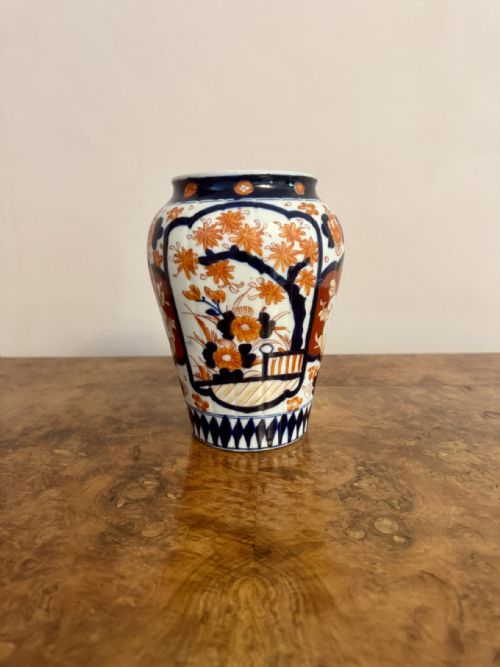
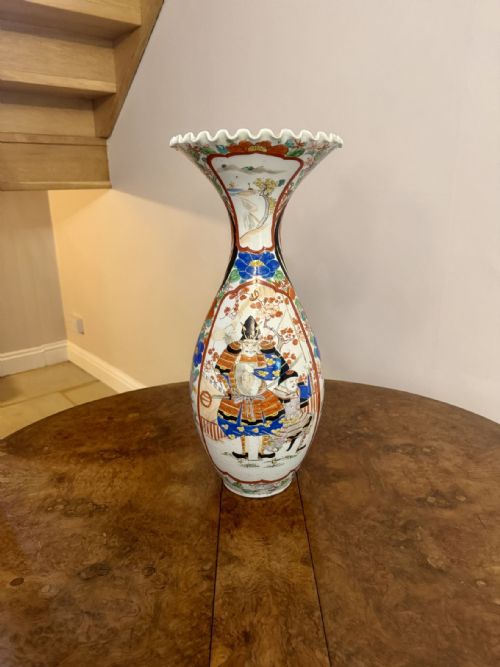


Vintage Imari Porcelain Vase
A vintage imari porcelain vase brings rich iron-red and cobalt-blue palettes to a room, offering striking pattern work from centuries of global trade.
Vintage Imari Porcelain Vase
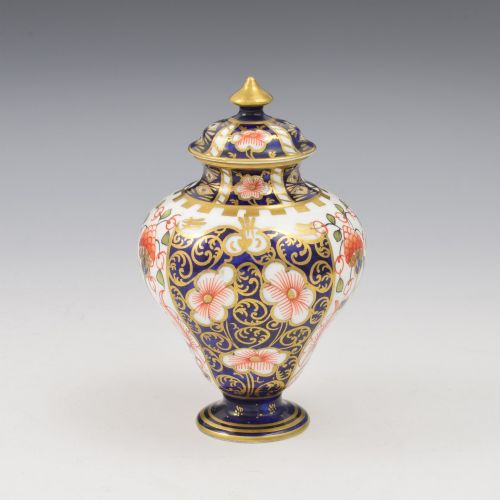
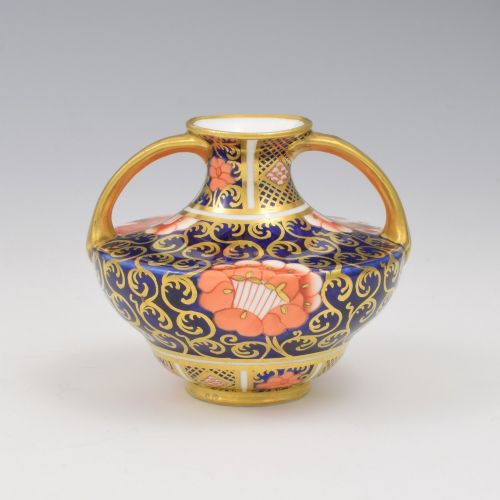
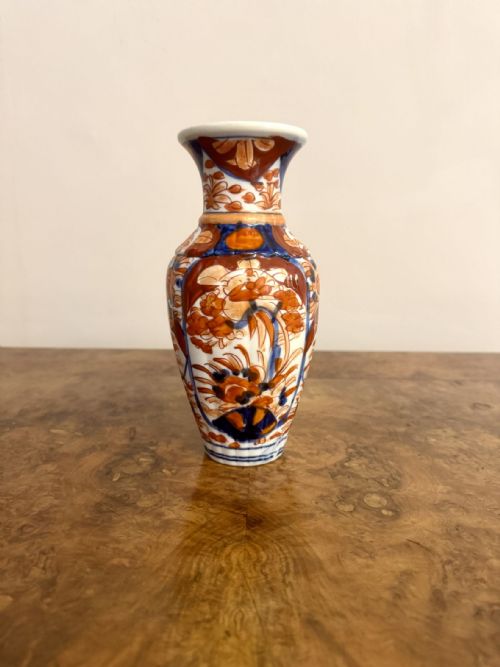
A vintage imari porcelain vase combines traditional Japanese aesthetic principles with the robust forms collectors expect from decorative ceramics. When searching for a vintage imari porcelain vase, buyers encounter everything from compact ginger jars and slender-neck vessels to grand floor-standing display pieces and matched pairs.
The selections span distinct periods of production, ranging from seventeenth-century Arita origins and eighteenth-century examples to Meiji period creations and early twentieth-century interpretations. European adaptations also appear, including ironstone versions from English makers and continental porcelain garnitures designed in the same distinctive palette.
How they were made
Makers shaped high-fired porcelain bodies by hand before applying underglaze cobalt blue pigments and overglaze iron-red enamel details. Many pieces received additional enrichment through delicate applications of gold leaf to accentuate the complex floral and geometric surface designs.
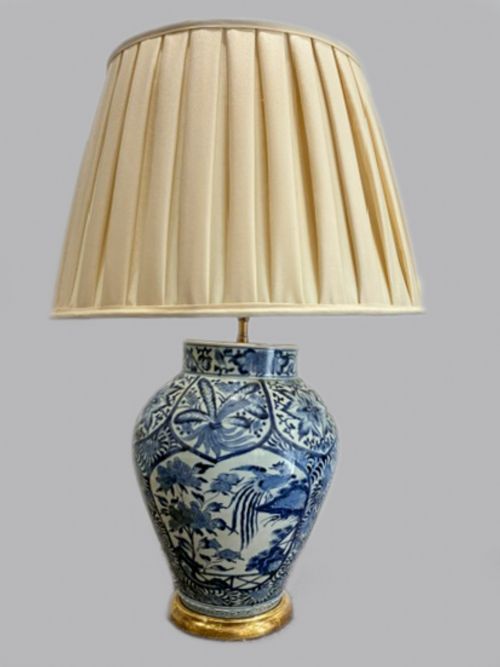
Some vessels underwent later adaptation for domestic lighting, integrating brass fittings and silk or fabric elements to serve as table lamps while retaining their original ceramic character. Ironstone bodies also emerge in certain nineteenth-century British interpretations, offering alternative weights and glazes.
Several seventeenth-century vessels traded their original duties for electrical wiring, serving today as remarkably dignified reading lamps.
What varies in quality
Quality rests in the crispness of the hand-painted cobalt and the precision of the enamel overlay, where master workshops achieved remarkable depth and clarity. Superior examples display balanced composition across complex panels of flora, fauna, and architectural motifs.
Scale and form dictate distinction, with large floor-standing vessels, matched pairs, and complete garniture sets representing higher tiers of original commission. The preservation of surface gilding and the clarity of the underlying glaze further separate standard production from exceptional artistry.
Royal Crown Derby·Masons Ironstone·Fukagawa
The Vintage Imari Porcelain Vase Glossary
- Imari
- A style of Japanese porcelain decorated in underglaze blue, iron-red, and gold, originating from the port town of Imari for export to Europe. This distinctive palette defines the entire genre.
- Arita
- The Japanese town and surrounding region where the clay and kilns for imari production were historically centred. Pieces attributed here represent the core tradition of the craft.
- Garniture
- A set of matching vases or jars designed to be displayed together on a mantelpiece or sideboard. These matched groupings often comprise three or more vessels.
- Ironstone
- A type of heavy, durable earthenware developed in Britain as a robust alternative to porcelain. Several nineteenth-century makers utilised this material to produce imari-patterned vessels.
- Meiji
- The period in Japanese history spanning from 1868 to 1912, noted for a surge in export ceramics destined for Western markets. Many decorative vases date from this era of intensive production.
Vintage Imari Porcelain Vase: Frequently Asked Questions
How do I date a vintage imari porcelain vase?
Dating relies on examining the body paste, the intensity of the underglaze cobalt, and the specific style of the iron-red and gilt enamel work. Seventeenth and eighteenth-century pieces often show coarser potting and hand-ground glazes, while Meiji and later nineteenth-century examples display greater technical uniformity.
Base marks, where present, help identify specific workshops or periods of production. Comparing the decorative motifs against established regional styles provides further chronological context.
Were imari vases made in Europe as well as Japan?
While the style originated in Japan during the Edo period, European potteries quickly recognised the popularity of the aesthetic. English and continental makers produced their own interpretations using local porcelain and ironstone bodies.
These European pieces adopted the signature cobalt blue and iron-red palette but often incorporated local clay compositions and potting techniques. Such examples form a distinct branch of the tradition alongside imported East Asian wares.
What is a garniture set?
A garniture set consists of multiple matching vases or jars intended to be displayed as a cohesive decorative unit. These groupings typically feature a mix of covered ginger jars and open vases designed for symmetry on large furniture.
Surviving complete sets are valued for their unified decorative schemes and matched proportions. Each piece in the set shares identical hand-painted motifs and glaze characteristics.
How should I display a large imari vase?
Large imari vases require stable placement on sturdy furniture due to their substantial weight and ceramic composition. Floor-standing models benefit from open spaces where their detailed panels can be viewed from multiple angles.
Protecting the surface from direct sunlight preserves the vibrancy of the iron-red enamel and gold leaf. Proper lighting enhances the rich depth of the cobalt blue underglaze.