


Japanese Ceramic Bottle
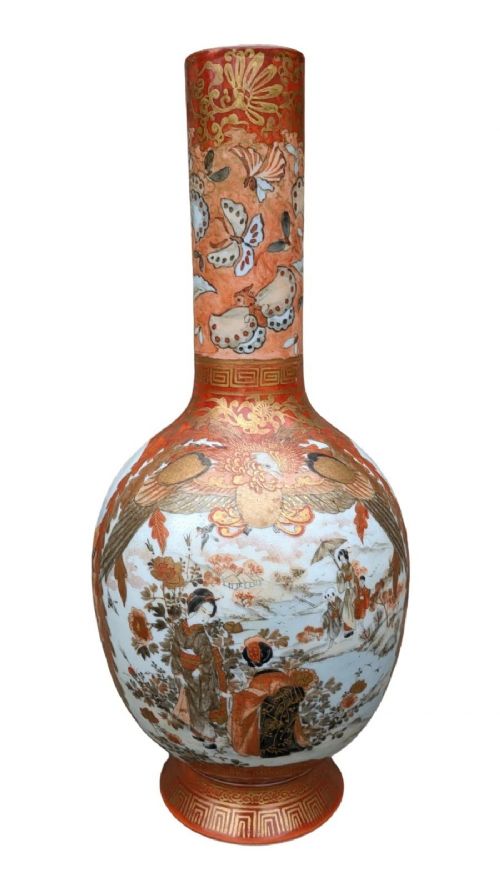
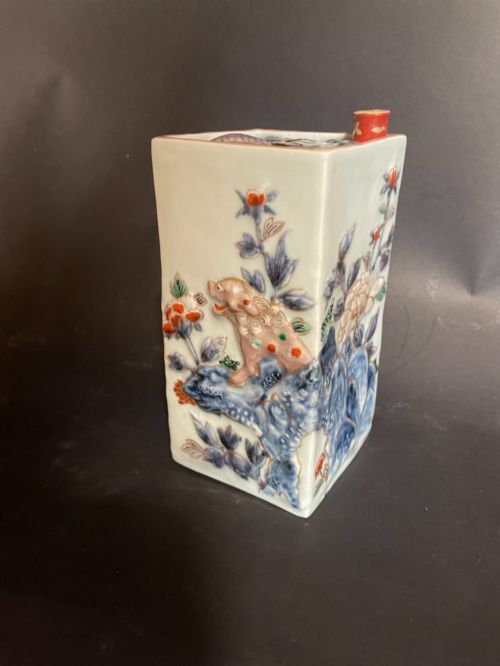
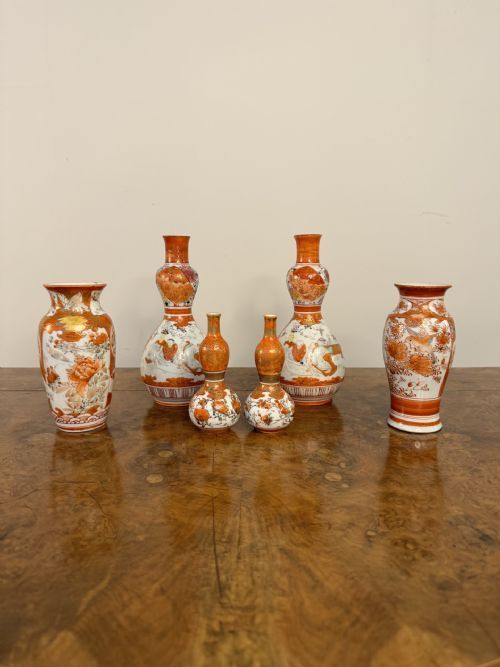
These japanese ceramic bottle pieces span centuries of kilns, offering classic forms from early wine flasks to decorative Imari and Kutani vases.
Japanese Ceramic Bottle
When you search for a japanese ceramic bottle, you encounter a variety of forms ranging from slender neck vessels and wine flasks to larger decorative vases. The pieces span periods from the seventeenth century through the Meiji and Taisho eras, showing both domestic utensils and export wares.
You are most likely to meet Japanese Imari and Kutani wares on this page, alongside Arita and Satsuma pieces. These objects display diverse decorative traditions, from cobalt glaze and enamel to gold leaf highlights on porcelain and earthenware bodies.
Materials and construction
Potters shaped these vessels from ceramic, earthenware, and porcelain bodies, applying cobalt glazes and enamel pigments by hand. Many examples incorporate meticulous gold leaf detailing across the surface decoration.
Firing techniques varied across the seventeenth, eighteenth, nineteenth, and early twentieth centuries, resulting in distinct bodies from kilns such as Arita, Kutani, and Satsuma.
Listings feature ceramics spanning the seventeenth century through to the Meiji and Taisho periods, utilising porcelain, earthenware, cobalt, and gold leaf.
Judging quality in Japanese ceramics
The distinction between standard production and superior examples lies in the crispness of the painting and the precision of the form. Finer pieces demonstrate greater control in the cobalt glaze and enamel work, with balanced proportions on bottle necks and vase bodies.
Earlier seventeenth-century items and finely painted Meiji period pieces often display a higher degree of artistry in their figural or floral motifs compared to later mass-produced export goods.
The Japanese Ceramic Bottle Glossary
- Imari
- A style of Japanese porcelain decorated in underglaze blue, iron red, and gold, named after the port from which it was shipped.
- Kutani
- A style of Japanese coloured porcelain and earthenware noted for vibrant enamel palettes and pictorial scenes.
- Tokuri
- A traditional Japanese bottle used primarily for serving sake wine.
- Satsuma
- A type of earthenware from Satsuma province featuring a crackled ivory glaze decorated with enamels and gilding.
- Arita
- The Japanese town and surrounding region famous as the birthplace of Japanese porcelain production.
Japanese Ceramic Bottle: Frequently Asked Questions
What is a tokuri?
A tokuri is a traditional Japanese flask or bottle specifically designed for serving sake. These vessels typically feature a narrow neck to retain temperature and a rounded body.
Historically used in homes and establishments, they represent the functional side of Japanese ceramics alongside purely decorative vases.
How do I identify Imari ware?
Imari ceramics are recognised by their distinctive palette, combining underglaze cobalt blue with rust red and gold leaf accents. The patterns often incorporate intricate floral and brocade designs.
This style became immensely popular for export to Europe during the Edo period and continued well into the nineteenth century.
Are these bottles waterproof?
Most antique ceramic and porcelain bottles are glazed internally, making them suitable for holding liquids like wine or water. However, hairline fractures in older earthenware can develop over centuries.
It is generally advisable to inspect the interior before using historical vessels for practical liquid storage.
How do I date a Japanese vase?
Dating relies on stylistic markers, materials, and kiln characteristics associated with periods such as the Edo, Meiji, or Taisho eras. Cobalt tones and enamel styles often shift noticeably between the seventeenth and nineteenth centuries.
Makers' marks, where present on the base, provide further clues to the specific kiln and decade of production.