



Vintage Glass Wine Goblet
These vintage glass wine goblet selections bring heavy lead crystal and bright coloured glass from Georgian stems to Edwardian tables.
Vintage Glass Wine Goblet
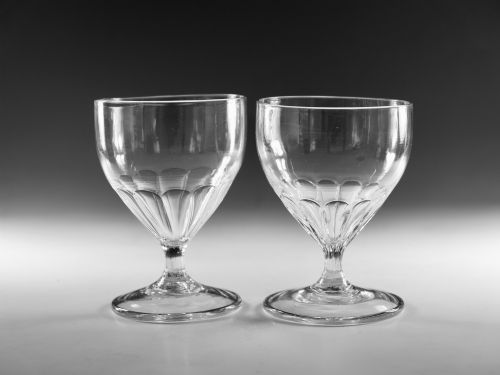
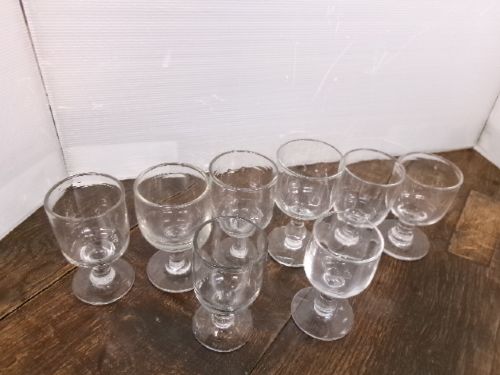
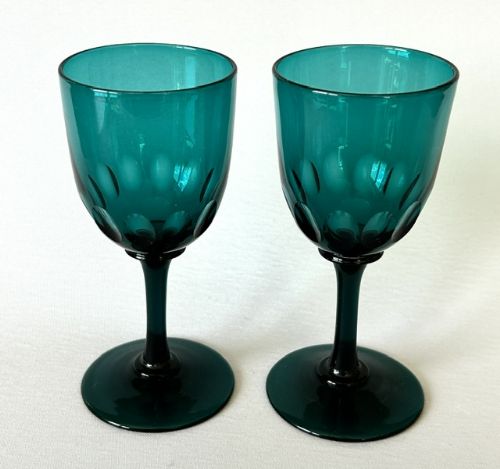
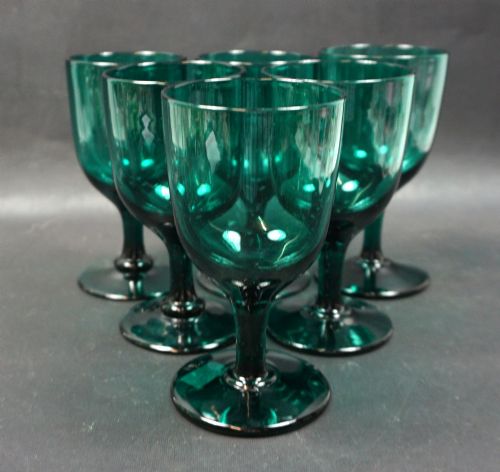
A vintage glass wine goblet represents centuries of drinking vessels designed for wine, ale, and cordials across Georgian, Victorian, and Edwardian periods. Buyers encounter everything from heavy rummers to delicate hock glasses and tall turquoise or green stems.
The pieces on this page span plain stems, faceted bowls, and intricate twists originating from English, French, German, and Italian makers. Formats range from single conversation pieces to matched sets for a complete dining service.
How they were made
Craftsmen shaped these vessels using lead glass and clear crystal, frequently incorporating gold leaf, enamel decoration, and coloured glass overlays such as cranberry, vaseline, and Bristol green. Molten metal was blown by hand into moulds or free-blown before being manipulated into stems and wide foot bases.
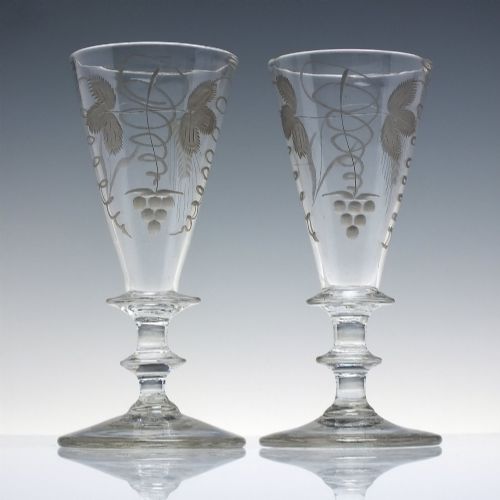
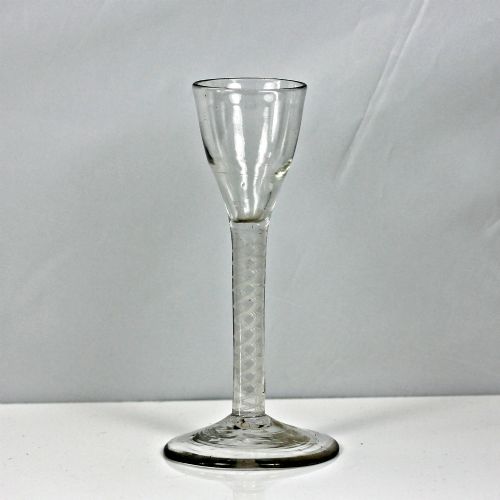
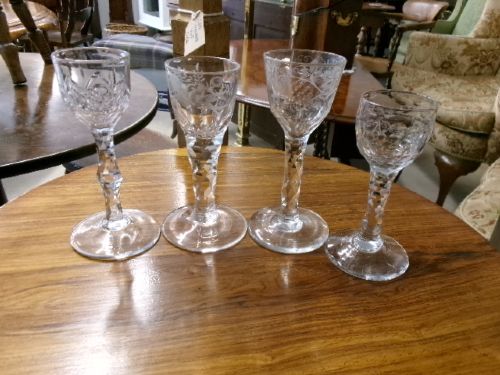
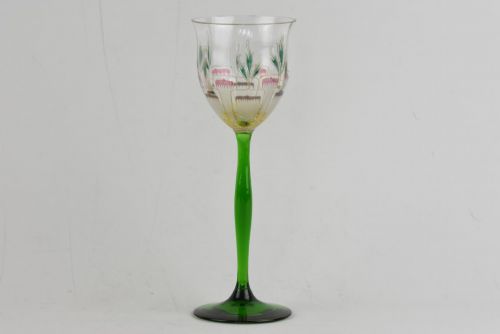
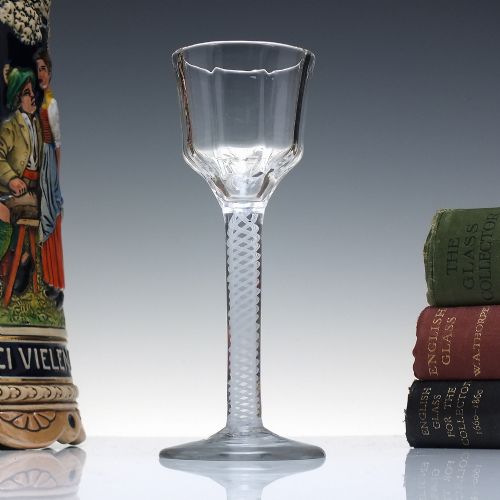
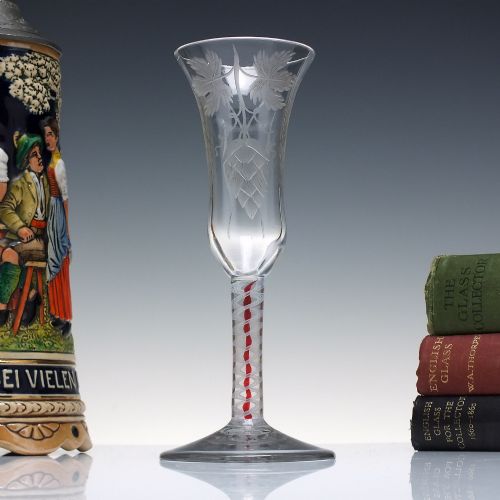
Techniques like air twists, opaque twists, and mixed twists required immense skill during the 18th century, trapping tiny air bubbles or glass threads inside the stem. Later periods utilised intaglio cutting, engraving, and floral enamelling to pattern the bowls.
Listings feature lead crystal, enamelled surfaces, and gold leaf across 18th Century, Victorian, and Edwardian periods.
What varies in quality
Quality rests upon the clarity of the metal, the precision of the stem manufacture, and the crispness of any wheel-engraving or cut facets. Heavy lead crystal holds a deep ring and a brilliant refractive quality that lesser glass simply lacks.
The delicacy of the bowl wall relative to a sturdy, well-balanced foot base dictates the handling experience. Superior pieces show masterwork in the twist formations or hand-painted enamel details that remain sharp and undisturbed.
TIFFANY & Co·Baccarat·Theresienthal·Webb Corbett·Salviati·St Louis Massenet
The Vintage Glass Wine Goblet Glossary
- Rummer
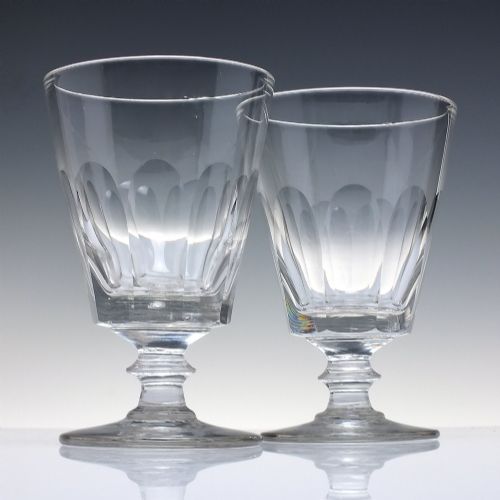
- A large, heavy drinking glass popular in the Georgian and Victorian eras, often featuring a stout stem and bucket bowl.
- Opaque twist
- A stem style created by enclosing white or coloured glass threads inside clear metal in a spiral pattern.
- Hock glass
- A tall wine glass traditionally used for German white wines, frequently coloured green or amber.
- Roemer
- A traditional Germanic drinking vessel with a large spherical bowl resting on a cylindrical stem decorated with prunts.
- Air twist
- A stem formation containing elongated spiral channels of trapped air running down the length of the glass.
Vintage Glass Wine Goblet: Frequently Asked Questions
How do I date a glass wine goblet?
Dating relies on stylistic clues like bowl shapes, pontil marks on the base, and stem construction. Eighteenth-century pieces often feature air or opaque twists, while Victorian examples lean towards heavy pressing or cranberry hues.
Examining the wear on the foot rim also provides clues about age and handling over the decades.
Were these goblets used for everyday dining?
Many of the sturdier rummers and cut-glass tumblers served heavy everyday duty on Georgian and Victorian tables. Finer enamelled hock glasses and delicate twist stems were reserved for special toasts and formal dining.
Today, collectors use them carefully for dinner parties or display them in cabinets.
What is the difference between lead crystal and standard glass?
Lead crystal contains a proportion of lead oxide, which increases the weight, refractive index, and resonance of the material. This allows the glass to be cut more deeply without fracturing.
Standard glass feels lighter and lacks the characteristic bell-like ring when tapped gently.
How should I clean antique coloured glass?
Hand wash antique glassware in lukewarm water using a mild detergent, supporting the bowl and stem rather than twisting them. Avoid dishwashers entirely, as thermal shock and harsh detergents ruin enamel and gold leaf.
Dry immediately with a lint-free cloth to maintain the brilliance of the lead crystal.