

Vintage Glass Stemware
When you search for vintage glass stemware, you meet centuries of drinking vessels shaped by hand and wheel from clear and coloured lead crystal.
Vintage Glass Stemware
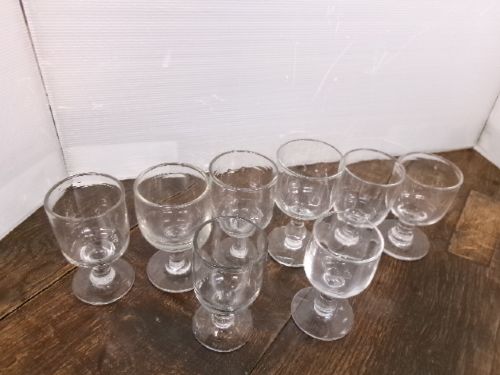
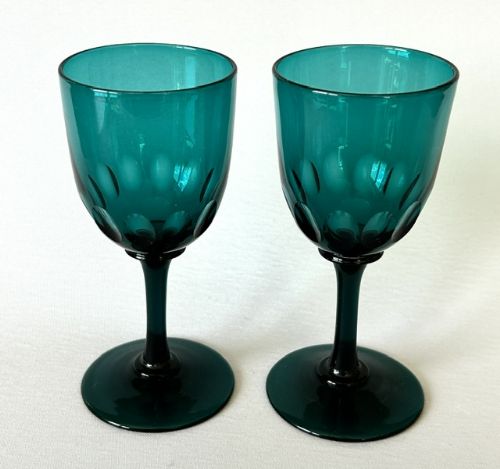
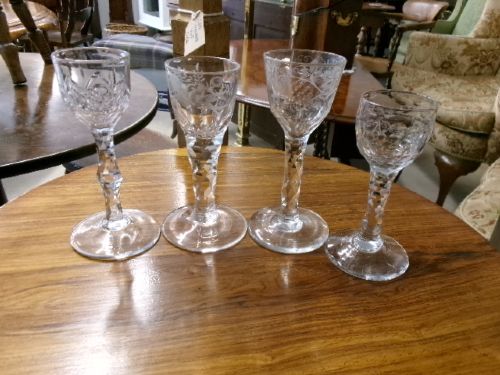
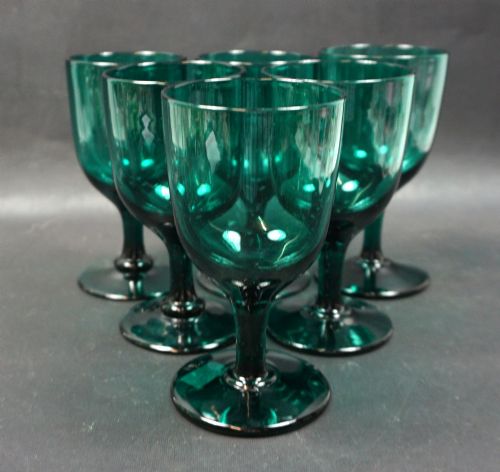
Vintage glass stemware encompasses drinking vessels for wine, champagne, beer, and ale spanning the eighteenth century through the Edwardian period and Art Deco years. The selection centres heavily upon Georgian opaque and air twist wine glasses alongside Victorian cranberry, green, and vaseline sets.
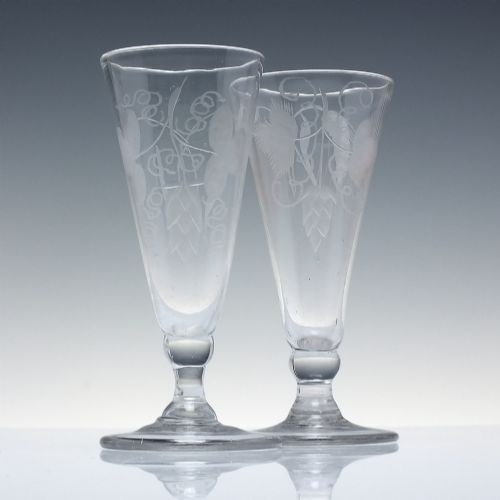
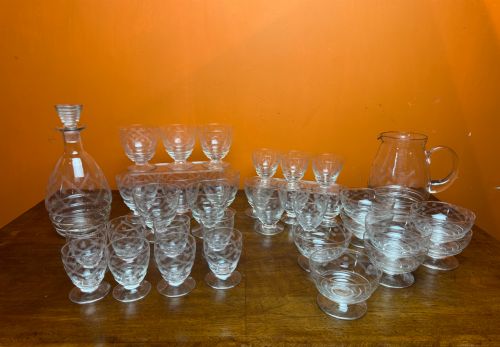
Forms range from intimate cordial glasses and rummers to large suites of champagne coupes and hock glasses. Buyers encounter single collectors' pieces with engraved bowls alongside matched sets intended for formal dining tables.
How they were made
Master glassmakers formed these pieces from lead glass and lead crystal, utilising free-blowing and mould-blowing techniques to shape bowls and stems. Workers introduced air bubbles or drawn opaque glass threads within the molten metal to create delicate twists.
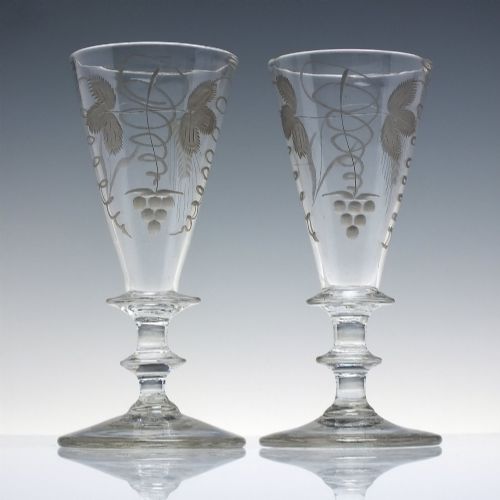
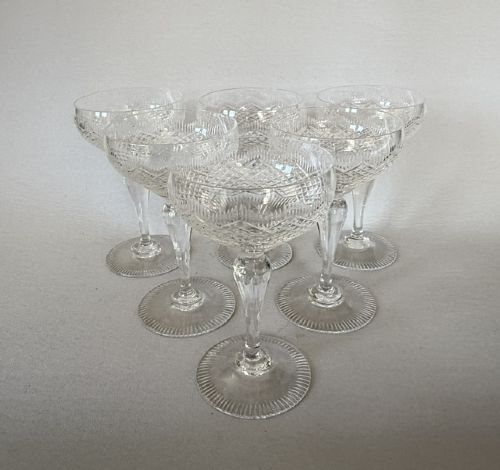
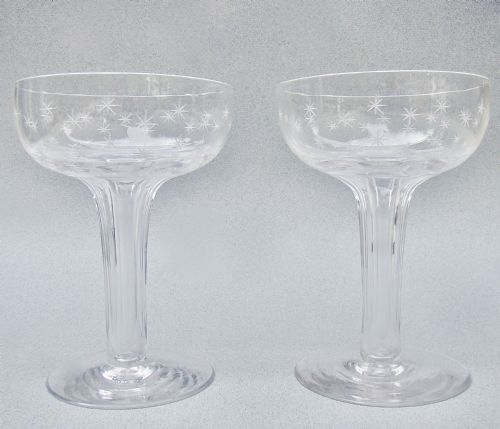
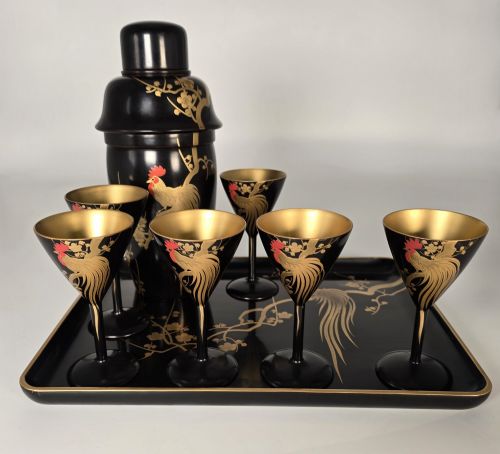
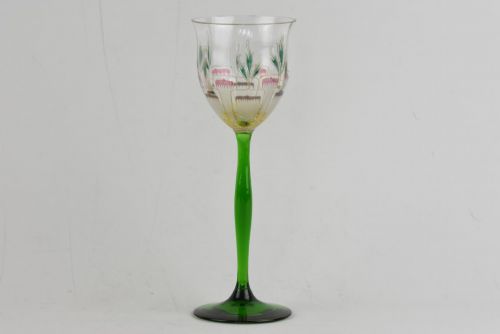
Finishing involved wheel-cutting, star-etching, and hand-painting with enamel and gold leaf. Over-crystal pieces required casing one layer of coloured glass over clear crystal before cutting through the top layer to reveal contrast.
Vaseline glass stemware glows an eerie, luminous green under ultraviolet light due to the trace uranium content added to the molten mix.
What varies in quality
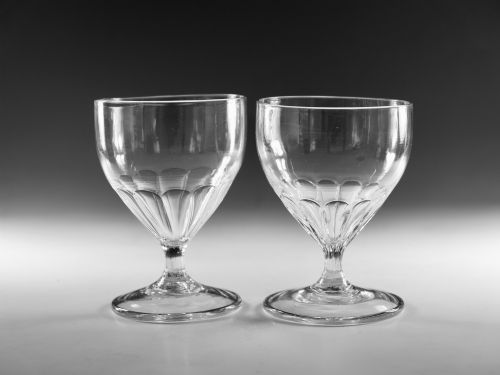
Quality rests in the crispness of the wheel-cut facets, the purity of the lead crystal, and the symmetry of the drawn stem. Superior pieces display intricate hand engraving and balanced proportions between foot, stem, and bowl.
The complexity of the internal twist, such as mixed or opaque white strands, separates masterwork Georgian glasses from simpler moulded examples. Richness and depth in coloured glass, particularly cranberry and vaseline hues, dictate the tier of the piece.
Baccarat·Theresienthal·Webb Corbett·Salviati·James Powell
The Vintage Glass Stemware Glossary
- Air twist
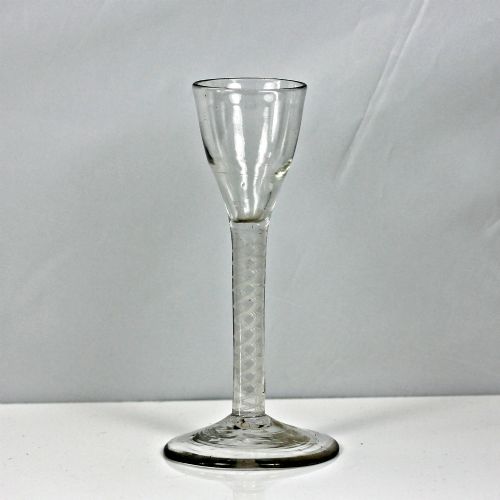
- A stem containing spiral threads of trapped air created by drawing and twisting heated glass rods. This technique is characteristic of eighteenth-century English drinking vessels.
- Opaque twist
- A stem featuring white or coloured enamel glass threads pulled into a spiral pattern inside clear metal. These threads are enclosed within a solid glass exterior.
- Hock glass
- A tall drinking vessel traditionally used for white wine, often featuring a coloured bowl and a long decorative stem. They appear frequently in Victorian and Edwardian suites.
- Rummer
- A heavy, short-stemmed goblet used for serving wine or spirits in the eighteenth and nineteenth centuries. They possess wide bowls and sturdy foot bases.
- Champagne coupe
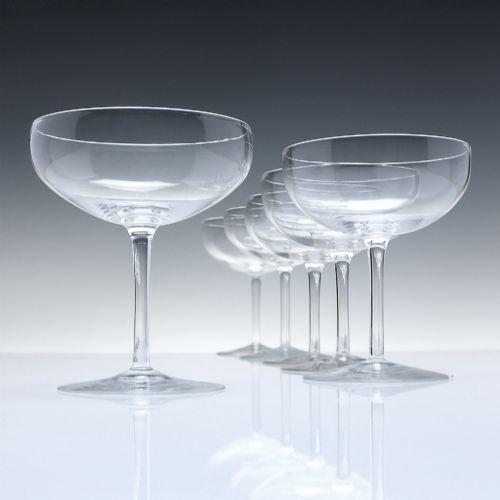
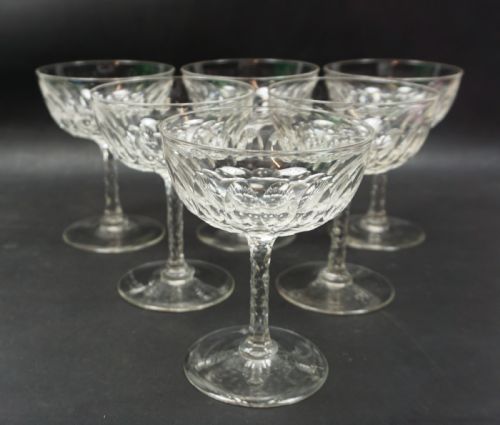
- A shallow, broad-bowled glass designed for sparkling wine and champagne. Victorian and Edwardian examples often showcase facet-cut stems and engraved decoration.
Vintage Glass Stemware: Frequently Asked Questions
How do I date an old wine glass?
Examine the form of the bowl, the construction of the stem, and the finish of the pontil mark on the underside of the foot. Eighteenth-century examples often display drawn stems and heavy lead content, while Victorian pieces lean towards moulded colours and elaborate etching.
Look closely at the wear patterns around the foot rim to gauge age. Hand-blown vessels typically show minor circular friction marks rather than modern machine-stamped smoothness.
What is an air twist stem?
An air twist is an optical effect inside the stem of a drinking glass created when tiny air bubbles are elongated into spiral threads during manufacture. Glassmakers trapped air in the hot metal before pulling and twisting the stem to form the pattern.
This technique flourished during the mid-eighteenth century in England. It produces a delicate internal pattern that catches candlelight differently than cut or plain stems.
Are these glasses safe to use?
Most antique glass stemware remains entirely stable for gentle use, provided you wash them strictly by hand in lukewarm water. Avoid sudden temperature changes to prevent thermal shock in old lead crystal.
Pieces decorated with gold leaf or delicate enamel require extra care to preserve the surface. Many collectors prefer to reserve these fragile vessels for special occasions rather than daily dining.
How do I distinguish lead crystal from normal glass?
Lead crystal possesses a heavier weight and a clearer ring when tapped gently on the rim compared to standard soda-lime glass. The high lead content allows for deeper, sharper facet cutting without fracturing the material.
Under natural light, lead crystal disperses light into spectral colours more vividly. It also feels slightly warmer to the touch than ordinary glass.