



Vintage Floral Inlaid Table
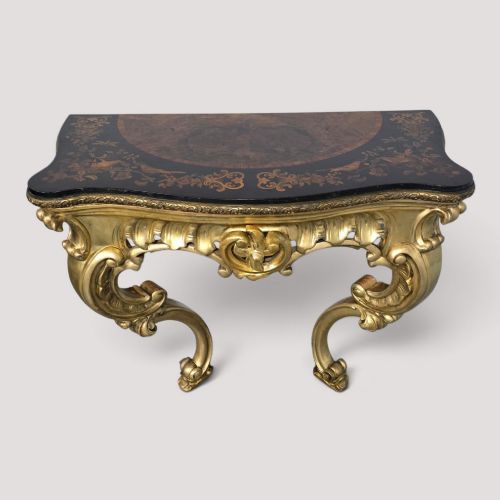
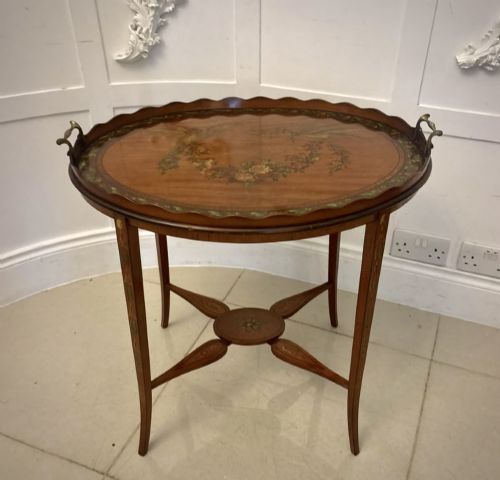
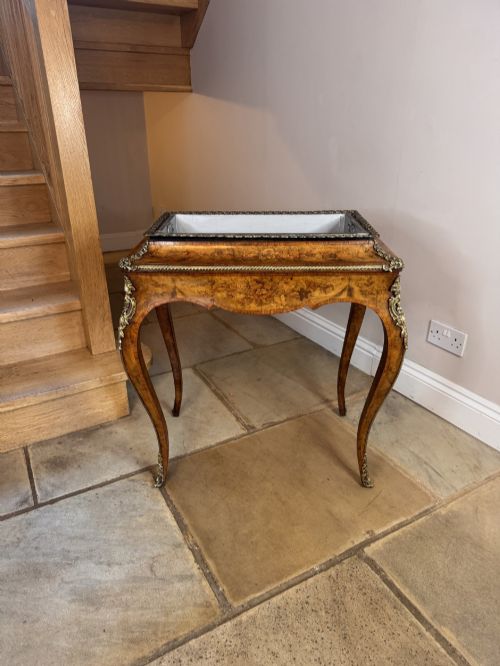
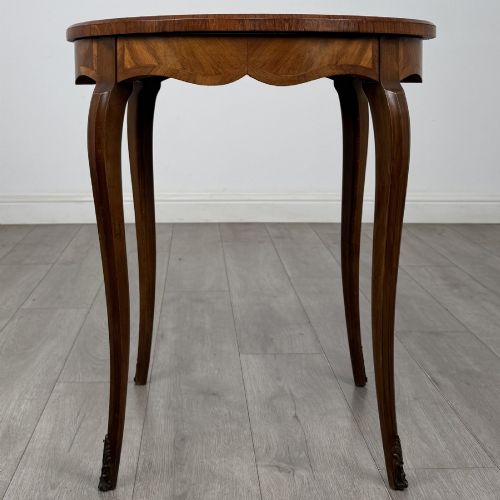
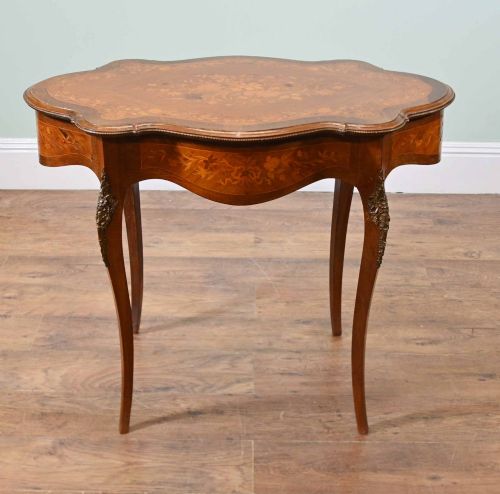
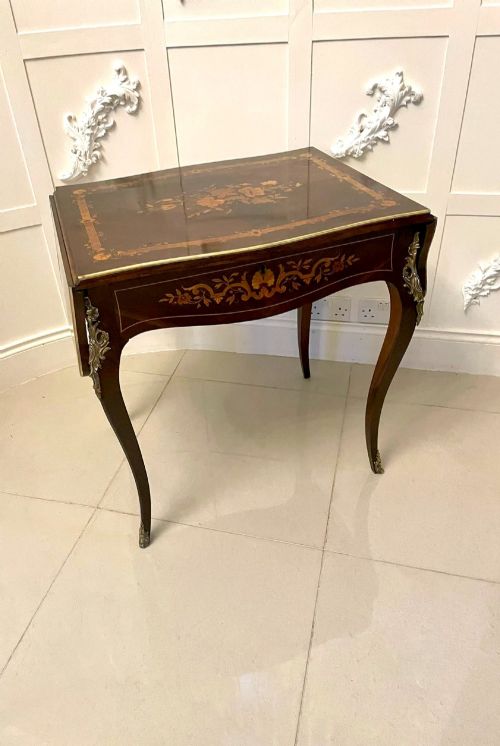
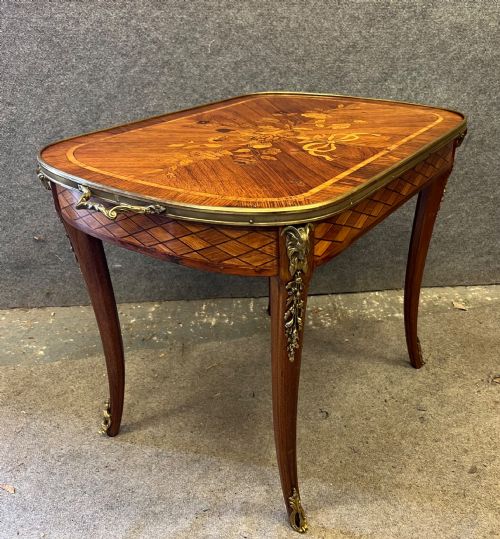
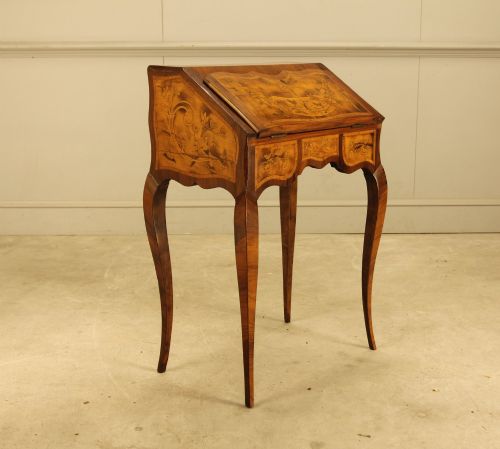
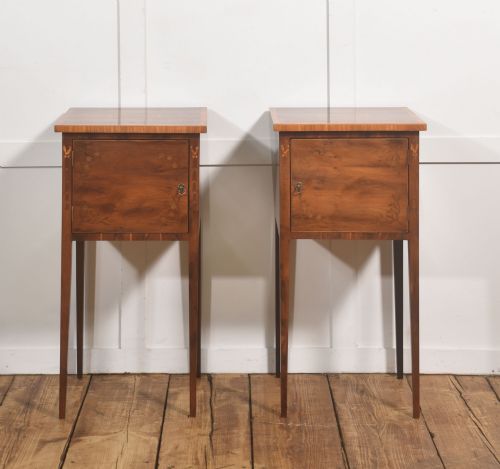
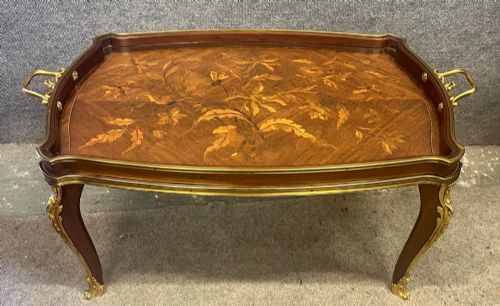
A vintage floral inlaid table brings intricate botanical woodwork and period charm into a room, making it a functional centrepiece.
Vintage Floral Inlaid Table
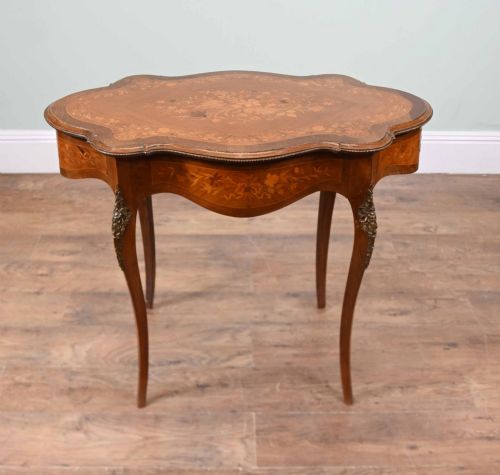
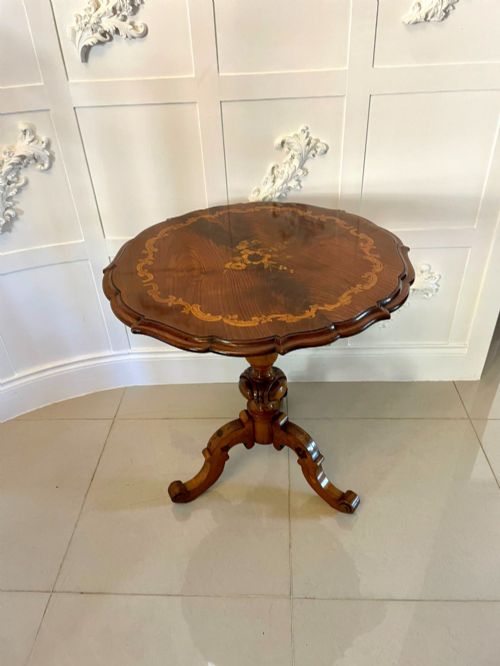
Buyers seeking a vintage floral inlaid table encounter a diverse selection of occasional furniture, predominantly featuring floral marquetry and parquetry. These pieces span from the nineteenth century into the twentieth century, encompassing Edwardian and Victorian creations alongside revivalist French designs.
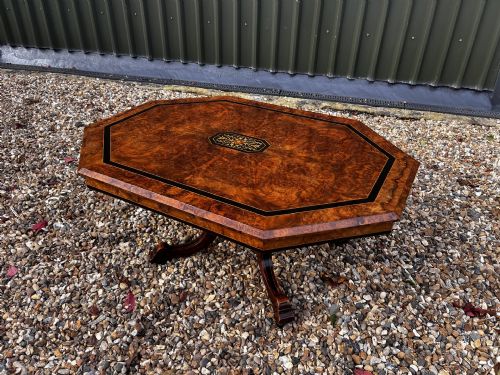
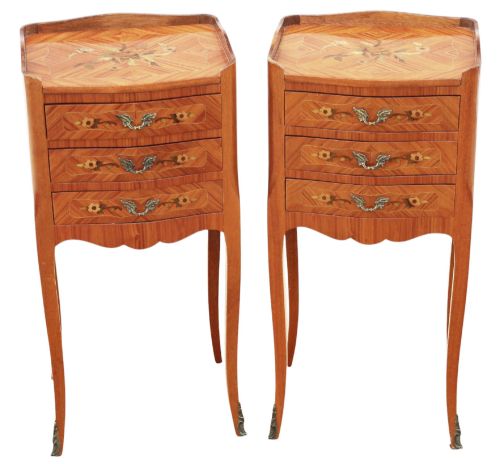
The most common forms on this page include bedside tables, side tables, lamp tables, and occasional tables, often displaying elaborate botanical motifs worked in contrasting timbers. Alongside these tables, the selection includes related forms such as desks, coffee tables, and cabinets carrying similar inlaid decoration.
Origins range widely across European and international workshops, from French Louis XV and Louis XVI style pieces to Dutch walnut items and Anglo-Indian productions. This variety means a buyer might select a freestanding centre table with robust rosewood or walnut construction, or a lighter satinwood occasional piece.
Materials and construction methods
Cabinetmakers utilised a foundation of dense hardwoods such as walnut, mahogany, rosewood, kingwood, and satinwood to construct the carcase and framing of each table. These sturdy timbers provided a stable base for the intricate surface decoration.
The characteristic floral imagery relies on marquetry techniques, where fine veneers of various coloured woods are precisely cut and fitted together to form botanical patterns. In some instances, additional materials like bone inlay or ormolu mounts enhance the decorative scheme.
Vintage Floral Inlaid Table Retail Price Guide 2026
Typical asking prices for vintage floral inlaid table among the pieces listed under this phrase on Sellingantiques today, from the lower quarter to the upper quarter. They describe what is for sale here now, not the wider market.
The listings on this page span the 1800s to the 1930s, featuring walnut, rosewood, mahogany, and satinwood across various occasional and bedside forms.
Distinctions in craftsmanship
Quality rests heavily on the precision of the marquetry cutter and the choice of contrasting veneers used to articulate the floral details. Finer examples display tight, seamless joints within the veneer work and subtle shading achieved through hot sand scorching.
The underlying timber selection and secondary framing determine the structural integrity, separating standard production pieces from workshop items of exceptional heft and refined proportion. Superior execution also shows in the crispness of carved details and the harmonious grain of the surrounding woods.
Liberty & Co·Henry Marc
The Vintage Floral Inlaid Table Glossary
- Marquetry
- A decorative technique applying fitted pieces of veneer to a structural panel to form pictorial or floral designs. This method allows artisans to use numerous contrasting wood types on a single surface.
- Parquetry
- Geometric mosaic woodwork arranged in regular patterns such as cubes or chequers. It frequently appears alongside floral marquetry on tabletop surfaces.
- Satinwood
- A durable, lustrous timber native to India and Sri Lanka with a golden-yellow sheen. Cabinetmakers favoured it for light-coloured table surfaces and delicate inlay work.
- Ormolu
- Gilded bronze mounts applied to furniture for decorative accent. This finish characterises many French revival tables from the nineteenth century.
- Kingwood
- A dense, richly grained tropical American timber featuring dark violet-brown tones with lighter streaks. It was widely utilised by period cabinetmakers for high-status veneered furniture.
Vintage Floral Inlaid Table: Frequently Asked Questions
How do I clean an inlaid table?
Dust the surface regularly with a soft, dry cloth to prevent dirt accumulation within the veneer joints. Avoid using harsh chemical polishes that can degrade historical finishes.
Apply a microcrystalline wax sparingly when the wood appears dry, buffing gently to maintain a natural sheen. Keep the table away from direct sunlight and heat sources to prevent the veneers from lifting.
Can I use these as bedside tables?
Many smaller examples, such as bedside chests and lamp tables, suit bedroom placement. Their compact footprints provide convenient surface space for a lamp or small items.
Ensure the height matches your bed frame for practical daily use. The decorative floral tops remain visible even when the surface holds everyday objects.
What periods do these tables represent?
The selection spans the nineteenth century through the early twentieth century, including Victorian and Edwardian examples. Revival styles draw heavily on eighteenth-century French aesthetics.
Construction details and timber choices help indicate the specific era of manufacture. Later pieces from the 1920s and 1930s often reflect simplified interpretations of earlier floral designs.
How do I identify floral marquetry?
Floral marquetry consists of hand-cut wood veneers assembled like a jigsaw puzzle to depict leaves, stems, and blossoms. Artisans select different timber species to provide natural colour variation without relying on paint.
Under magnification, the tiny joints between the contrasting wood segments become visible. Shading on the petals is traditionally achieved by scorching the veneer edges in hot sand.