



Victorian Liberty Co Table
These victorian liberty co table pieces bring together distinct revival designs and traditional cabinet-making.
Victorian Liberty Co Table
A victorian liberty co table encompasses occasional and side tables produced or retailed by the firm across various late nineteenth and early twentieth century styles. Buyers looking at this phrase encounter distinct pieces that reflect the store's eclectic aesthetic, drawing on global design influences rather than strict adherence to one British tradition.
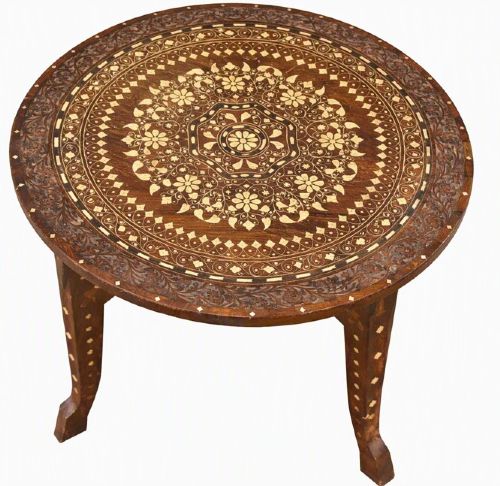
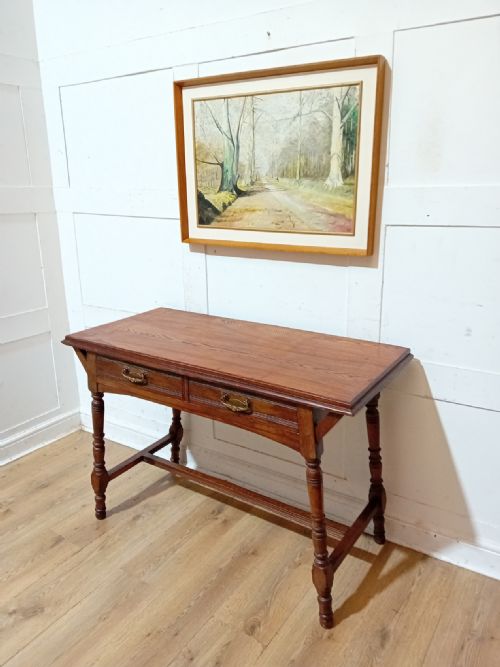
The most common examples on this page are occasional and side tables rendered in forms such as octagonal, circular, or two-tier configurations. These pieces utilise woods like mahogany, ash, and ebonised timber, frequently incorporating decorative inlays or structural elements associated with the Arts and Crafts and Moorish revival movements.
Materials and construction
Makers utilised a range of timbers including mahogany, ash, rosewood, walnut, and ebonised wood to form the primary structures of these tables. Construction methods varied from traditional British cabinet-making to specialised regional joinery found in imported Anglo-Indian and Moorish pieces.
Surface ornamentation relied heavily on contrasting materials set directly into the wood. Craftsmen employed bone, mother of pearl, and brass inlay, alongside bamboo and leather elements, to create the intricate geometric and botanical patterns characteristic of the firm's output.
Design styles span Arts and Crafts, Moorish Revival, Anglo-Japanese, and Aesthetic Movement.
Distinctions in quality
Quality in a victorian liberty co table rests primarily on the crispness of the carving and the precision of the inlay work. Finer examples display tightly fitted bone or mother of pearl segments with minimal filler, whereas simpler pieces rely entirely on printed or painted surface decoration.
The choice of timber and structural integrity also separate standard production items from masterworks designed by figures like Leonard Wyburd. Solid hardwoods and sophisticated joinery denote superior craftsmanship, while secondary woods and simpler dowel construction indicate more commercial utility.
Liberty & Co·Leonard Wyburd
The Victorian Liberty Co Table Glossary
- Anglo-Moorish
- A style combining British furniture forms with Islamic and Moorish architectural motifs. These pieces often feature intricate pierced fretwork and geometric inlay.
- Ebonised
- Wood treated with a dark stain or finish to imitate ebony. This technique was popular in nineteenth-century design to provide stark contrast for inlaid materials.
- Occasional table
- A small, movable table designed for specific, intermittent use in a room. They appear in various heights and top shapes across the inventory.
- Inlay
- A decorative technique where materials such as bone, brass, or lighter woods are embedded into recesses in the primary wood surface. The resulting pattern sits flush with the surrounding timber.
Victorian Liberty Co Table: Frequently Asked Questions
What is a victorian liberty co table?
A victorian liberty co table is an occasional or side table retailed or manufactured by the London emporium during the late nineteenth or early twentieth century. These tables range from plain ash Arts and Crafts designs to heavily inlaid Moorish and Anglo-Indian forms.
The firm collaborated with various designers and workshops to produce furniture that departed from heavy Victorian styles in favour of lighter, more artistic domestic pieces.
How do I identify a Liberty table?
Identification relies on physical markers such as maker stamps, paper labels, or distinct design attributes linked to the firm's known output and designers like Leonard Wyburd. Stylistic indicators include Moorish geometric carving, Japanese-influenced joinery, and specific Arts and Crafts proportions.
Not every piece carries an explicit stamp, so stylistic comparison with documented archive examples remains a primary method of attribution.
Where were these tables used?
These tables served primarily as occasional furniture in domestic drawing rooms, smoking rooms, and hallways. Their modest scale allowed them to be easily moved and used for holding books, lamps, or decorative objects.
Drop-flap and two-tier variations provided adaptable surface space for smaller nineteenth-century living areas.
How do I care for inlaid wood?
Inlaid surfaces require stable indoor humidity levels to prevent the timber from expanding or contracting differently from the bone, brass, or mother of pearl elements. Dusting with a soft, dry cloth preserves the finish without threatening delicate joints.
Avoid placing these tables in direct sunlight or near heat sources, which can dry out ebonised finishes and loosen small inlay pieces.