
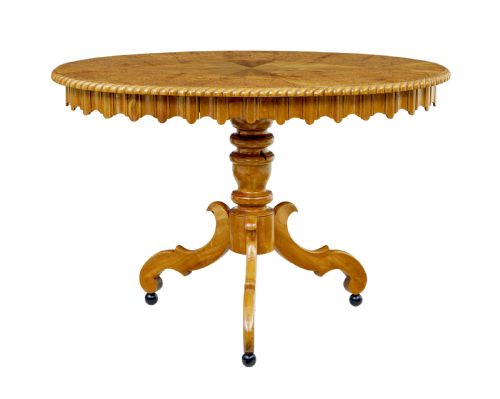
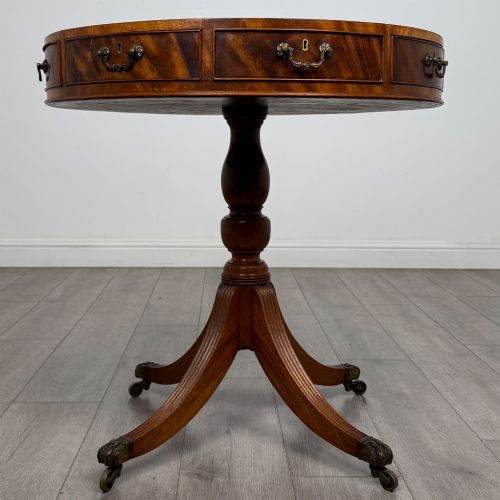
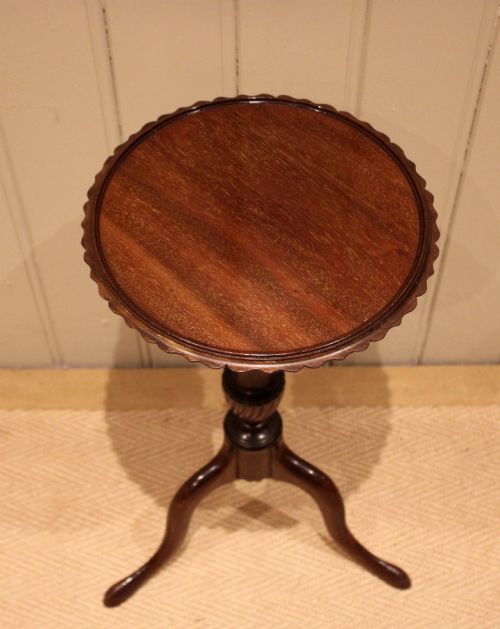
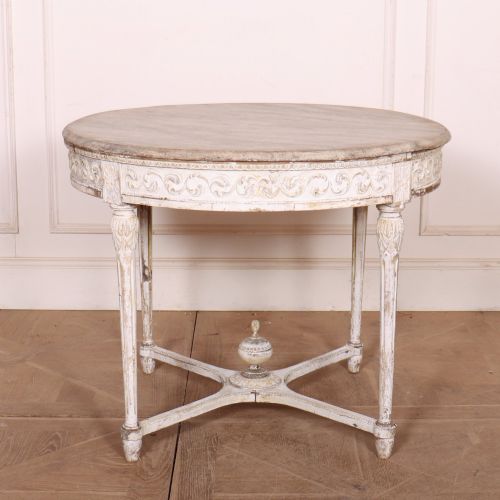
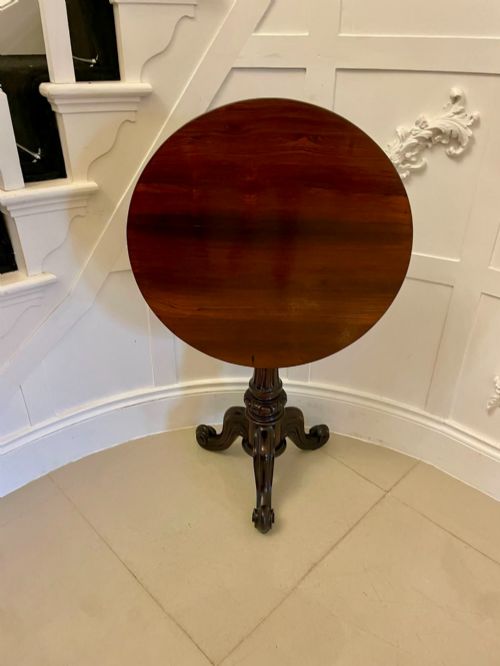
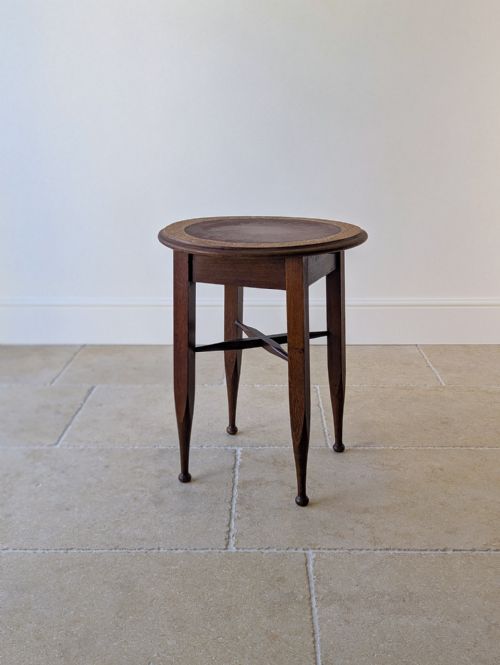

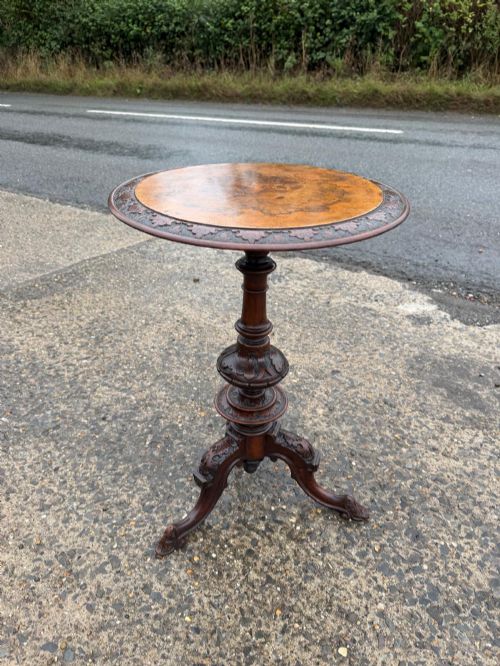
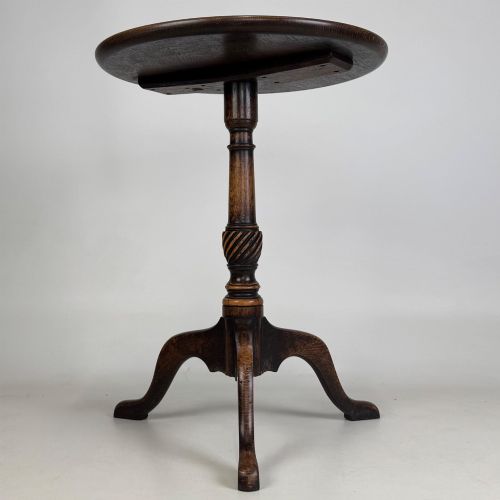
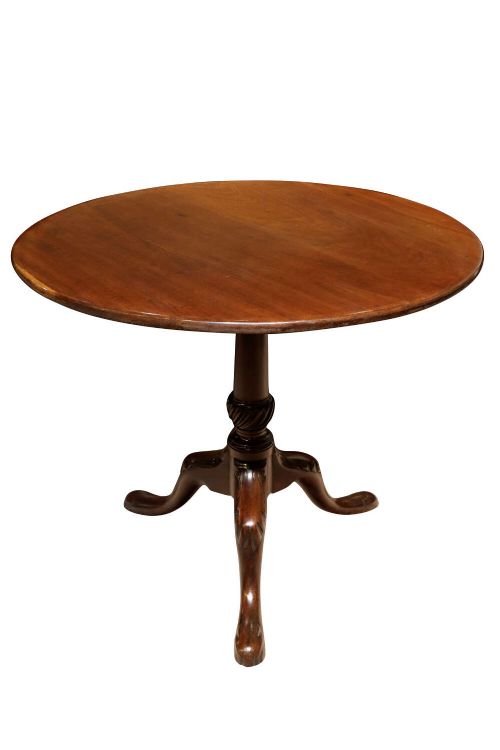
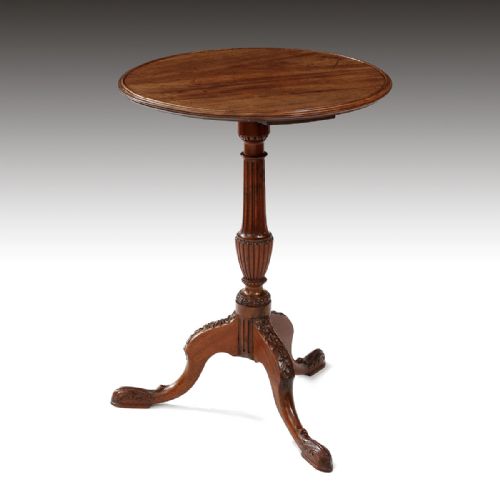
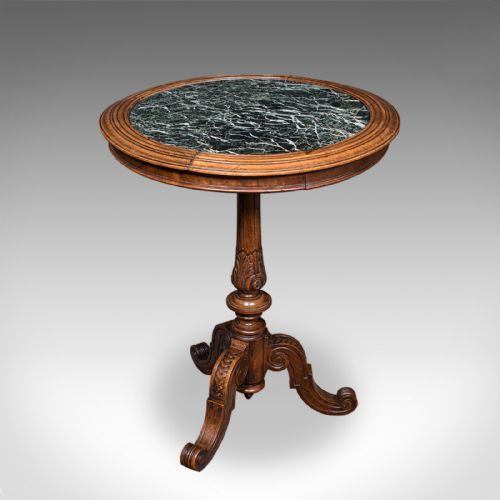
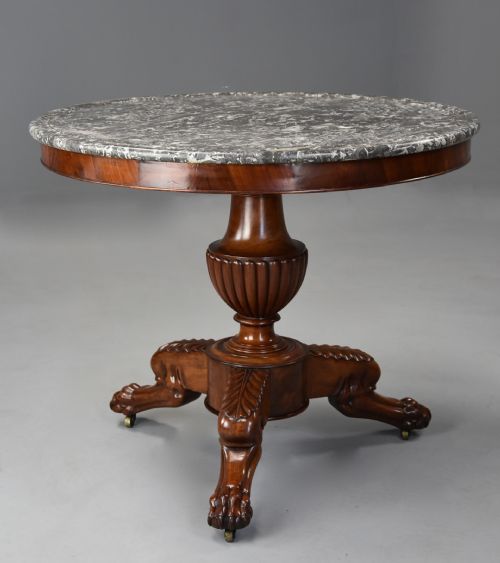
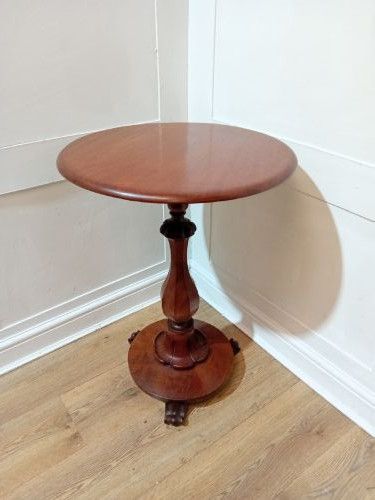
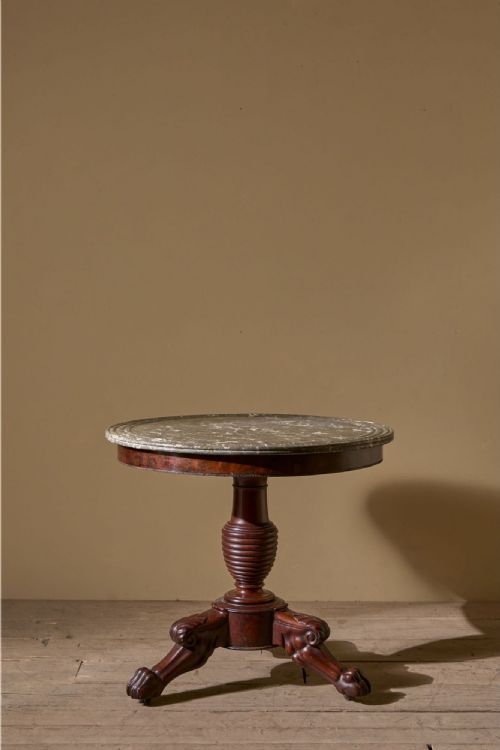
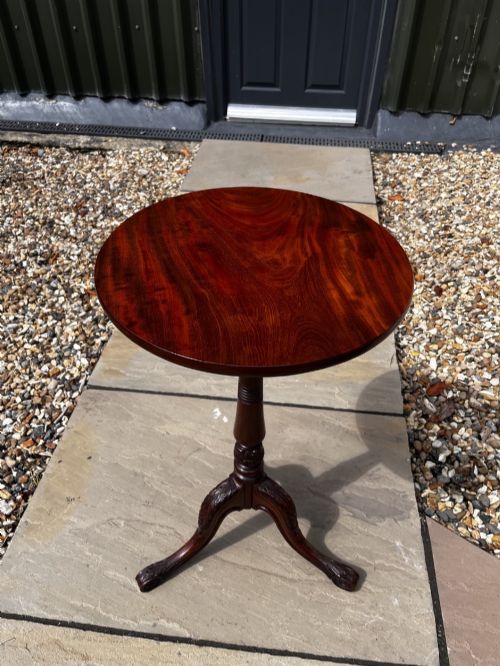
Circular Carved Side Table
A circular carved side table brings compact surface space and rich timber grain to a room, uniting functional support with decorative carving.
Circular Carved Side Table
A circular carved side table serves smaller spaces as a lamp, wine, or occasional table, resting on a tripod base or central pillar. These pieces span the nineteenth and early twentieth centuries, drawing on Regency, Victorian, and Edwardian design traditions.
Mahogany and walnut predominate on this page, often paired with marble tops or intricate bone and brass inlay in Anglo-Indian and continental examples. Most pieces date from the Victorian era through the Edwardian period, offering compact proportions suited to modern interiors.
Materials and construction
Cabinetmakers utilised solid timbers and veneers such as mahogany, rosewood, burr walnut, and birch, frequently turning central columns and shaping tripod legs by hand. Tops range from solid timber with dish edges to inset white or grey marble slabs supported by carved wooden mounts.
Detailing includes relief carving around borders, turned pedestals, and inlaid bone or brass motifs seen on Anglo-Indian and regional pieces. Tilt-top mechanisms employ brass catches and wooden blocks to allow tables to stand flat or fold away vertically.
Listings feature woods spanning mahogany, rosewood, oak, birch, and burr walnut, alongside marble and brass elements.
Judging quality
Quality rests upon the crispness of the hand-carved detail and the selection of figured timbers, such as burr walnut or flame mahogany, across the top. Heavy, stable tripod bases with well-proportioned legs indicate superior construction compared to lighter, rigid frames.
Original surfaces, tight joints, and intact marble inserts or delicate bone inlay elevate a piece. Later alterations, such as painted decoration added to plain tops, separate standard production items from finer period examples.
Gillow·Liberty & Co·Waring & Gillow
The Circular Carved Side Table Glossary
- Gueridon
- A small French table, often circular with a marble top, designed for holding lamps or decorative objects. These tables frequently feature mahogany or walnut frames.
- Tilt-top
- A table mechanism allowing the surface to pivot ninety degrees for storage against a wall when not in use. This feature appears on nineteenth-century tripod tables.
- Tripod base
- A three-legged support structure commonly found beneath nineteenth-century lamp and wine tables. This design ensures stability on uneven floors.
- Burr walnut
- A highly figured wood veneer harvested from tree growths, producing swirling patterns on table tops. Cabinetmakers prized this material for decorative occasional furniture.
- Demi-lune
- A half-moon shape used for console and side tables designed to sit flush against a wall. This profile saves floor space in narrow hallways.
Circular Carved Side Table: Frequently Asked Questions
What is a circular carved side table used for?
These tables provide a compact surface for lamps, drinks, or decorative objects in living rooms and hallways. Their small footprint makes them suitable for placing beside seating.
Historically, specific versions like wine tables or gueridons held glassware or lighting in formal drawing rooms. Today they function similarly while adding period character to domestic interiors.
How do I identify a Victorian piece?
Victorian examples often feature dense mahogany or walnut timbers, turned tripod columns, and deep, hand-carved mouldings. Heavy construction and rich grain patterns typify the period.
Examine the underside for traditional fixings, hand-cut screws, and timber shrinkage that indicate nineteenth-century manufacture rather than later reproduction.
Are marble top tables heavy?
Yes, inset marble slabs add considerable weight to the top of the table, though the heavy wooden bases are balanced to prevent tipping. This weight helps keep the table stable in busy rooms.
When moving these pieces, lift the marble separately if loose, or support both the top and the base together to protect the frame joints.
How do tilt-top mechanisms work?
A tilt-top table uses a wooden catch or brass latch beneath the surface that releases the top to pivot vertically. This allowed tables to be stored against walls when extra floor space was needed.
Check the pivot block and catch for wear, as frequent use over the centuries can loosen the fit between the top and the central column.