
Indian Carved Occasional Table
An indian carved occasional table brings intricate colonial craftsmanship and dense botanical motifs directly into a sitting room.
Indian Carved Occasional Table
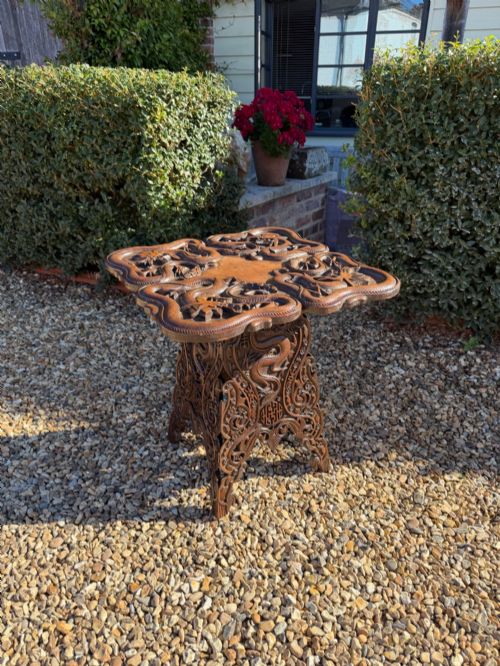
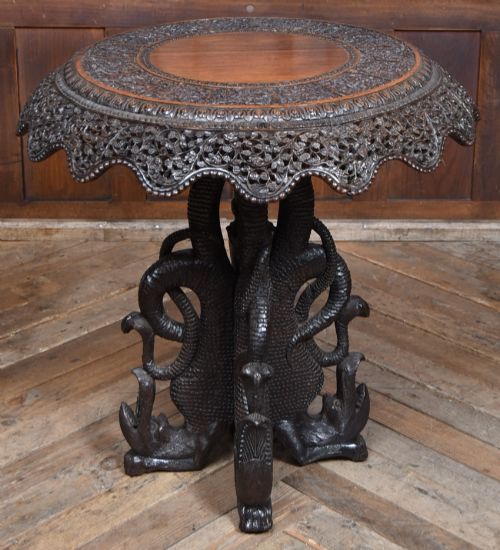
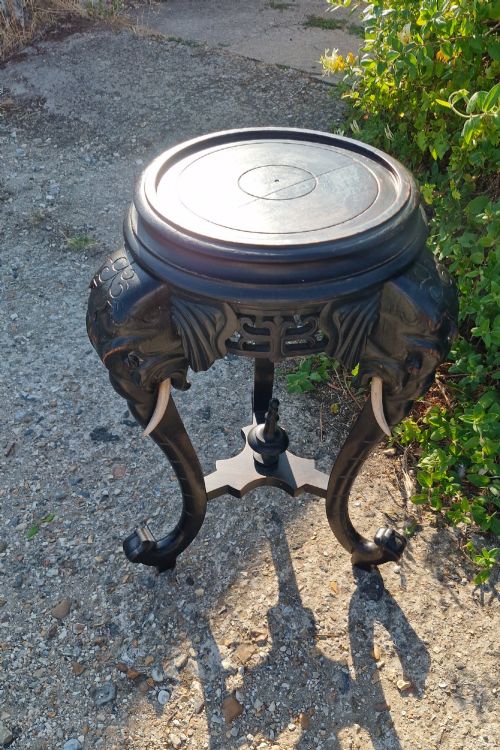
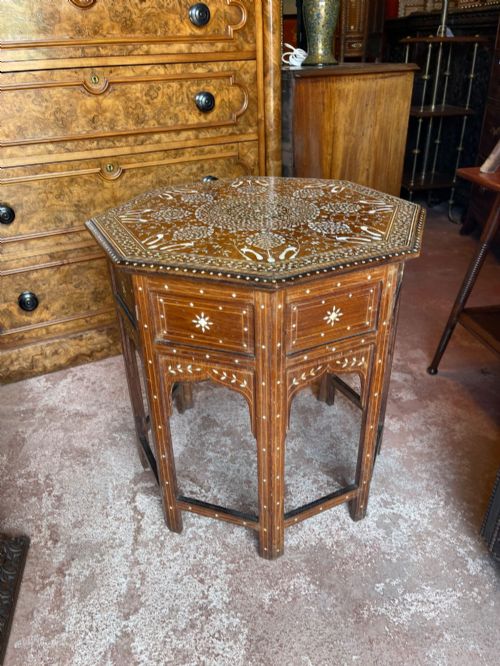
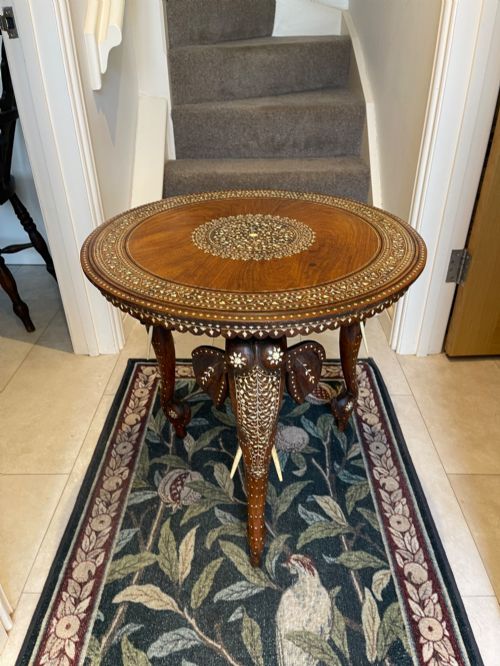
When searching for an indian carved occasional table, a buyer encounters dense floral reliefs, geometric folding frames, and figurative supports shaped as elephants or dragons. These pieces span the nineteenth and early twentieth centuries, emerging from regional centres such as Hoshiarpur, Bombay, and Burma under Anglo-Indian and colonial influences.
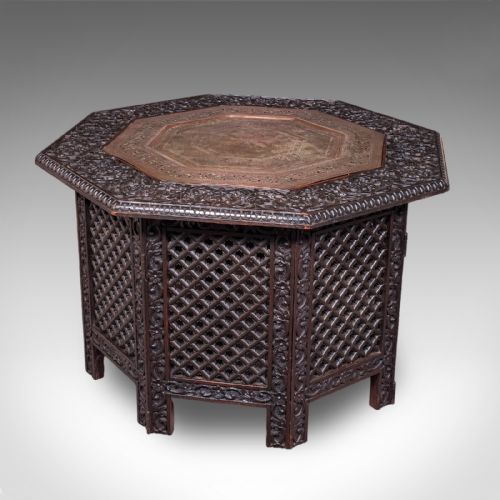
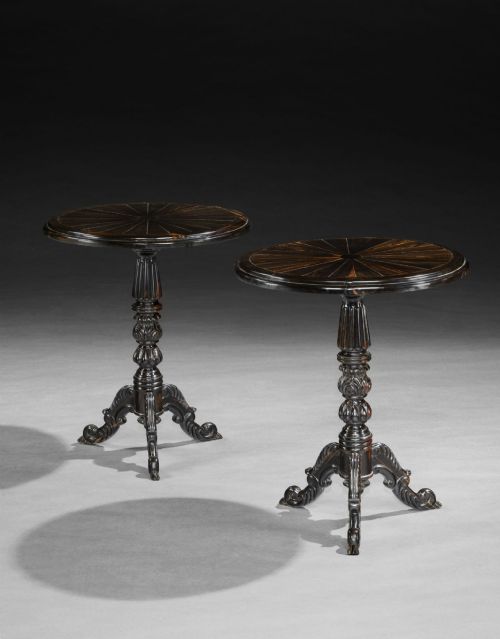
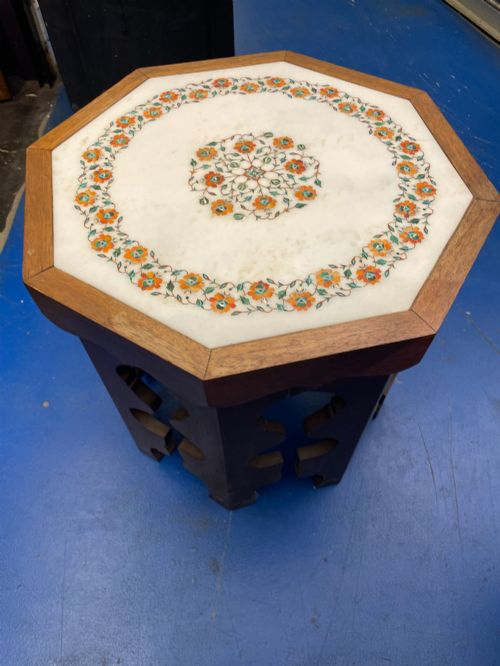
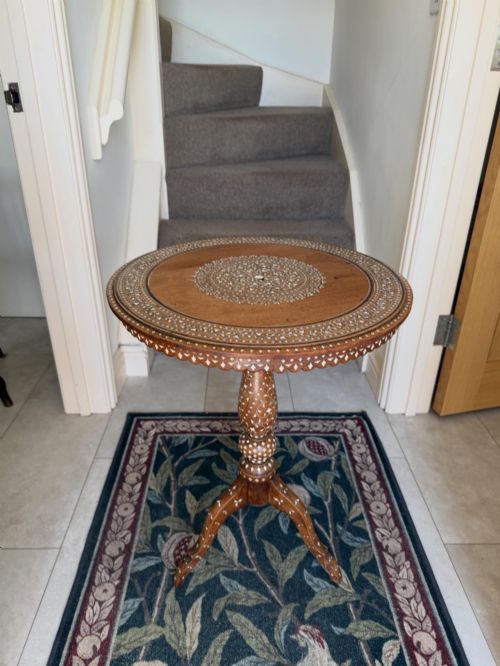
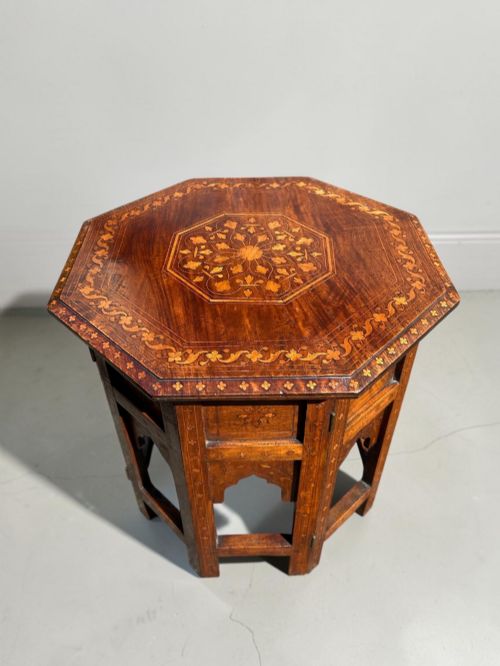
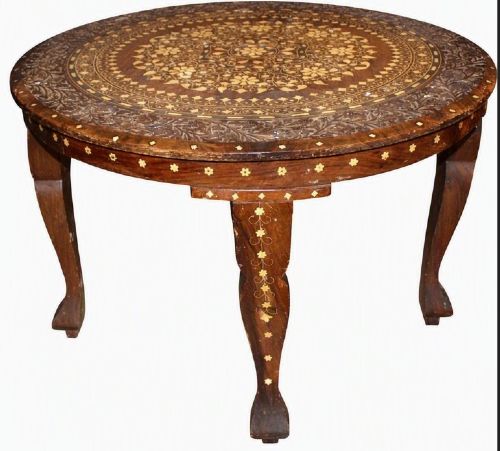
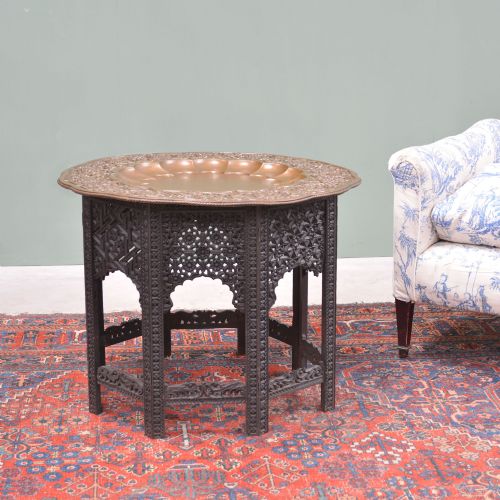
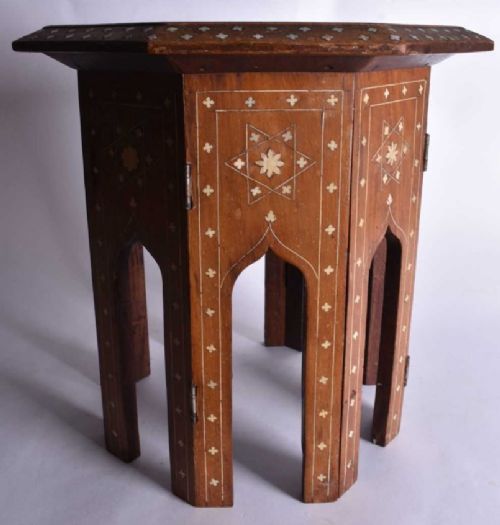
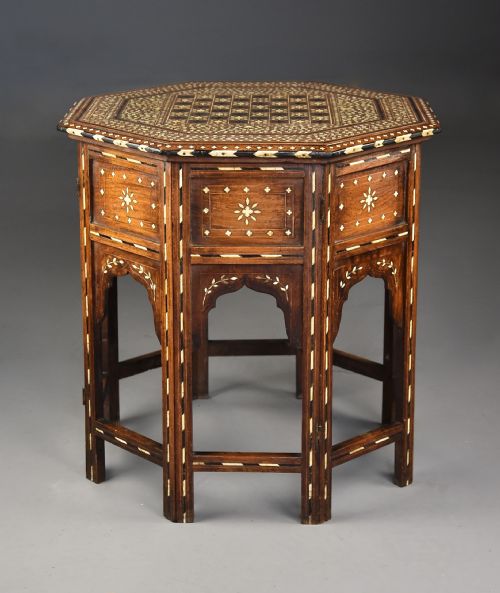
The octagonal folding tray table and the circular pedestal form appear most frequently on this page. Makers constructed these formats for domestic use within British colonial homes, adapting traditional local carving methods to British furniture types like side tables, coffee tables, and games tables.
Materials and Technique
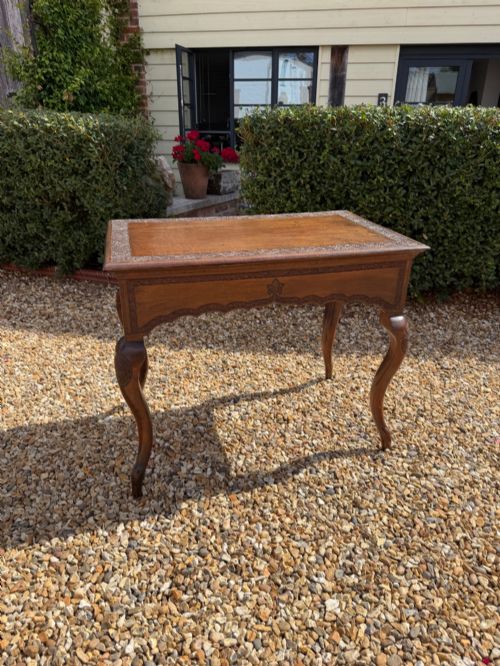
Artisans carved these tables from dense tropical timbers including teak, padouk, rosewood, and ebony, which provided a stable base for deep, three-dimensional relief work. The carving technique relies on continuous scrolling foliage, beasts, and geometric lattices that cover every available surface.
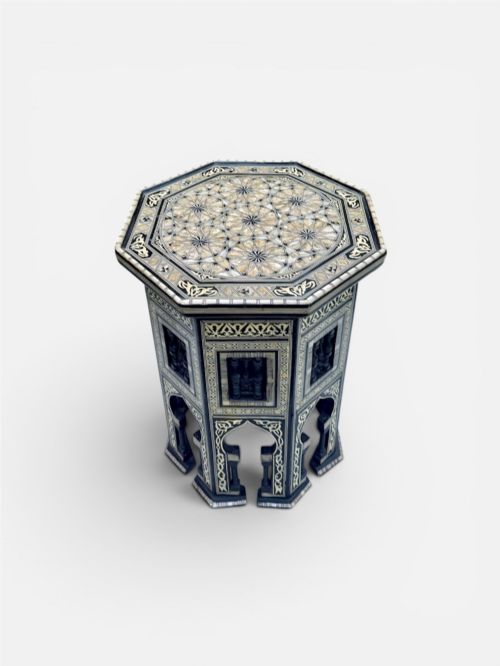
Many examples incorporate contrasting inlay materials set directly into the dark wood ground. Bone, mother-of-pearl, and brass wire create crisp geometric patterns and floral motifs, particularly on octagonal and folding tables originating from Hoshiarpur and Damascus.
Listings feature woods such as teak, padouk, rosewood, and ebony, paired with bone, brass, and mother-of-pearl inlay across various nineteenth and twentieth-century styles.
Assessing Craftsmanship
Quality rests upon the depth, sharpness, and discipline of the carving itself. Superior tables display crisp undercutting and balanced symmetry across dense foliage, whereas lesser examples show shallow, hasty scoring that lacks definition.
The integrity of the structural joinery and the precision of the inlay work further distinguish the range. Finely made pieces maintain tight joints in complex folding mechanisms and retain every sliver of bone or mother-of-pearl within the wooden ground.
Liberty and Co
The Indian Carved Occasional Table Glossary
- Anglo-Indian
- Furniture made in India during the British colonial period for export or for resident British families, combining British forms with local carving styles.
- Hoshiarpur
- A town in Punjab renowned for intricate woodcarving and inlay work using sheesham wood, brass, and bone.
- Padouk
- A heavy, durable reddish-brown tropical hardwood frequently utilised for nineteenth-century colonial furniture.
- Teapoy
- A small occasional table or tea caddy stand originating in India and popular throughout the Victorian era.
Indian Carved Occasional Table: Frequently Asked Questions
What is an Indian carved occasional table?
These pieces are nineteenth and early twentieth-century small tables featuring dense hand-carved decoration and regional inlay work. Artisans produced them in locations such as Hoshiarpur and the Bombay Presidency for both local use and the British colonial market.
They function as versatile decorative items for living spaces, taking the form of octagonal folding tables, pedestal bases, and circular side tables. The designs integrate traditional eastern motifs with familiar European furniture shapes.
How do I identify a Hoshiarpur table?
Hoshiarpur tables typically feature an octagonal folding top or a rigid frame entirely covered in dense, interlocking floral and geometric carvings. Artisans from this Punjab region frequently added intricate bone or brass wire inlay to contrast against the dark timber ground.
Unlike simpler carved pieces from other districts, these items rely on precise micro-mosaic patterns alongside deep relief foliage. Many fold flat on an ingenious fretted wooden hinge system.
What woods were used for these tables?
Carvers utilised dense tropical hardwoods that could accept extremely fine, sharp detail without splintering. Teak, padouk, rosewood, and ebony appear most often across nineteenth-century examples.
These dark timbers provided a strong tonal contrast when paired with lighter inlay materials such as bone and mother-of-pearl. The natural weight of these hardwoods also gave stability to folding and pedestal structures.
How do I care for an inlaid wooden table?
Maintain these tables by keeping them away from direct heat sources and sudden humidity changes to prevent the wood from shrinking. This protects the delicate bone and brass inlay from loosening within its channels.
Apply a minimal amount of appropriate natural wax rather than liquid polishes to preserve the finish of the dark hardwood. Gentle dusting with a soft brush helps clear debris from the deep recesses of the carved relief.